Loading...
Done
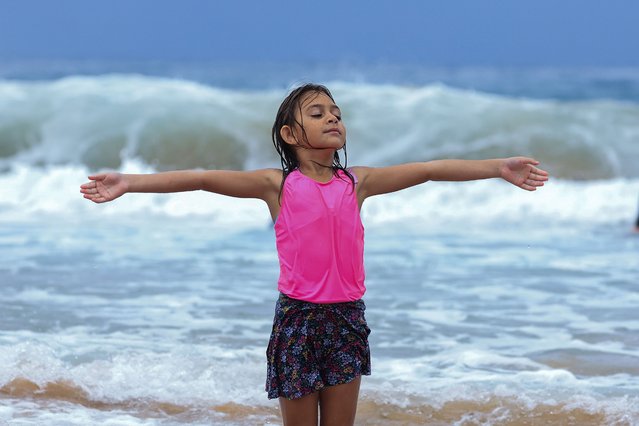
A girl stands with arms outstretched at North Narrabeen on January 27, 2024 in Sydney, Australia. Around 30 indigenous children from Brewarrina, Weilmoringle, and Goodooga in the far North West NSW travelled to Sydney to participate in the program. The initiative is part of the Bush to Beach programme, which now in its 19th year, gives indigenous children a unique opportunity to learn and explore Sydney's beach culture. The efforts are made possible entirely by volunteers, donations and sponsorship. Bush to Beach is a charity dedicated to inspiring hope, confidence, and self-esteem and promoting education for Aussie bush kids, a release by the charity said. This trip is a reward for school attendance and an opportunity for the kids to see that there is another world outside their community and help develop confidence and self-esteem, according to Bush to Beach co-founder Jack Cannons. (Photo by Jenny Evans/Getty Images)

A girl stands with arms outstretched at North Narrabeen on January 27, 2024 in Sydney, Australia. Around 30 indigenous children from Brewarrina, Weilmoringle, and Goodooga in the far North West NSW travelled to Sydney to participate in the program. The initiative is part of the Bush to Beach programme, which now in its 19th year, gives indigenous children a unique opportunity to learn and explore Sydney's beach culture. (Photo by Jenny Evans/Getty Images)
Details
10 Feb 2024 09:26:00
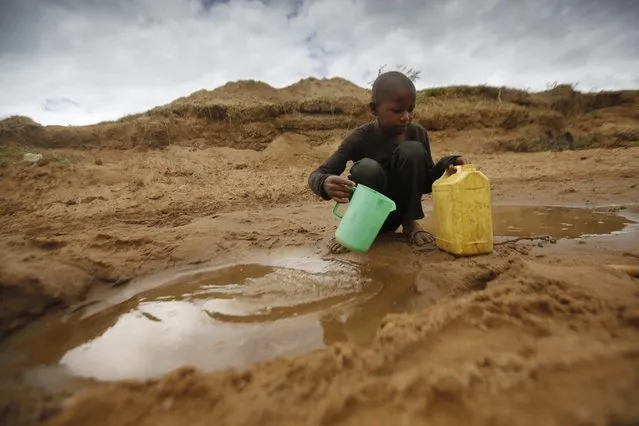
A young boy scoops water from a hand-dug well in the dry riverbed near Matinyani, in the semi-arid Kitui County in southeastern Kenya, 22 March 2015, the World Water Day. Residents of Kitui County and other arid and semi-arid areas of the country have been hard-hit by extremely poor rainfall this year while the government said in previous month that some 1.6 million people countrywide are facing acute starvation due to the drought and will need relief food over the next six months. (Photo by Dai Kurokawa/EPA)

A young boy scoops water from a hand-dug well in the dry riverbed near Matinyani, in the semi-arid Kitui County in southeastern Kenya, 22 March 2015, the World Water Day. Residents of Kitui County and other arid and semi-arid areas of the country have been hard-hit by extremely poor rainfall this year while the government said in previous month that some 1.6 million people countrywide are facing acute starvation due to the drought and will need relief food over the next six months. Residents of Matinyani say they haven't seen a drop of rain in nearly four months. Thousands of Kenyans in rural areas walk tens of kilometers just to fetch water to drink and to be used in their homes. According to an estimate by UNESCO (United Nations Educational, Scientific and Cultural Organization), 17 million people lack access to safe water in Kenya, where the drought is a perennial problem. (Photo by Dai Kurokawa/EPA)
Details
23 Mar 2015 11:01:00
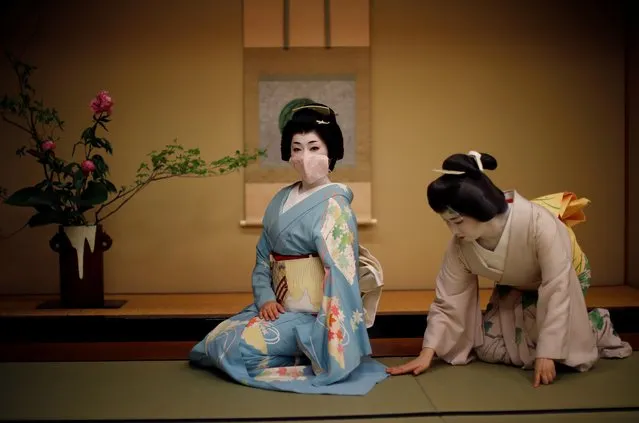
Mayu adjusts Koiku’s kimono, as Koiku wears a protective face mask while posing for a photograph, before they work at a party where they will entertain with other geisha at Japanese luxury restaurant Asada in Tokyo, Japan, June 23, 2020. The coronavirus pandemic has made Tokyo's geisha fear for their centuries-old profession as never before. Though the number of geisha - famed for their witty conversation, beauty and skill at traditional arts - has been falling for years, they were without work for months due to Japan's state of emergency and now operate under awkward social distancing rules. Engagements are down 95 percent, and come with new rules: no pouring drinks for customers or touching them even to shake hands, and sitting 2 meters apart. Masks are hard to wear with their elaborate wigs, so they mostly don't. “I was just full of anxiety”, said Mayu, 47. “I went through my photos, sorted my kimonos ... The thought of a second wave is terrifying”. (Photo by Kim Kyung-Hoon/Reuters)

Mayu adjusts Koiku’s kimono, as Koiku wears a protective face mask while posing for a photograph, before they work at a party where they will entertain with other geisha at Japanese luxury restaurant Asada in Tokyo, Japan, June 23, 2020. (Photo by Kim Kyung-Hoon/Reuters)
Details
23 Jul 2020 00:03:00
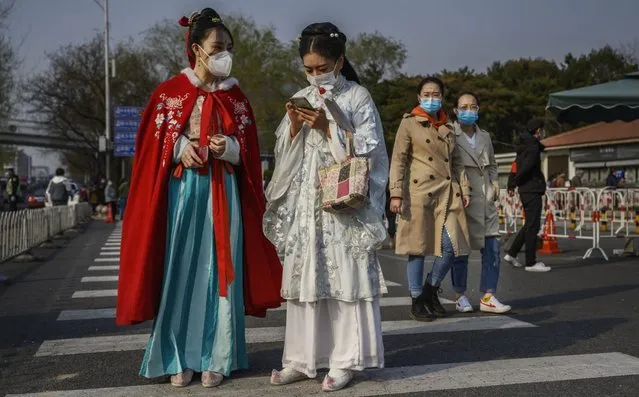
Chinese women wear protective masks as they are dressed in traditional clothing from the Qing Dynasty era outside a park on March 29, 2020 in Beijing, China. A limited section of the iconic tourist site was re-opened to the public this week allowing a smaller number of visitors to reserve tickets online in advance and to enter after passing health screening. With the pandemic hitting hard across the world, China recorded its first day with no new domestic cases of the coronavirus last week, since the government imposed sweeping measures to keep the disease from spreading. For two months, millions of people across China have been restricted in how they move from their homes, while other cities have been locked down in ways that appeared severe at the time but are now being replicated in other countries trying to contain the virus. Officials believe the worst appears to be over in China, though there are concerns of another wave of infections as the government attempts to reboot the worlds second largest economy. In Beijing, it is mandatory to wear masks outdoors, retail stores operate on reduced hours, restaurants employ social distancing among patrons, and tourist attractions at risk of drawing large crowds remain closed. Monitoring and enforcement of virus-related measures and the quarantine of anyone arriving to Beijing is carried out by neighborhood committees and a network of Communist Party volunteers who wear red arm bands. A primary concern for Chinese authorities remains the arrival of flights from Europe and elsewhere, given the exposure of passengers in regions now regarded as hotbeds for transmission. Since January, China has recorded more than 81,000 cases of COVID-19 and at least 3200 deaths, mostly in and around the city of Wuhan, in central Hubei province, where the outbreak first started. (Photo by Kevin Frayer/Getty Images)

Chinese women wear protective masks as they are dressed in traditional clothing from the Qing Dynasty era outside a park on March 29, 2020 in Beijing, China. A limited section of the iconic tourist site was re-opened to the public this week allowing a smaller number of visitors to reserve tickets online in advance and to enter after passing health screening. (Photo by Kevin Frayer/Getty Images)
Details
01 Apr 2020 00:05:00
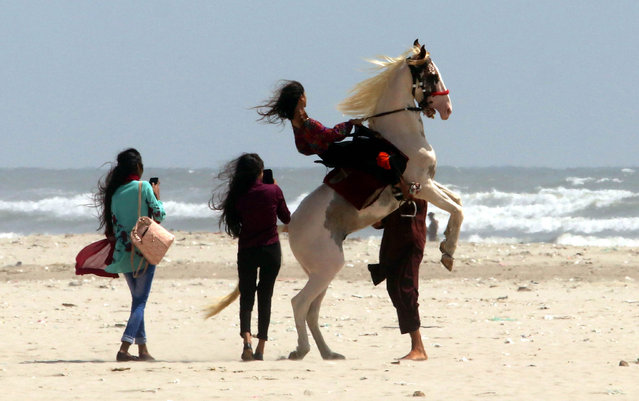
An Afghan girl rides a horse at the beach in Karachi, Pakistan, 07 September 2020. (Photo by Rehan Khan/EPA/EFE)

An Afghan girl rides a horse at the beach in Karachi, Pakistan, 07 September 2020. (Photo by Rehan Khan/EPA/EFE)
Details
23 Sep 2020 00:05:00
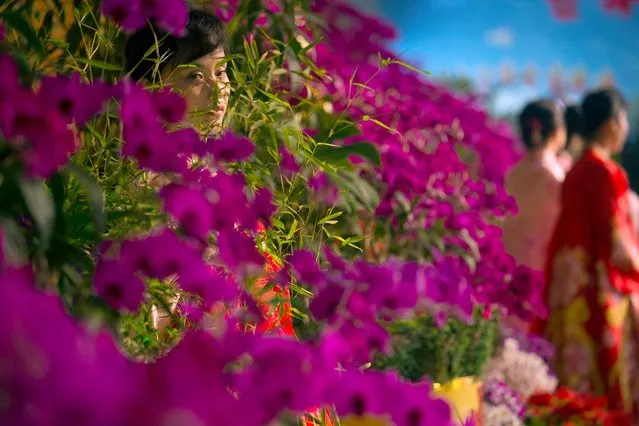
North Korean women in colorful traditional dresses are surrounded by flower blossoms known as “Kimilsungia” as they wait to guide guests at a flower exhibition in Pyongyang, North Korea, April 14, 2014. The flowers, named after Kim Il Sung, are on display to celebrate the late leader's official birth date of April 15, 1912. (Photo by David Guttenfelder/AP Photo)

North Korean women in colorful traditional dresses are surrounded by flower blossoms known as “Kimilsungia” as they wait to guide guests at a flower exhibition in Pyongyang, North Korea, April 14, 2014. The flowers, named after Kim Il Sung, are on display to celebrate the late leader's official birth date of April 15, 1912. (Photo by David Guttenfelder/AP Photo)
Details
28 Apr 2014 12:21:00
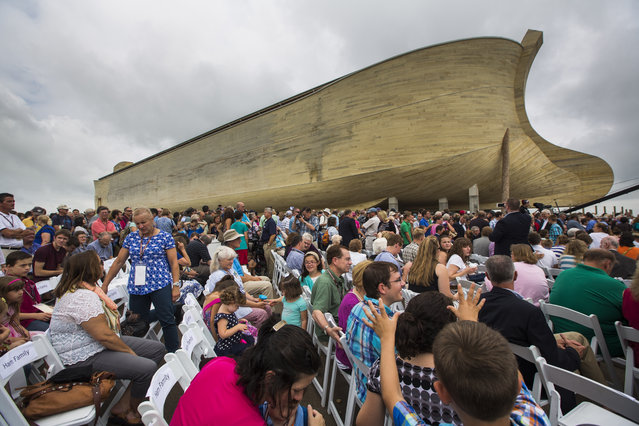
Visitors gather outside Ark Encounter, a 100 million USD, 510-foot-long re-creation of Noah's Ark in Williamstown Kentucky, USA, 05 July 2016. Ark Encounter is the brainchild of Australian-born creationist Ken Ham; it was built with the help of state tax incentives and the sale of 62 million USD in junk bonds. (Photo by Jim Lo Scalzo/EPA)

Visitors gather outside Ark Encounter, a 100 million USD, 510-foot-long re-creation of Noah's Ark in Williamstown Kentucky, USA, 05 July 2016. Ark Encounter is the brainchild of Australian-born creationist Ken Ham; it was built with the help of state tax incentives and the sale of 62 million USD in junk bonds. (Photo by Jim Lo Scalzo/EPA)
Details
07 Jul 2016 11:40:00
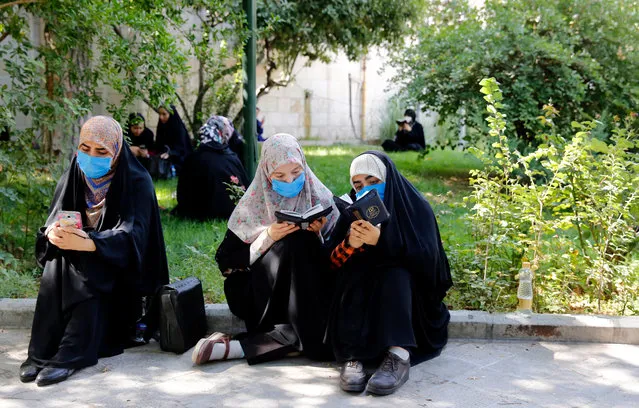
Faithful wearing face mask pray during the Arafah prayer ceremony ahead of Eid al-Adha, at the Tehran university’s mosque in Tehran, Iran, 30 July 2020. Iran will not hold the Eid al-Adha prayers and ceremonies over the coronavirus (COVID-19) crisis in the country. (Photo by Abedin Taherkenareh/EPA/EFE)

Faithful wearing face mask pray during the Arafah prayer ceremony ahead of Eid al-Adha, at the Tehran university’s mosque in Tehran, Iran, 30 July 2020. Iran will not hold the Eid al-Adha prayers and ceremonies over the coronavirus (COVID-19) crisis in the country. (Photo by Abedin Taherkenareh/EPA/EFE)
Details
16 Sep 2020 00:05:00