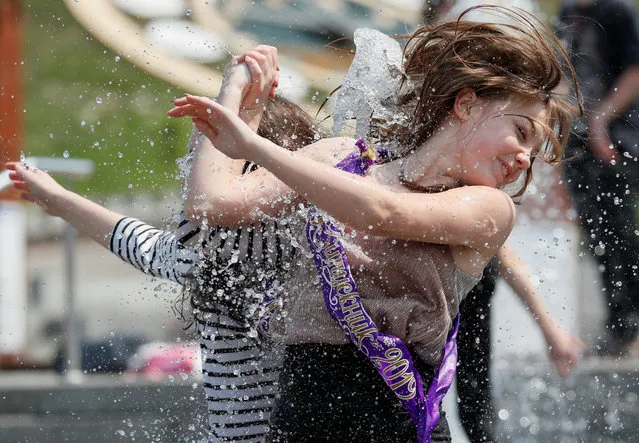
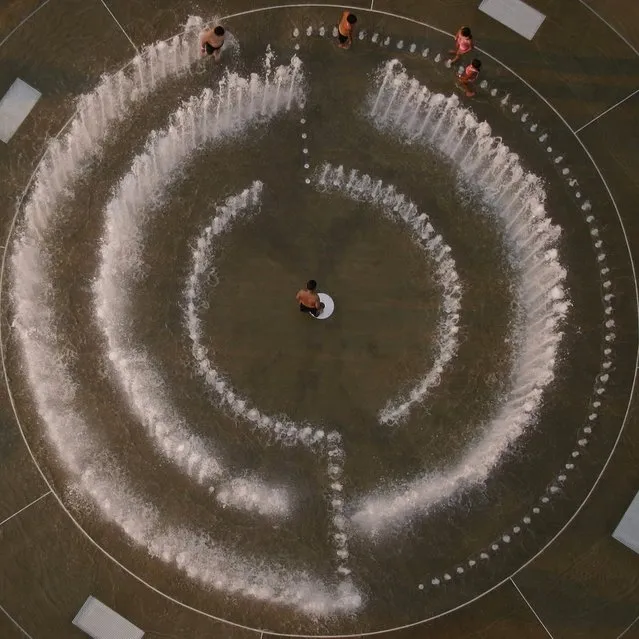
Secondary school graduates play in a fountain as they celebrate the last day of school, traditionally called the “last bell” in central Kiev, Ukraine on May 31, 2019. (Photo by Valentyn Ogirenko/Reuters)
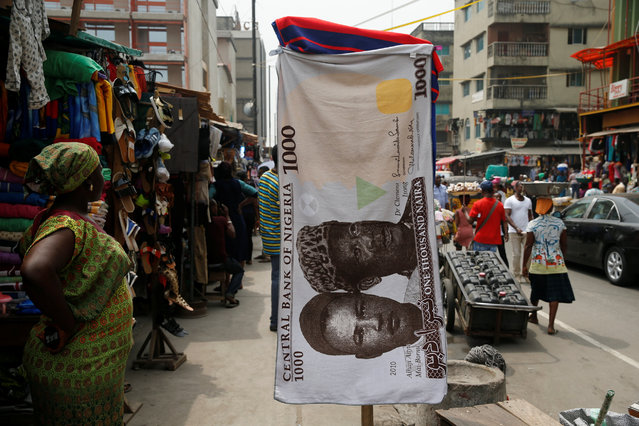
A towel with a print of the Nigerian naira is displayed for sale at a street market in the central business district in Nigeria's commercial capital Lagos February 4, 2016. (Photo by Akintunde Akinleye/Reuters)
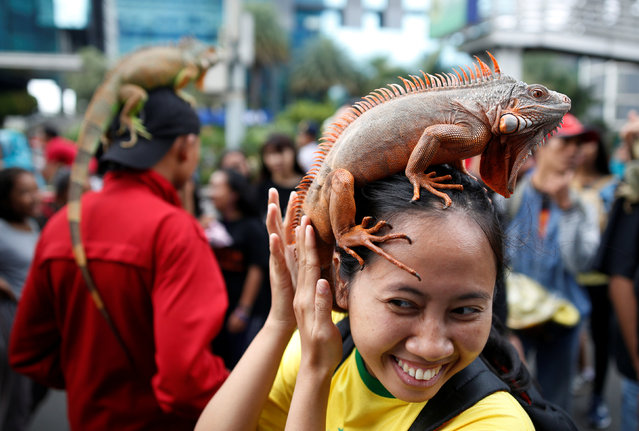
A woman holds an iguana perched on her head at a gathering of a reptile club during a car-free day in central Jakarta, Indonesia February 5, 2017. (Photo by Darren Whiteside/Reuters)
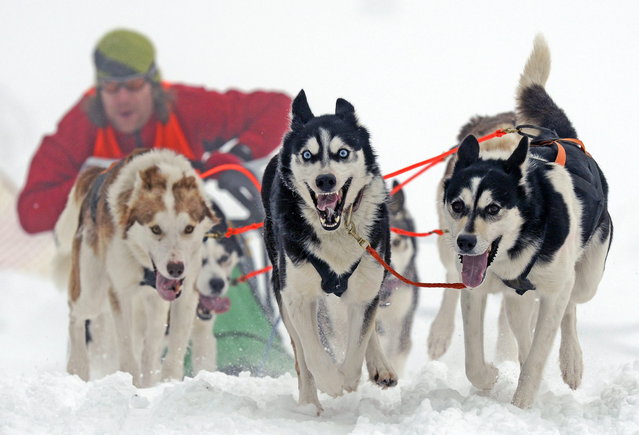
Musher Michael Ruopp of Germany starts with his sled dogs at the 23rd International Sled Dog Race in Oberhof, central Germany, Sunday, February 24, 2013. (Photo by Jens Meyer/AP Photo)
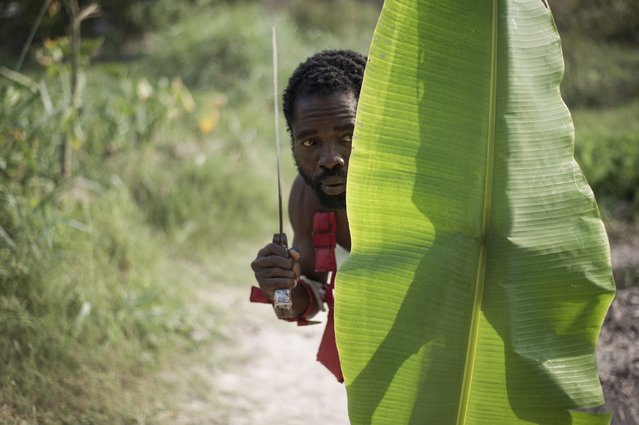
A member of the mainly Christian “anti-balaka” (anti-machete) militia trains in the Boeing neighbourhood of Bangui, Central African Republic, on February 24, 2014. (Photo by Fred Dufour/AFP Photo)
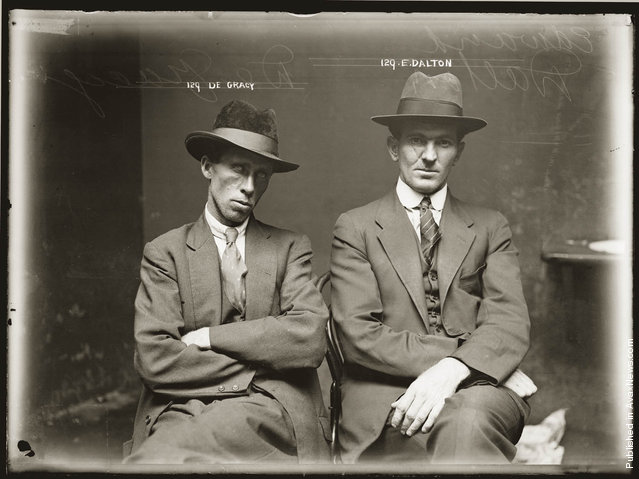
Mug shot of De Gracy (sic) and Edward Dalton. Details unknown. Central Police Station, Sydney, around 1920. (Photo by NSW Police Forensic Photography Archive, Justice & Police Museum, Histiric Houses Trust of NSW)
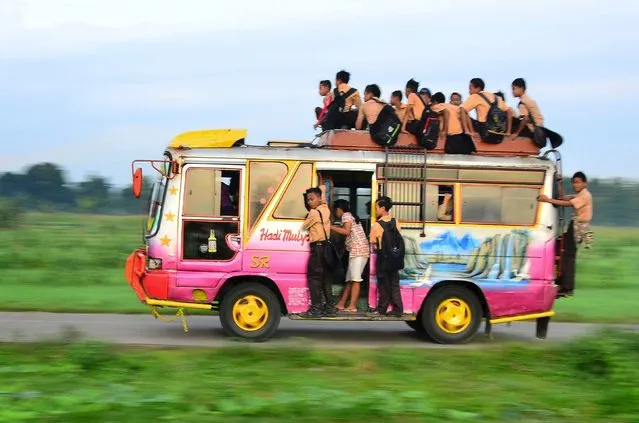
A group of students sit on top of a bus at Kemusu street in Boyolali, Central Java of Indonesia, March 20, 2015 in this picture taken by Antara Foto. (Photo by Yusuf Nugroho/Reuters/Antara Foto)
Kite Aerial photography (KAP) is a hobby and a type of photography. A camera is lifted using a kite and is triggered either remotely or automatically to take aerial photographs. The camera rigs can range from the extremely simple, consisting of a trigger mechanism with a disposable camera, to complex apparatus using radio control and digital cameras. On some occasions it can be a good alternative to other forms of aerial photography.