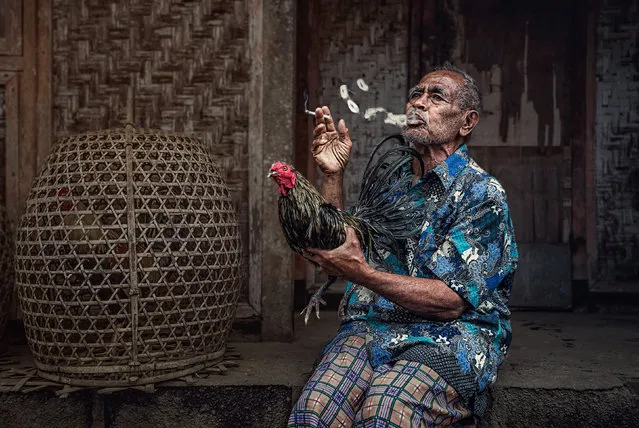
“A Balinese man shows off his pride and joy, a fighting cock, while on a cigarette break after a morning’s work in nearby fields”. (Photo by Coltrane Koh/The Guardian)
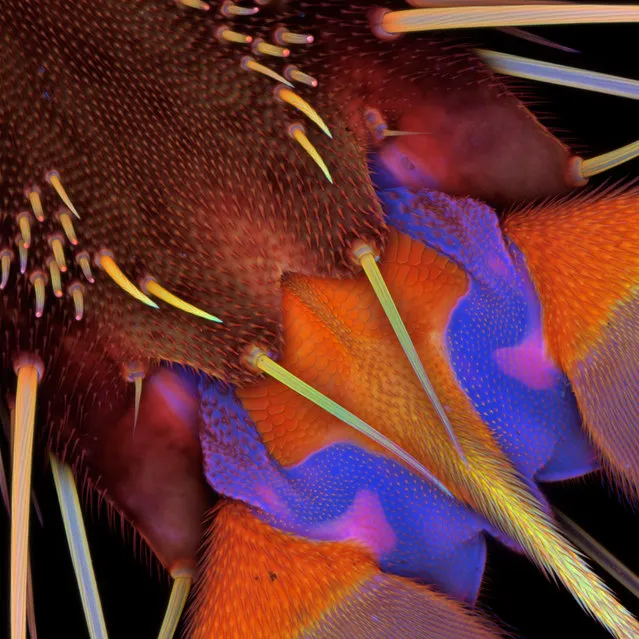
“Microscope images forge an extraordinary bond between science and art, said Hidenao Tsuchiya, Olympus America's Vice President and General Manager for the Scientific Equipment Group. We founded this competition to focus on the fascinating stories coming out of today's life science research laboratories. The thousands of images that people have shared with the competition over the years reflect some of the most exciting work going on in research today – work that can help shed light on the living universe and ultimately save lives. We look at BioScapes and these beautiful images as sources of education and inspiration to us and the world”. – OlympusBioScapes
Photo: Pretarsus of the third leg of a female drone fly (Eristalis tenax), ventral view, by Dr. Jan Michels, Institute of Zoology, Christian-Albrechts-University of Kiel, Germany. (Photo by Olympus BioScapes)
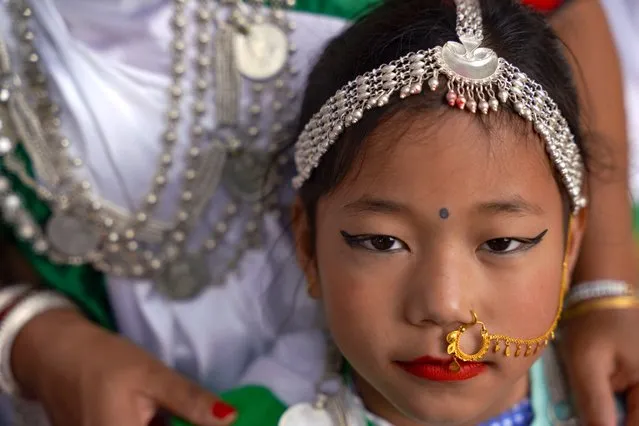
A girl from the Tharu community takes part in a ritual during the Shama Chakewa festival to honor the relationship between brothers and sisters in Kathmandu on November 8, 2022. (Photo by Skanda Gautam/ZUMA Press Wire/Rex Features/Shutterstock)
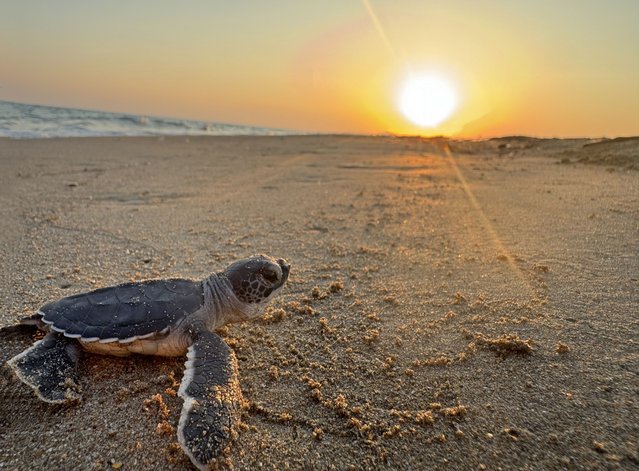
An endangered baby turtle hatched from its egg in its nest on the Belek coast, is trying to reach the open sea by walking along the beach in Antalya, Turkiye on August 05, 2025. In the Belek and Kizilot region, one of the largest nesting areas in the Mediterranean, many baby turtles continue to meet the sea. (Photo by Tahsin Ceylan/Anadolu via Getty Images)
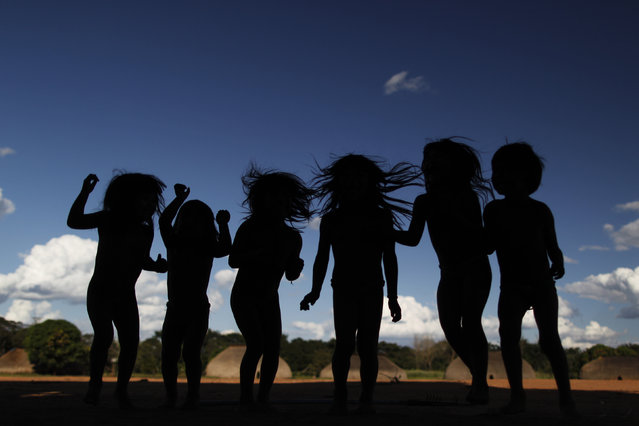
Yawalapiti children play during the preparations for the celebration of “quarup”, a ritual held to honor in death a person of great importance to them, in the Xingu National Park, Mato Grosso State, May 7, 2012. (Photo by Ueslei Marcelino/Reuters)
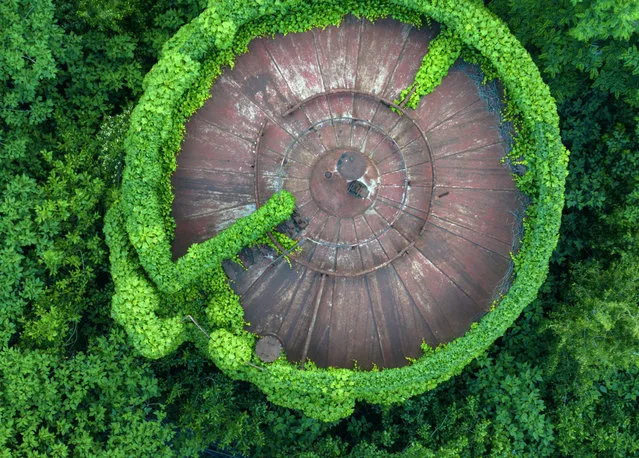
A row of abandoned oil tanks is filled with creepers on the riverside of Liyun River in Huai 'an, East China's Jiangsu Province, May 9, 2023. (Photo credit should read CFOTO/Future Publishing via Getty Images)
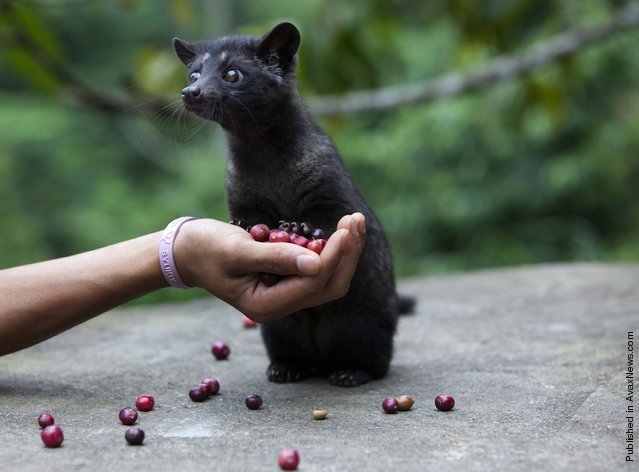
“Kopi luwak (Malay pronunciation), or civet coffee, is one of the world's most expensive and low-production coffee. It is made from the beans of coffee berries which have been eaten by the Asian Palm Civet (Paradoxurus hermaphroditus) and other related civets, then passed through its digestive tract. ...