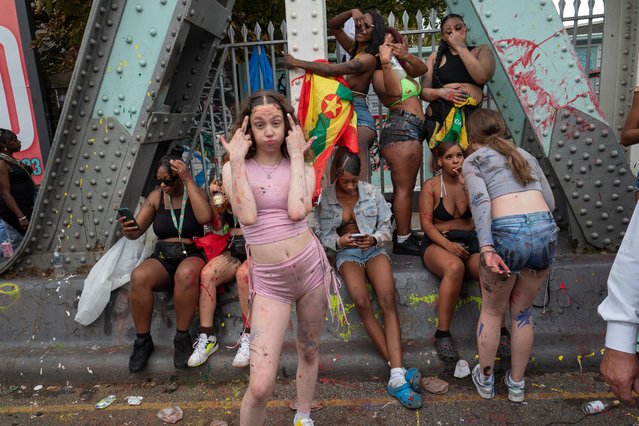
Paint-splattered revellers take a break at the Notting Hill carnival in West London in the last decade of August 2022. (Photo by Andy Hall/The Observer)
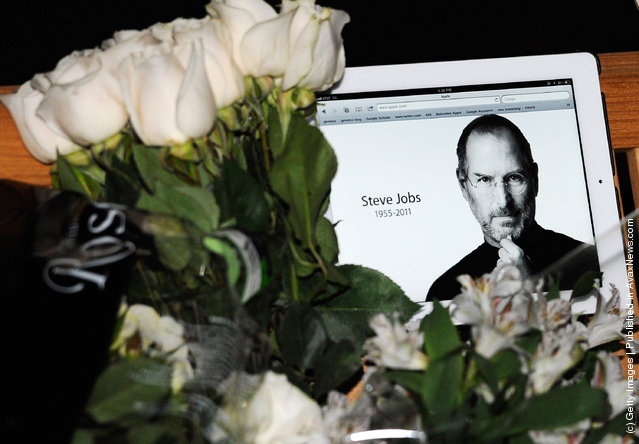
Flowers and an iPad showing a picture of Steve Jobs are placed at a makeshift memorial for Steve Jobs at the Apple headquarters on October 5, 2011 in Cupertino, California. Jobs, 56, passed away after a long battle with pancreatic cancer... (Photo by Kevork Djansezian/Getty Images)
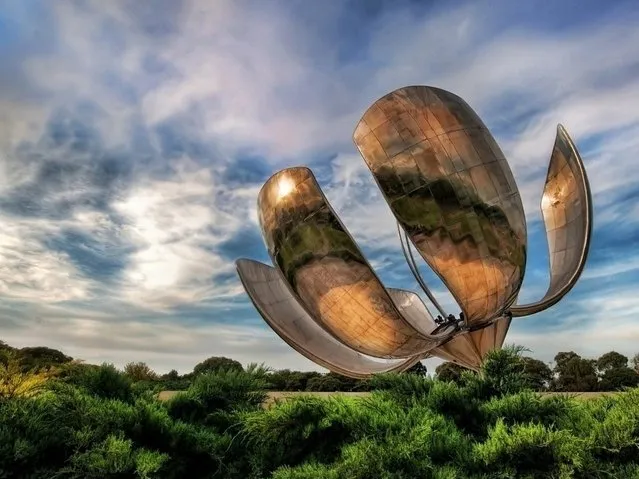
Floralis Genérica is a sculpture made of steel and aluminum located in Plaza de las Naciones Unidas, Avenida Figueroa Alcorta, Buenos Aires, a gift to the city by the Argentine architect Eduardo Catalano. Catalano once said that the flower "is a synthesis of all the flowers and is both a hope that is reborn every day to open." It was created in 2002. The sculpture moves closing its petals in the evening and opening them in the morning, although this mechanism is currently disabled. The sculpture is located in the center of a park of four acres of wooded boundaries, surrounded by paths that get closer and provide different perspectives of the monument, and placed above a reflecting pool, which apart from fulfilling its aesthetic function, protects it. It represents a large flower made of stainless steel with aluminum skeleton and reinforced concrete, which looks at the sky, extending to it its six petals. Weighs eighteen tons and is 23 meters high.
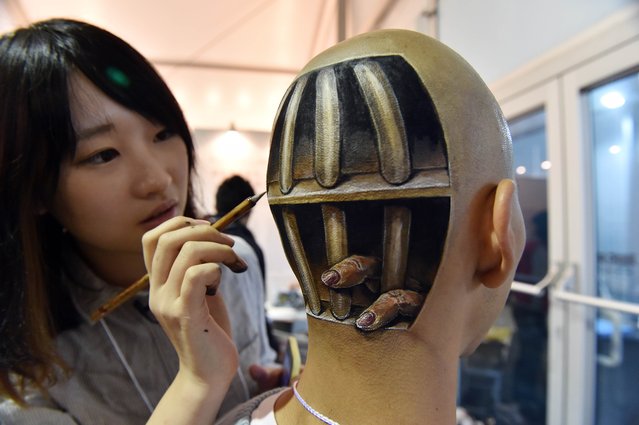
This picture taken on November 1, 2014 shows Japanese body-painting artist Hikaru Cho (L) adding the finishing touches to a body painting of fingers sticking out from prison cell bars on the head of Ryonosuke Tanaka during “Tokyo Designers Week” in Tokyo. Cho, 21, was born to Chinese parents in Japan and burst onto Tokyo's art scene when she entered the city's Musashino Art University in 2012. Cho's ultimate ambition is to paint an entire – and naked – body. (Photo by Yoshikazu Tsuno/AFP Photo)