Loading...
Done
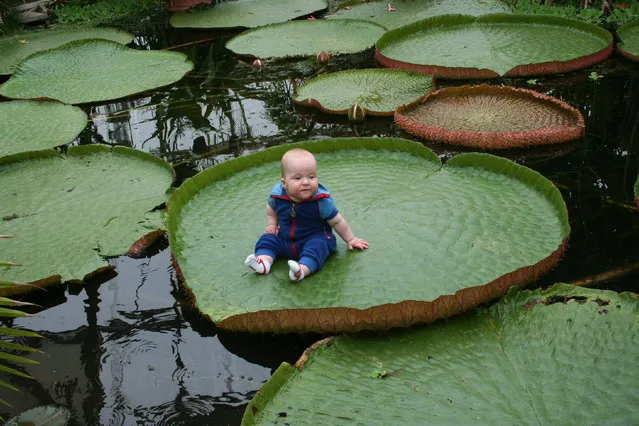
Victoria amazonica

The species has very large leaves, up to 3 m in diameter, that float on the water's surface on a submerged stalk, 7–8 m in length. The species was once called Victoria regia after Queen Victoria, but the name was superseded. V. amazonica is native to the shallow waters of the Amazon River basin, such as oxbow lakes and bayous. It is depicted in the Guyanese coat of arms. The flowers are white the first night they are open and become pink the second night. They are up to 40 cm in diameter, and are pollinated by beetles.
Details
03 Sep 2012 06:58:00


Retired teacher Geoff Ostling displays his tattooed skin at a portrait session at his home in Petersham on May 11, 2009 in Sydney, Australia. The 62-year old has pledged to donate his skin to the National Gallery in Canberra after his death. Ostling, who did not get his first tattoo until he was in his forties, is now covered in the artwork by artist eX de Merci from neck to ankle with the theme 'all the flowers of a Sydney garden'. (Photo by Lisa Maree Williams/Getty Images)
Details
15 Jun 2011 10:22:00
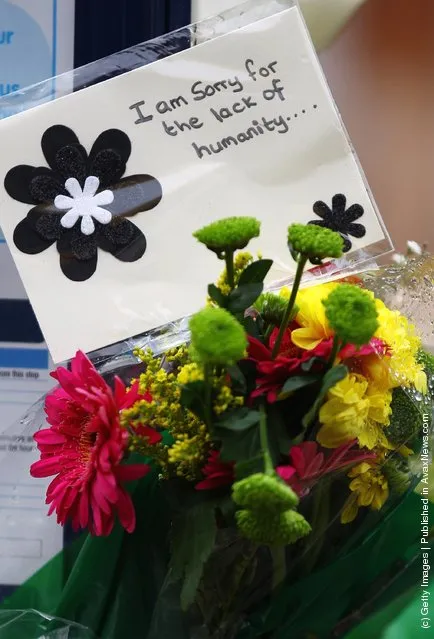
Respects Are Paid To Three Killed In Hit And Run During Birmingham Riot

Flowers are left at the scene of a hit and run following civil disturbances in the Winson Green area on August 11, 2011 in Birmingham, England. Police are continuing investigations after three people – reportedly trying to protect shops from rioting and looting in Dudley Road – were struck by a car. Police have so far arrested over 1,000 people following rioting which erupted over a four-day period across the UK. (Photo by Jeff J Mitchell/Getty Images)
Details
11 Aug 2011 14:14:00
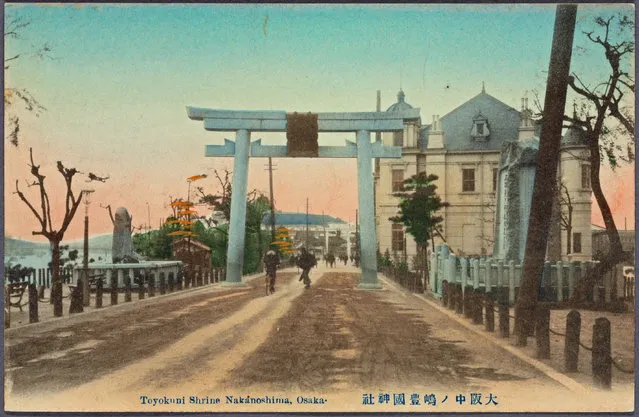
Toyokuni Shrine Nakanoshima, Osaka, Japan. (Photo by New York Public Library/Caters News)

These timeless postcards offer an eye-opening glimpse into life in Japan in the early 20th century. Taken from hand-colored photographs, the postcards showcase the still beauty of the country, depicting a nation on the cusp of modernization. The images feature solemn fishermen, bustling streets, temples and shrines: a country yet to be influenced by Western culture. The tinting effect brings out the rich colors of the natural surroundings, with trees, flowers and cherry blossoms jumping from the original black-and-white images. Here: Toyokuni Shrine Nakanoshima, Osaka, Japan. (Photo by New York Public Library/Caters News)
Details
02 Apr 2016 09:33:00
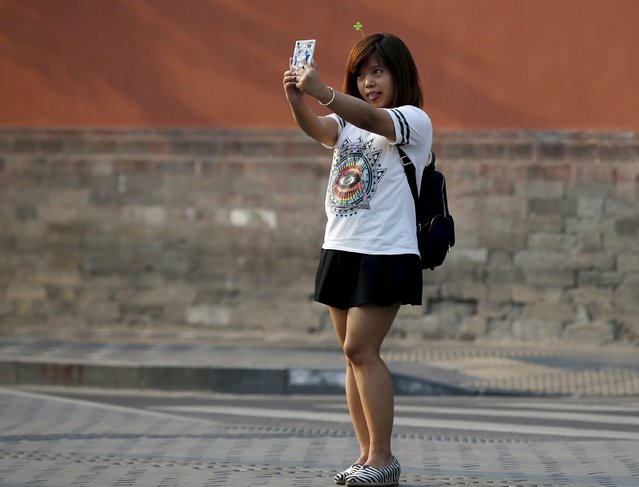
A woman wearing a four-leaf clover-like hairpin takes a selfie nearby Nanluoguxiang street in Beijing, China, September 16, 2015. (Photo by Kim Kyung-Hoon/Reuters)

A woman wearing a four-leaf clover-like hairpin takes a selfie nearby Nanluoguxiang street in Beijing, China, September 16, 2015. Wearing antenna styled hairpins in the shape of various flowers and plants at scenic spots has become a new trend in Beijing. (Photo by Kim Kyung-Hoon/Reuters)
Details
18 Sep 2015 15:08:00
“Stonedog”. (Photo by Vincent Bal/The Guardian)

Earlier this year, Belgian film-maker and artist Vincent Bal stumbled upon an uncanny resemblance to an elephant in the shadow of his tea cup. This gave him the idea for Shadowology, a series of doodles that interact with the shadows of simple, everyday objects: a banknote, some ice cubes and a flower, for example, can turn into a church, a woman and a hippy. “I draw a few lines and I get my image. It’s really the shadows that inspire me”, Bal says. Here: “Stonedog”. (Photo by Vincent Bal/The Guardian)
Details
02 Oct 2016 08:28:00
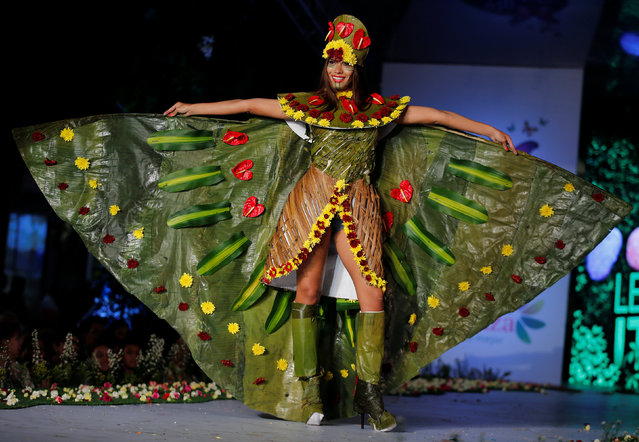
A model presents a creation during the Biofashion show, which features designs made from plants, recycled and natural materials, in Cali, Colombia, November 19, 2016. (Photo by Jaime Saldarriaga/Reuters)

A model presents a creation during the Biofashion show, which features designs made from plants, recycled and natural materials, in Cali, Colombia, November 19, 2016. BioFashion is an environmental initiative that seeks to create awareness about the preservation and management of natural resources where new designers develop dresses made with living plants, flowers and organic elements. (Photo by Jaime Saldarriaga/Reuters)
Details
21 Nov 2016 10:37:00
A follower of the Afro-Brazilian religion Umbanda pays tribute for Iemanja, goddess of the sea, in Copacabana Beach in Rio de Janeiro, Brazil December 29, 2017. (Photo by Ricardo Moraes/Reuters)

A follower of the Afro-Brazilian religion Umbanda pays tribute for Iemanja, goddess of the sea, in Copacabana Beach in Rio de Janeiro, Brazil December 29, 2017. Hundreds of practitioners of Brazil's Afro-Brazilian Candomble and Umbanda faiths have gathered at Rio de Janeiro's Copacabana beach to honor Yemanja. Worshippers were mostly dressed in white as they launched their offerings to Iemanja: small boats with flowers and bowls with candles and fruits. (Photo by Ricardo Moraes/Reuters)
Details
30 Dec 2017 06:22:00