Loading...
Done
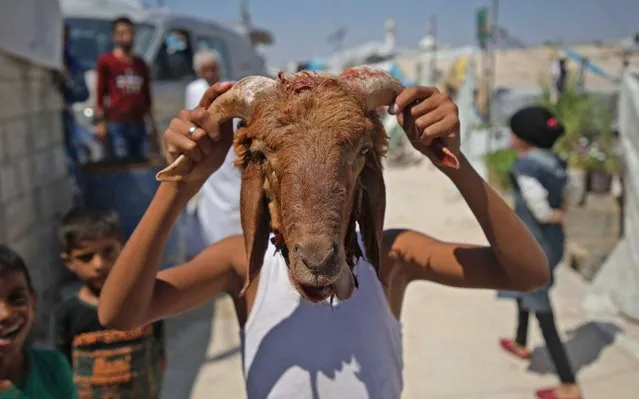
A Syrian boy plays with the head of a sacrificed sheep at a DIP camp for Interally Displaced Persons near the town of Aqrabat in Syria's northern Idlib province on August 12, 2019. Known as the “big” festival, Eid Al-Adha is celebrated each year by Muslims sacrificing various animals according to religious traditions, including cows, camels, goats and sheep. The festival marks the end of the Hajj pilgrimage to Mecca and commemorates Prophet Abraham's readiness to sacrifice his son to show obedience to God. (Photo by Aaref Watad/AFP Photo)

A Syrian boy plays with the head of a sacrificed sheep at a DIP camp for Interally Displaced Persons near the town of Aqrabat in Syria's northern Idlib province on August 12, 2019. Known as the “big” festival, Eid Al-Adha is celebrated each year by Muslims sacrificing various animals according to religious traditions, including cows, camels, goats and sheep. The festival marks the end of the Hajj pilgrimage to Mecca and commemorates Prophet Abraham's readiness to sacrifice his son to show obedience to God. (Photo by Aaref Watad/AFP Photo)
Details
15 Aug 2019 00:05:00
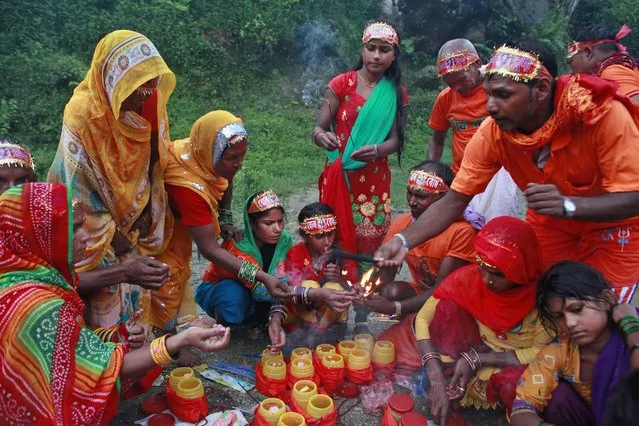
Hindu devotees perform rituals during the Bol Bom pilgrimage, on the outskirts of Kathmandu, Nepal, Monday, August 8, 2016. During this pilgrimage, devotees walk miles barefooted before offering water collected from Bagmati river, at the Pashupatinath temple in Katmandu. Shravan Somwar or Monday of Hindu calendar month of Shravan is considered auspicious for offering prayers to Lord Shiva, the god of destruction. (Photo by Niranjan Shrestha/AP Photo)

Hindu devotees perform rituals during the Bol Bom pilgrimage, on the outskirts of Kathmandu, Nepal, Monday, August 8, 2016. During this pilgrimage, devotees walk miles barefooted before offering water collected from Bagmati river, at the Pashupatinath temple in Katmandu. Shravan Somwar or Monday of Hindu calendar month of Shravan is considered auspicious for offering prayers to Lord Shiva, the god of destruction. (Photo by Niranjan Shrestha/AP Photo)
Details
09 Aug 2016 12:42:00
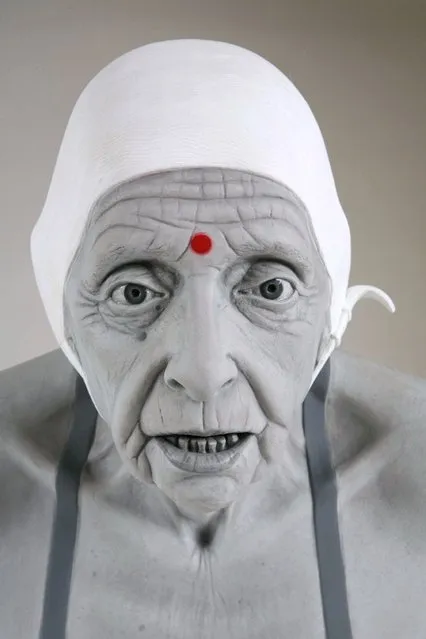
Dive by Tip Toland

Tip Toland is a sculptor and instructor living in the Seattle, Washington area. Her current focus is figurative ceramic sculpture. Tip is represented by the Nancy Margolis Gallery in New York City.

Photo: “Letter to God”, 2011. Stoneware, paint, chalk pastel, hair. (Photo by Tip Toland/Marie-Andrée Côté)
Details
02 Jun 2012 11:16:00


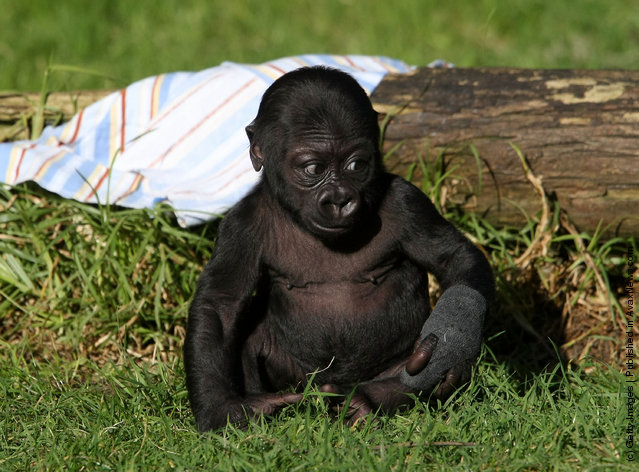
A three month-old baby gorilla named Hasani sits in the grass March 11, 2009 at the San Francisco Zoo in San Francisco, California. The newborn gorilla was given the name Hasani. Hasani's father, a twenty seven year-old gorilla named Oscar Jonsey, picked between five color coded cantaloupes representing the five name finalists to come up with the newborn's name that was submitted by Amanda VerPloeg of Oskaloosa, Iowa. (Photo by Justin Sullivan/Getty Images)
Details
30 Mar 2011 13:46:00
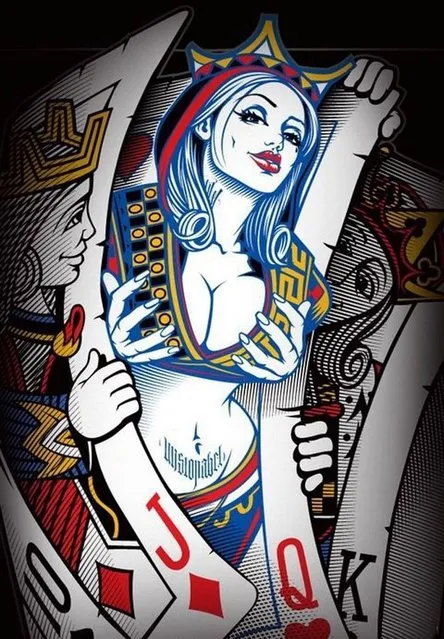
Cards Poker By Og Abel

The great vector artist OG Abel was a diamond in the rough. Growing up in violent surroundings, OG Abel found shelter in art. With an unsupportive father who always told him artist die broke, his only creative activity was strongly connected to religion. Having a church-going mother, OG Abel says he would spend hour drawing images from the Bible, his favorite pictures being those of animals, especially lions. He would also study the elaborate paintings in churches, the architecture, and/or the sculptures.
Details
15 Sep 2014 11:22:00
Tsukimi Ayano steps out of her house in the village of Nagoro on Shikoku Island in southern Japan February 24, 2015. (Photo by Thomas Peter/Reuters)

Tsukimi Ayano steps out of her house in the village of Nagoro on Shikoku Island in southern Japan February 24, 2015. Tsukimi Ayano made her first scarecrow 13 years ago to frighten off birds pecking at seeds in her garden. The life-sized straw doll resembled her father, so she made more. Today, the tiny village of Nagoro in southern Japan is teeming with Ayano's hand-sewn creations, frozen in time for a tableau that captures the motions of everyday life. (Photo by Thomas Peter/Reuters)
Details
17 Mar 2015 12:38:00
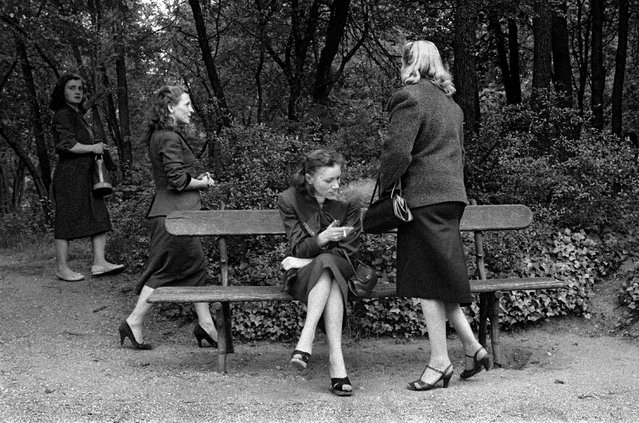
Horvat started out as a photojournalist. Meeting Henri Cartier-Bresson in 1951 proved to be a milestone in his career, leading to a two-year trip to Asia and exhibiting internationally, including in the 1955 show The Family of Man at New York's Museum of Modern Art. Here: Prostitutes, Bois de Boulogne, 1956. (Photo by Frank Horvat/The Guardian)

Born in 1958 in Abbazia, Italy, Frank Horvat is considered one of the founding fathers of French fashion photography. Frank Horvat: Storia di un Fotografo is on at Palazzo Chiablese Musei Reali, Turin, until 16 June. Here: Prostitutes, Bois de Boulogne, 1956. (Photo by Frank Horvat/The Guardian)
Details
01 Jun 2018 00:05:00
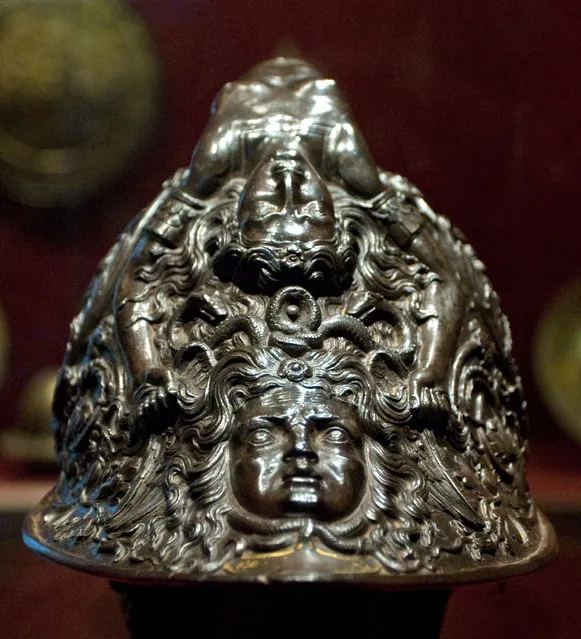
Heroic Armor Of The Italian Renaissance By Filippo Negroli

Filippo Negroli (ca. 1510–1579) was an armourer from Milan. He was renowned as being extremely skilled, and may be considered the most famous armourer of all time. Working together with his younger brothers Giovan Battista (ca. 1511-1591) and Francesco (ca. 1522-1600) in the Negroli family workshop headed by their father Gian Giacomo Negroli (ca. 1463-1543), Filippo was specialized in repoussé of armour, whereas his brother Francesco was renowned for his damascening skills.
Details
21 Aug 2015 10:59:00