Loading...
Done
Centre of the Heart Nebula by Ivan Eder (Hungary). Situated 7500 light years away in the ‘W’-shaped constellation of Cassiopeia, the Heart Nebula is a vast region of glowing gas, energized by a cluster of young stars at its centre. The image depicts the central region, where dust clouds are being eroded and moulded into rugged shapes by the searing cosmic radiation. (Photo by Ivan Eder)

The competition, which is run by the Royal Observatory Greenwich in association with BBC Sky at Night Magazine, is now in its sixth year and has received over 2,500 entries. Photo: Centre of the Heart Nebula by Ivan Eder (Hungary). Situated 7500 light years away in the “W”-shaped constellation of Cassiopeia, the Heart Nebula is a vast region of glowing gas, energized by a cluster of young stars at its centre. The image depicts the central region, where dust clouds are being eroded and moulded into rugged shapes by the searing cosmic radiation. (Photo by Ivan Eder)
Details
03 Jul 2014 11:59:00
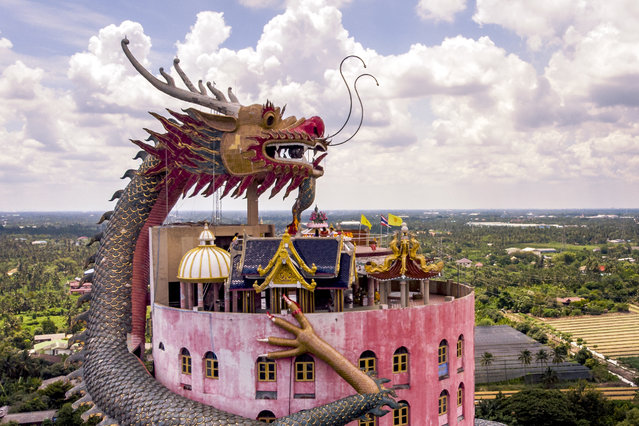
An aerial view taken on September 11, 2020 shows the Buddhist temple Wat Samphran (Dragon Temple) in Nakhon Pathom, some 40km west of Bangkok. Wat Samphran is a popular tourist destination with visitors coming to see the huge dragon figure curling around a pink cylindrical building next to the Buddha statues and places of worship of the traditional Buddhist temple complex. (Photo by Mladen Antonov/AFP Photo)

An aerial view taken on September 11, 2020 shows the Buddhist temple Wat Samphran (Dragon Temple) in Nakhon Pathom, some 40km west of Bangkok. Wat Samphran is a popular tourist destination with visitors coming to see the huge dragon figure curling around a pink cylindrical building next to the Buddha statues and places of worship of the traditional Buddhist temple complex. (Photo by Mladen Antonov/AFP Photo)
Details
25 Sep 2020 00:01:00
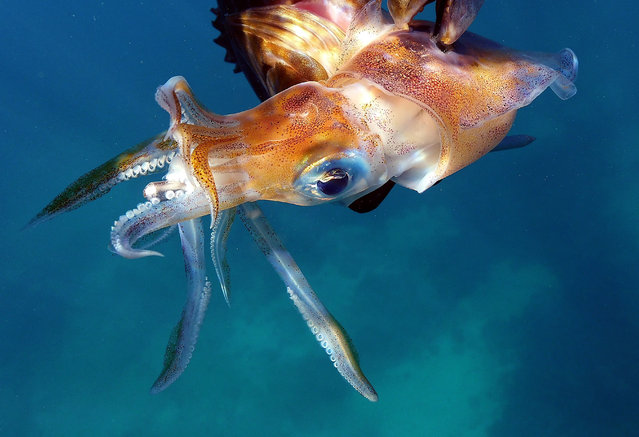
A squid swims underwater off the shore of the coastal city of Qalamun, north of the Lebanese capital Beirut, on September 24, 2019. (Photo by Ibrahim Chalhoub/AFP Photo)

A squid swims underwater off the shore of the coastal city of Qalamun, north of the Lebanese capital Beirut, on September 24, 2019. (Photo by Ibrahim Chalhoub/AFP Photo)
Details
06 Oct 2019 00:03:00
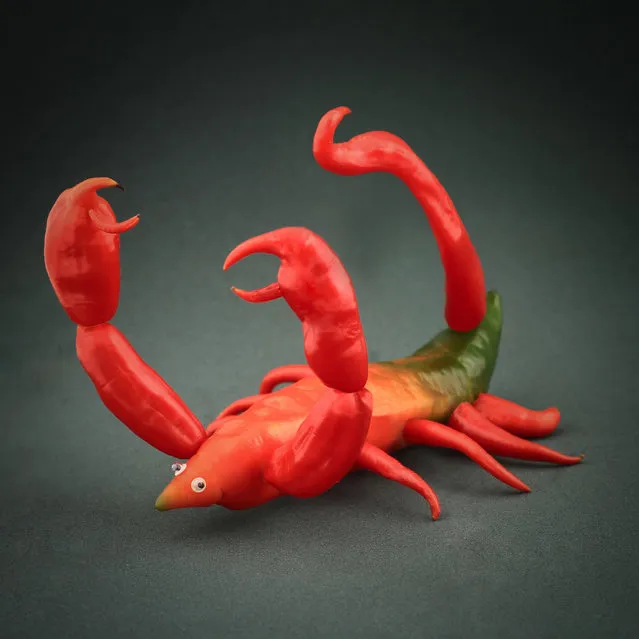
“Red Pepperpion. (Photo by Vanessa Dualib)

“Red Pepperpion. Red Pepperpions are secretive, nocturnal arachilli which can be spotted in kitchens of arid climates all around the world.

Red Pepperpions are equipped with a delicious (and depending on the quantity...deadly!) stinger at the end of its tail. If you happen to get bitten (or if you bite him!) it will produce a burning sensation on your taste nerves.

However, there is no need to worry, since the fact is that his potent stinger is usually only used when hunting or whenever the Pepperpion feels like he might become part of someones meal...

At daylight or when encountering a larger foe, such as a Saucier Chef, they retreat into burrows inside the fridge or hide beneath the oven”. (Photo and comment by Vanessa Dualib)


Details
08 Feb 2013 09:24:00
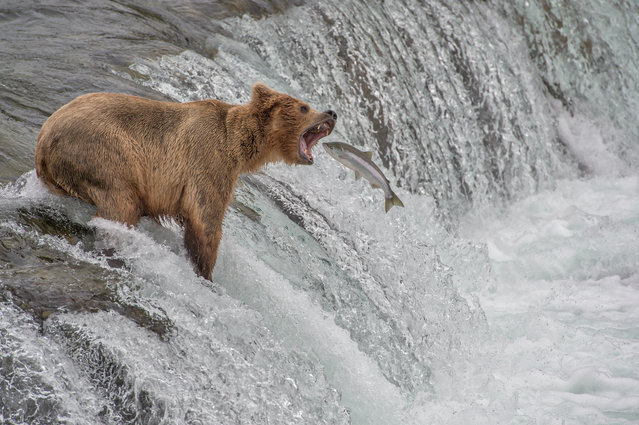
“Catch of the Decade”. Can you guess what happened next? Photo location: Katmai National Park, Alaska, USA. (Photo and caption by Aaron Baggenstos/National Geographic Photo Contest)

“Catch of the Decade”. Can you guess what happened next? Photo location: Katmai National Park, Alaska, USA. (Photo and caption by Aaron Baggenstos/National Geographic Photo Contest)
Details
30 Sep 2014 08:47:00
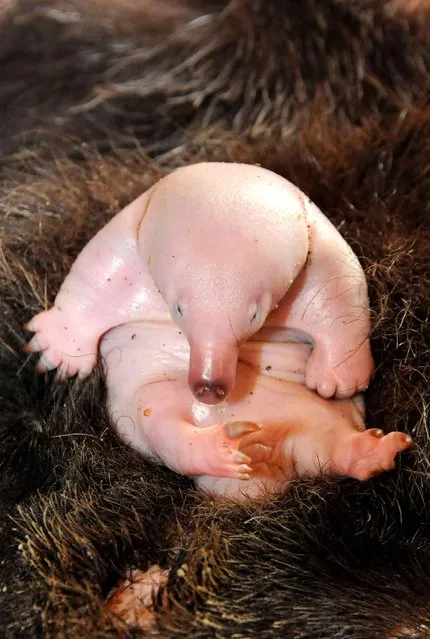
It's a 30-day-old Echidna baby, known as a “puggle” – one of only 24 ever bred in captivity. The proud parents are Tippy and Pickle of Australia Zoo. The tiny baby, whose s*x has not yet been identified, hatched from a soft egg and will continue to develop and nurse inside Tippy's warm pouch. (Photo by Australia Zoo/Rex/Sipa Press)

It's a 30-day-old Echidna baby, known as a “puggle” – one of only 24 ever bred in captivity. The proud parents are Tippy and Pickle of Australia Zoo. The tiny baby, whose s*x has not yet been identified, hatched from a soft egg and will continue to develop and nurse inside Tippy's warm pouch. (Photo by Australia Zoo/Rex/Sipa Press)
Details
21 Sep 2013 10:30:00
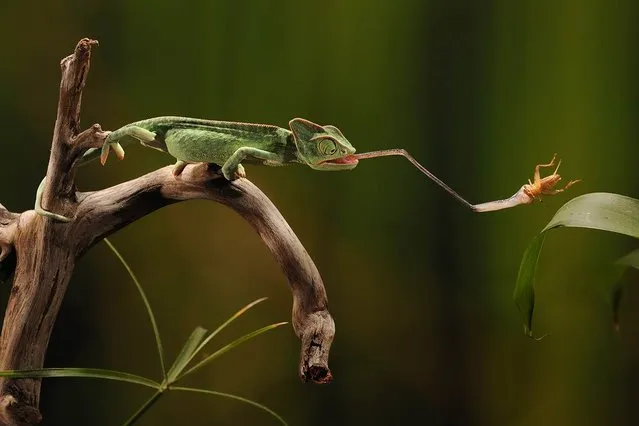
A veiled chameleon extends its tongue to catch a cricket

“Scott Linstead is an internationally published, freelance wildlife photographer/writer. His clients include Natural History Magazine, Hewlett Packard, Ranger Rick Magazine and a number of wildlife publications in North America and Europe. Scott's column on the techniques of bird photography appears in every issue of Outdoor Photography Canada”.

Photo: A veiled chameleon extends its tongue to catch a cricket. Canadian wildlife photographer Scott Linstead, formerly an aerospace engineer and high school teacher, uses a device called Phototrap “to not only photograph the elusive, but also the unimaginably quick”. (Photo by Scott Linstead)
Details
22 May 2012 11:32:00
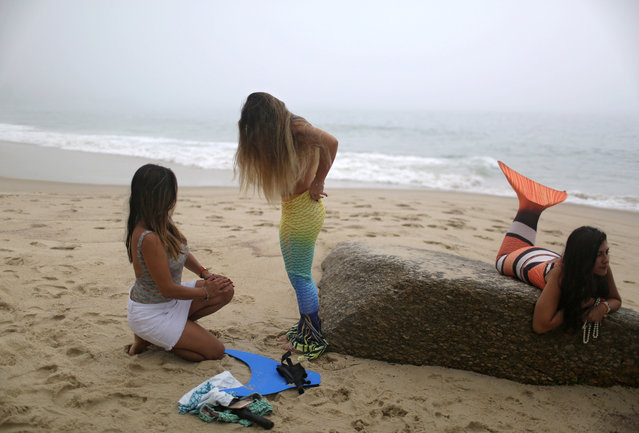
Girls prepare to take part in a mermaid lesson in Rio de Janeiro, Brazil May 28, 2017. (Photo by Pilar Olivares/Reuters)

Girls prepare to take part in a mermaid lesson in Rio de Janeiro, Brazil May 28, 2017. Women in Brazil are not unique in their affinity for mermaiding. Classes are held as far away as Texas and some folks wonder if mermaiding will be the next fitness craze. (Photo by Pilar Olivares/Reuters)
Details
14 Aug 2017 07:11:00