Loading...
Done
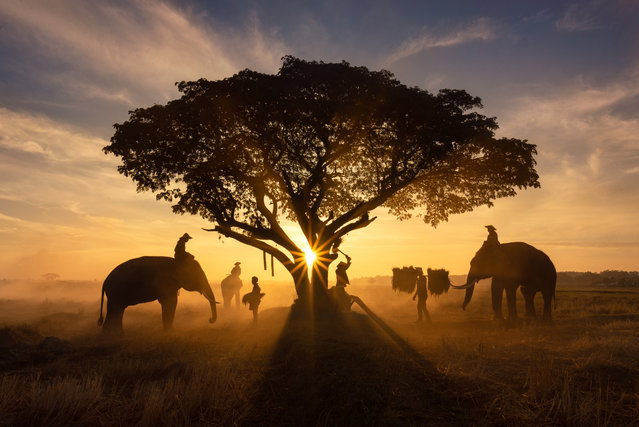
These eye-catching photographs capture the special relationship between a group of farmers and elephants – with a gorgeous sunset in the background. Vithun Khamsong, a civil engineer, shot the images earlier this year while visiting Surin, Thailand. Khamsong said: “My favorite is the one where the sunset can be seen behind the man and the elephant. I was impressed and wanted to capture this lifestyle for other people see it”. (Photo by Vithun Khamsong/Caters News Agency)

These eye-catching photographs capture the special relationship between a group of farmers and elephants – with a gorgeous sunset in the background. Vithun Khamsong, a civil engineer, shot the images earlier this year while visiting Surin, Thailand. (Photo by Vithun Khamsong/Caters News Agency)
Details
11 Sep 2019 00:03:00
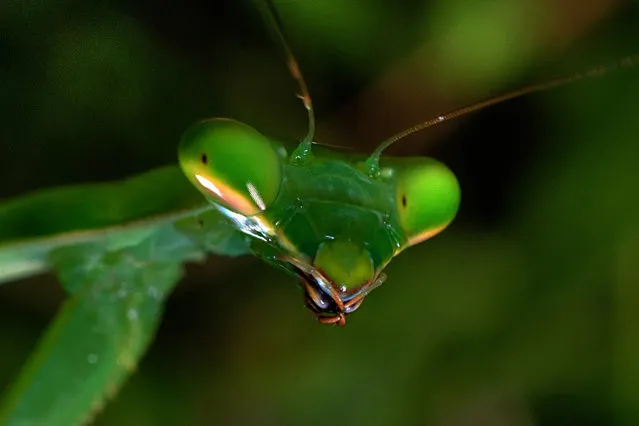
Close Encounter of the Insect Kind: Check out the awesome face on this praying mantis. I can't get over the mouth, it's like something from a science fiction movie. Of all photographic styles macro is definitely my favorite. I am constantly amazed, in every photo that I take, by the intricate level of detail that exists on even the smallest of creatures. It's a stark reminder that a very complex and infinitely beautiful world exists just beyond our human-sized level of perception. Photo taken in Donnybrook, Queensland, Australia. (Photo by Andrew Young/National Geographic Photo Contest

Close Encounter of the Insect Kind: “Check out the awesome face on this praying mantis. I can't get over the mouth, it's like something from a science fiction movie. Of all photographic styles macro is definitely my favorite. I am constantly amazed, in every photo that I take, by the intricate level of detail that exists on even the smallest of creatures. It's a stark reminder that a very complex and infinitely beautiful world exists just beyond our human-sized level of perception. Photo taken in Donnybrook, Queensland, Australia” – Andrew Young. (Photo by Andrew Young/National Geographic Photo Contest via The Atlantic)
Details
24 Sep 2012 09:18:00
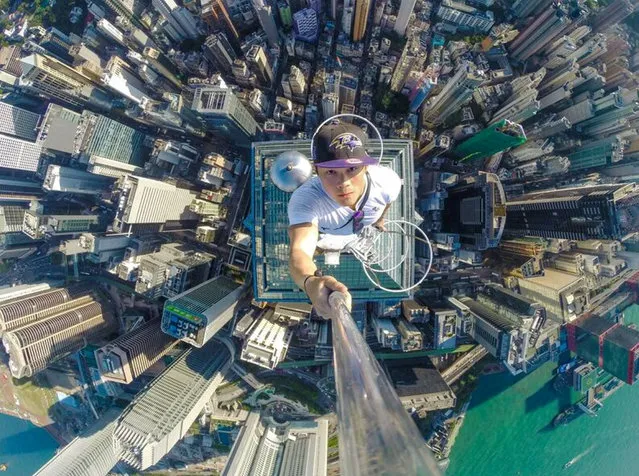
Roof-topping enthusiast Daniel Lau takes a selfie with high-rise buildings down below as he stands on the top of a skyscraper in Hong Kong, China on August 15, 2017. Welcome to “roof-topping”, where daredevils take pictures of themselves standing on the tops of tall buildings, or in some cases even dangling from them, without any safety equipment. A craze that began in Russia has now taken hold in Hong Kong, one of the world's most vertical cities, with dramatic results. “I'm an explorer”, said Daniel Lau, one of the three who climbed to the top of The Center. A student, he said roof-topping was “a getaway from my structured life”. “Before doing this, I lived like an ordinary person, having a boring life”, he said. “I wanted to do something special, something memorable. I want to let people see Hong Kong, the place they are living, from a new perspective”. Mr Lau said he had been inspired by Russian climbers and that he was unafraid of the vertiginous heights he scales. (Photo by ImagineChina/Rex Features/Shutterstock)

Roof-topping enthusiast Daniel Lau takes a selfie with high-rise buildings down below as he stands on the top of a skyscraper in Hong Kong, China on August 15, 2017. A craze that began in Russia has now taken hold in Hong Kong, one of the world's most vertical cities. Mr Lau said he had been inspired by Russian climbers and that he was unafraid of the vertiginous heights he scales. (Photo by ImagineChina/Rex Features/Shutterstock)
Details
16 Aug 2017 07:23:00
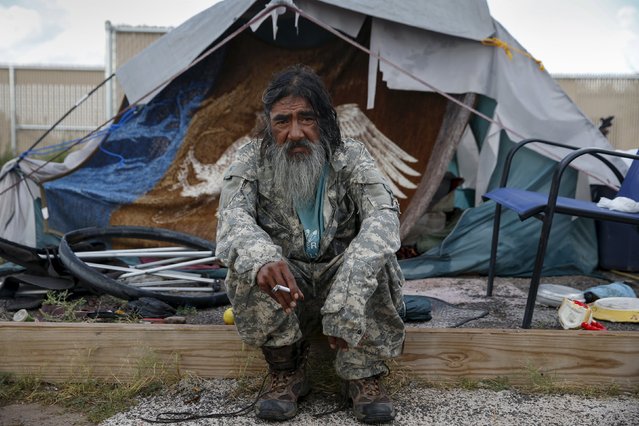
Daniel J. Wabsey, a 58-year-old war veteran, sits outside his tent at Camp Hope in Las Cruces, New Mexico October 6, 2015. “I've been traveling for 35 or 38 years. Getting inside would take a while to get used to. I just want to be able to eat, sleep and be safe. We all get along and understand in Camp Hope. We've all been there. With common sense you can survive out here”, Wabsey said. Camp Hope describe themselves as an “alternative transitional living project for the homeless”. Around 50 people live at the camp. (Photo by Shannon Stapleton/Reuters)

Daniel J. Wabsey, a 58-year-old war veteran, sits outside his tent at Camp Hope in Las Cruces, New Mexico October 6, 2015. “I've been traveling for 35 or 38 years. Getting inside would take a while to get used to. I just want to be able to eat, sleep and be safe. We all get along and understand in Camp Hope. We've all been there. With common sense you can survive out here”, Wabsey said. Camp Hope describe themselves as an “alternative transitional living project for the homeless”. Around 50 people live at the camp. (Photo by Shannon Stapleton/Reuters)
Details
19 Dec 2015 08:05:00
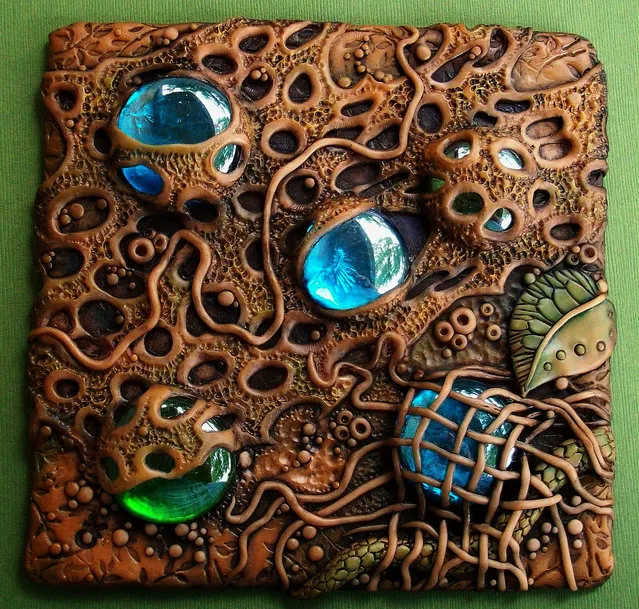
The Craft And Art Of Clay By Chris Kapono

My name is Chris Kapono and I am a self-taught artist living in Missouri. I have been drawing and painting ever since I can remember and art has been a big part of my life. My love of animals and nature is reflected in my art and sometimes interesting things I find on walks in the woods will find their way into some of my pieces!

Chris Kapono

Details
26 Aug 2015 14:25:00
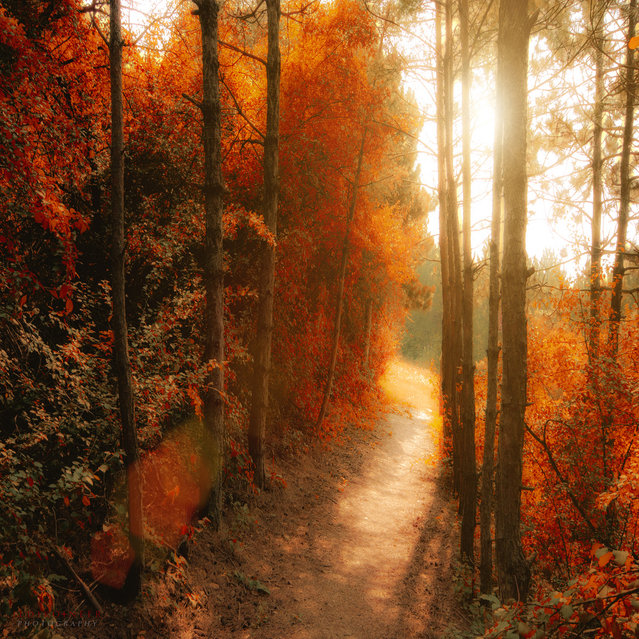
Path to the shine. (Ildiko Neer)

“I bought my first dlsr camera in 2009 may. The first part of my life is gone but the other i dedicate to photography. If i try to imagine myself, i saw someone on the road, who walking straight to the light. This kind of light is the photography and the post-processing in my life. My pictures express the feelings, moods what i felt under my trip in the last few years”. – Ildiko Neer

Photo: “Path to the shine”, 2011. (Photo by Ildiko Neer)


Details
12 Dec 2012 06:39:00
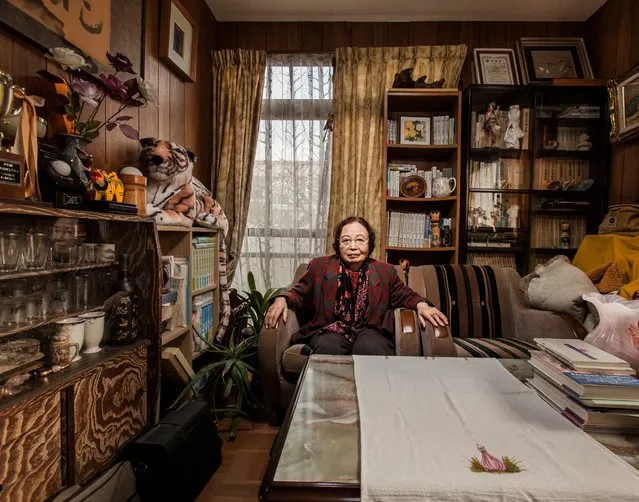
Takeoka Chisaka, Hiroshima, Japan. “One morning in August 1945, I was walking home from the night shift at a factory in Hiroshima. As I reached my door, there was a huge explosion. When I came to, my head was bleeding and I had been blasted 30m away”. (Photo and caption by Sasha Maslov)

Takeoka Chisaka, Hiroshima, Japan. “One morning in August 1945, I was walking home from the night shift at a factory in Hiroshima. As I reached my door, there was a huge explosion. When I came to, my head was bleeding and I had been blasted 30m away. The atomic bomb had detonated. When I found my mother, her eyes were badly burned. A doctor said they had to come out, but he didn’t have the proper tools so used a knife instead. It was hellish. I became a peace-worker after the war. In the 1960s, at a meeting at the UN, I met one of the people who created the atomic bomb. He apologised”. (Photo and caption by Sasha Maslov)
Details
11 May 2015 11:56:00
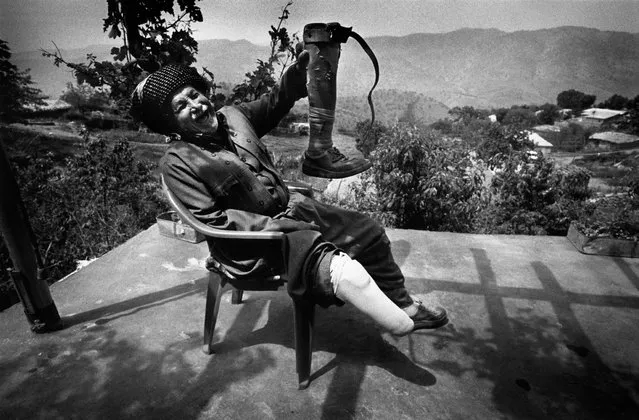
Ismail Mustafa, seen in 2007. “I was collecting mushrooms on the hill near here. I didn’t see the mine. There was a huge explosion. When I woke up I saw that both my legs were gone; I thought my life was over. My brother and another guy were with me. They made a stretcher from sticks and tied it together with clothing. It took two hours to get off the mountain. ‘My daughter has also been injured. She found a shell and brought it into the house and put it on the fire. She didn’t know what she was doing at the time – she was only three. She is blind and has lost an arm”. (Photo by Sean Sutton for the Mines Advisory Group/The Guardian)

Ismail Mustafa, seen in 2007. “I was collecting mushrooms on the hill near here. I didn’t see the mine. There was a huge explosion. When I woke up I saw that both my legs were gone; I thought my life was over. My brother and another guy were with me. They made a stretcher from sticks and tied it together with clothing. It took two hours to get off the mountain. ‘My daughter has also been injured. She found a shell and brought it into the house and put it on the fire. She didn’t know what she was doing at the time – she was only three. She is blind and has lost an arm”. (Photo by Sean Sutton for the Mines Advisory Group/The Guardian)
Details
08 Sep 2017 09:33:00