Loading...
Done
Afghanistan: Dogs of War Part 2

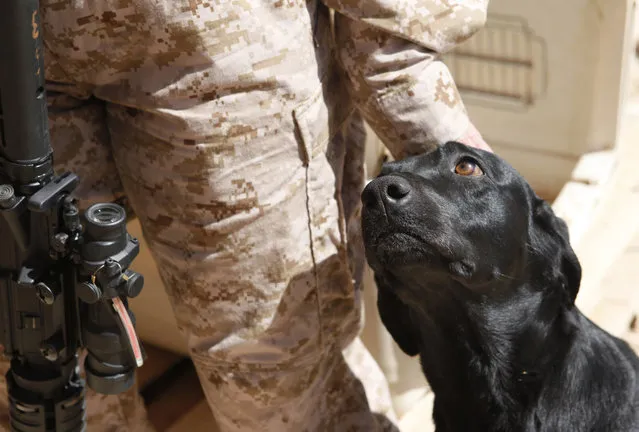
Throughout the course of the long war in Afghanistan, Coalition troops have relied on thousands of military working dogs to help keep them safe, and make their jobs easier. The dogs are trained to detect explosives, to find illegal drugs, to search for missing comrades, or target enemy combatants. Not only are they active on the front lines, but behind the lines they serve as therapy dogs, service dogs, and loyal companions. They also share the same risks as the ground troops, suffering injuries and sometimes death on the battlefields. Gathered here are images of these dogs and their handlers in Afghanistan and back home, from over the past several years, part of the ongoing series here on Afghanistan.
Details
05 Jun 2014 21:10:00
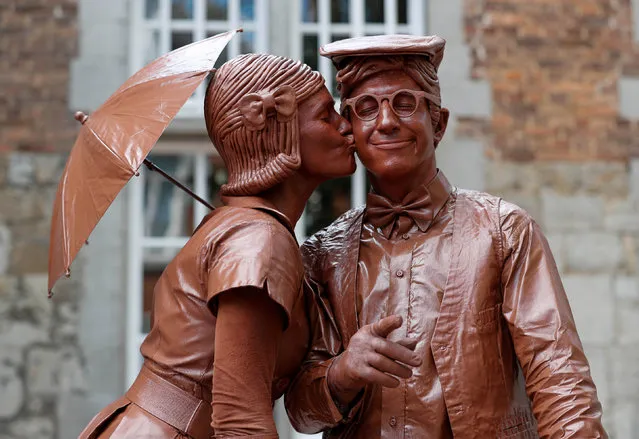
Artists called “Le couple en chocolat” take part in the festival “Statues en Marche” in Marche-en-Famenne, Belgium, July 22, 2018. (Photo by Yves Herman/Reuters)

Artists called “Le couple en chocolat” take part in the festival “Statues en Marche” in Marche-en-Famenne, Belgium, July 22, 2018. Living statues are a common sight in many city centres, but it is rare to see such a diverse range of this peculiar form of street art for which performers must keep still for painfully long periods of time to create the desired illusion. (Photo by Yves Herman/Reuters)

Details
25 Jul 2018 00:05:00
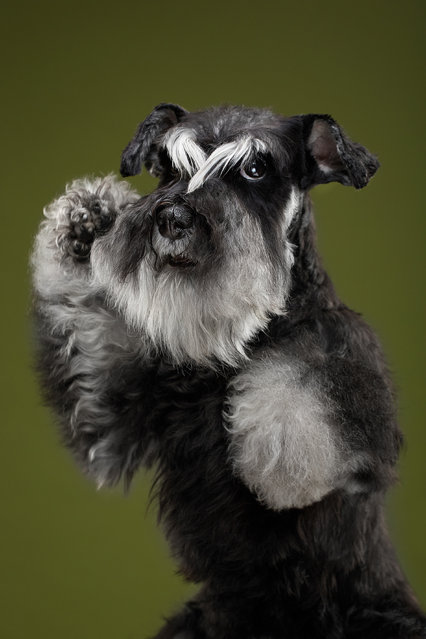
“Every dog has a certain exterior – long or short hair, light or dark, colored or monochrome – so I have to keep everything in mind during the light setup”, said Khokhlov. (Photo by Alexander Khokhlov/Veronica Ershova/Caters News Agency)

These adorable pawtraits seem to show the personalities of a variety of canines, capturing their incredible diverseness in their expressions and fine details. Khokhlov and Ershova, who are from Moscow, have taken portraits of about 50 breeds of pooches – earning much critical acclaim. (Photo by Alexander Khokhlov/Veronica Ershova/Caters News Agency)
Details
14 Aug 2018 00:05:00
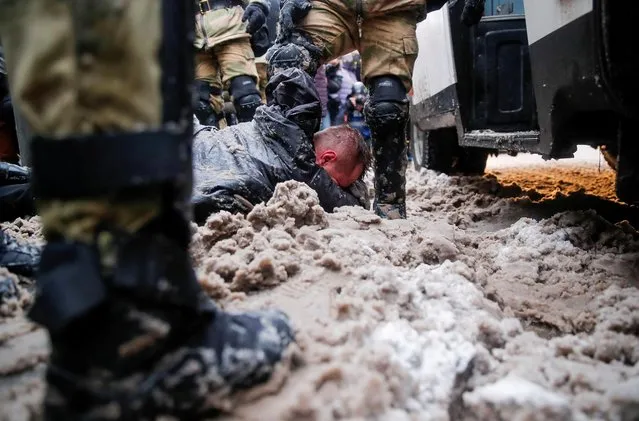
Law enforcement officers detain a man during a rally in support of jailed Russian opposition leader Alexei Navalny in Moscow, Russia on January 31, 2021. (Photo by Maxim Shemetov/Reuters)

Law enforcement officers detain a man during a rally in support of jailed Russian opposition leader Alexei Navalny in Moscow, Russia on January 31, 2021. Thousands of people have taken to the streets across Russia to demand the release of jailed opposition leader Alexei Navalny, keeping up the wave of nationwide protests that have rattled the Kremlin. Hundreds have been detained by police. (Photo by Maxim Shemetov/Reuters)
Details
01 Feb 2021 09:38:00
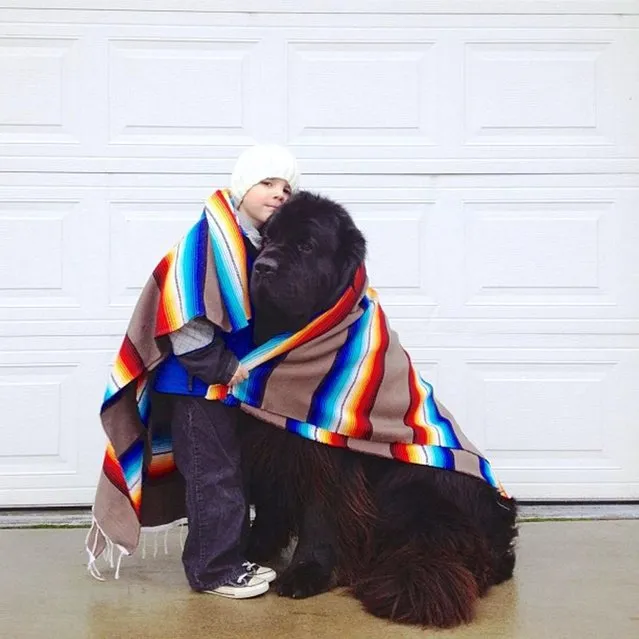
Hats off (or on) to Julian for sharing his blanket with his good buddy. Not that the furry beast needs it... (Photo by Stasha Becker/Rex Features)

Five-year-old Julian Becker and his 165 pound pet Newfoundland Max have been best buds around all their lives. To commemorate the friendship and to keep Julian's father, a Naval officer who is often away, in the loop, Julian's mom Stasha began taking photos. Photo: Hats off (or on) to Julian for sharing his blanket with his good buddy. Not that the furry beast needs it... (Photo by Stasha Becker/Rex Features)
Details
12 Apr 2013 11:29:00
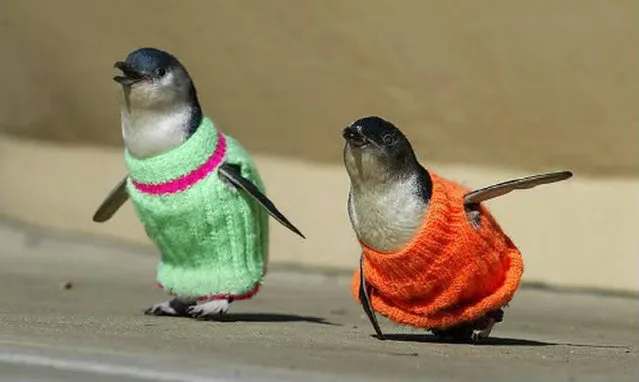
New Zealand Penguins in Need of Sweaters

Penguin sweaters, also known as penguin jumpers, are sweaters which are knitted for penguins that have been caught in oil slicks. When an oil spill affects penguins, they are dressed in knitted sweaters to stop them preening their feathers and to keep them warm, since the spilled oil destroys their natural oils. This also prevents them from poisoning themselves by ingesting the oil. The sweaters are removed and discarded as soon as the penguins can be washed. The original project has been completed, but the knitting pattern is still available on-line, as subsequent oil spills make it necessary. The extra sweaters are kept on behalf of the Wildlife Rescue Team.
Details
31 Oct 2012 13:06:00
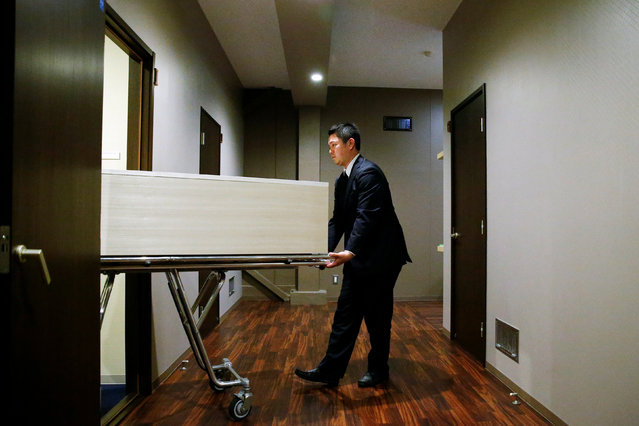
A staff member removes a coffin from a room of the “Corpse Hotel” in Kawasaki, Japan, April 20, 2016. (Photo by Thomas Peter/Reuters)

A staff member removes a coffin from a room of the “Corpse Hotel” in Kawasaki, Japan, April 20, 2016. Many so-called corpse hotels have emerged as a flourishing business in the city following a crunch in crematoriums. Families can rent a room in Sousou on a daily charge of 9,000 Japanese yen (£58, €74, $84) to keep the body of the deceased relative for up to four days until they find a crematorium. (Photo by Thomas Peter/Reuters)
Details
30 Apr 2016 09:46:00
Moon jellyfish and cross jellies. (Photo by David Hall)

David Hall’s photographs of scenery and creatures off the coast of Canada in the Pacific Northwest portray serenity under the water, which belie the extreme challenges he faces to get his images. For each shoot, Hall wears a dry suit, a neoprene body suit that covers all of his body but his head and traps air inside to keep him warm. Water temperature in Canada’s British Columbia typically ranges between 45 and 50 degrees Fahrenheit. Photo: Moon jellyfish and cross jellies. (Photo by David Hall)
Details
16 Sep 2014 12:57:00