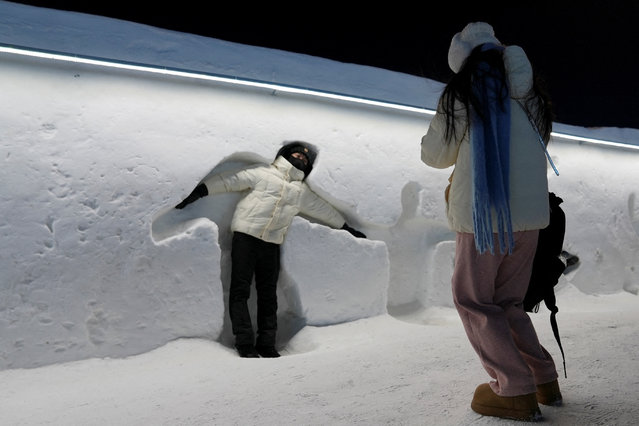
A visitor poses for pictures at the Harbin International Ice and Snow Festival in Harbin, Heilongjiang province, China on January 5, 2025. (Photo by Xiaoyu Yin/Reuters)
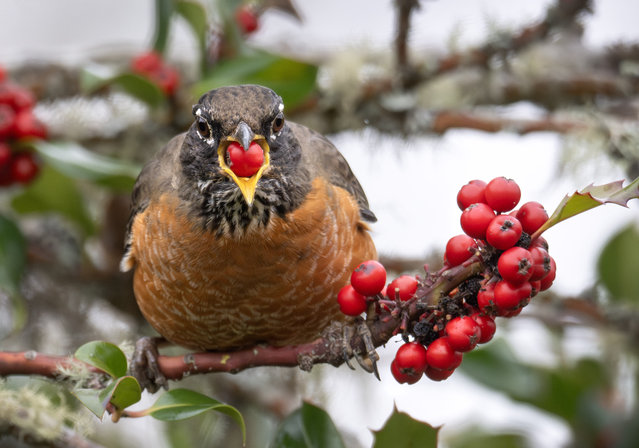
An American robin feeds on holly berries in a thicket near Elkton in southwestern Oregon on November 16, 2024. Many birds can safely consume holly berries, including blackbirds, redwings, and thrushes. There is an old wives tale that if you see a bird eating a berry, it is safe for humans to eat, but this is not true. Birds consume many plants that are poisonous to humans, holly berries included. (Photo by Robin Loznak/ZUMA Press Wire/Rex Features/Shutterstock)
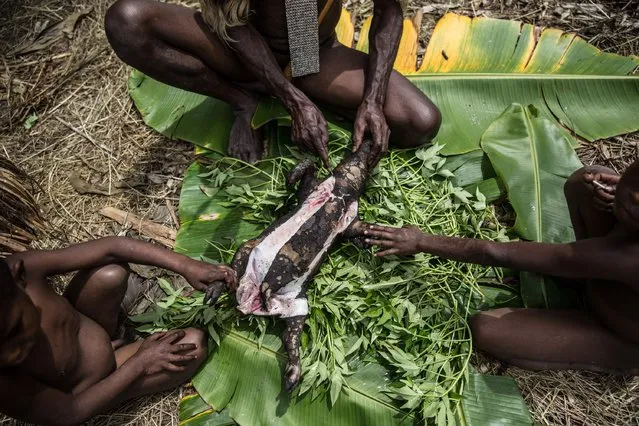
A man from the Dani tribe cuts the head of a pig after cooked by traditional way which is use burned hot stones at Obia Village on August 9, 2014 in Wamena, Papua, Indonesia. The stone-age Dani tribe live a traditional existence in the Baliem Valley, which is situated 1600 metres above sea level in the heart of the Cyclops Mountains. (Photo by Agung Parameswara/Getty Images)
Lion dance with LED lights, perform on the glass deck of the King Power Mahanakhon building, currently Thailand's tallest at 314 meters (1,030 feet) tall, Bangkok, Thailand, Monday, February 4, 2019. Chinese will celebrate the lunar new year on Feb. 5 this year which marks the Year of the Pig in the Chinese zodiac. (Photo by Sakchai Lalit/AP Photo)
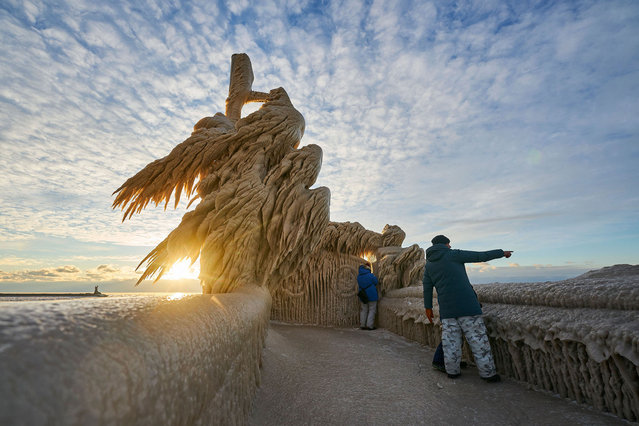
People explore the ice covered pier in Port Stanley, Ontario, Canada, on December 27, 2022. The ice formations were created by a large winter storm which hit the region on over the Christmas weekend. Temperatures were expected to moderate across the eastern and midwest US on December 27, after days of freezing weather from "the blizzard of the century" left at least 49 dead and caused Christmas travel chaos. (Photo by Geoff Robins/AFP Photo)
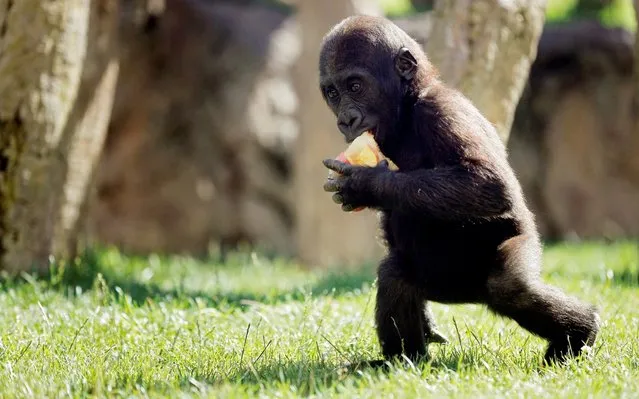
A gorilla cube named Pepe eats frozen fruit to fight high temperatures at the Bioparc zoo in Valencia, eastern Spain, 28 June 2019. Spanish peninsula is suffering a heat wave with temperatures reaching up to 45 degrees. (Photo by Kai Foersterling/EPA/EFE/Rex Features/Shutterstock)
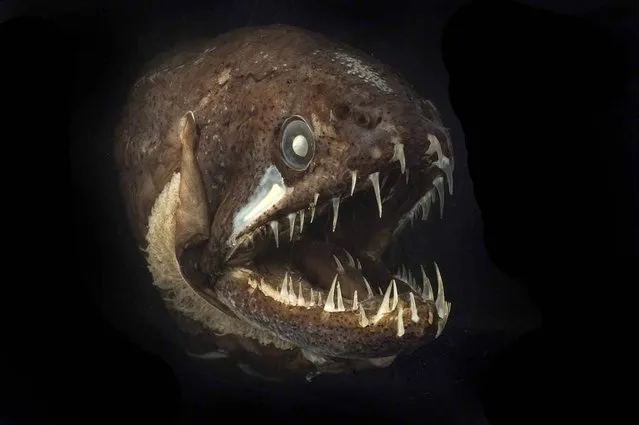
Imagine living in the sea where it is permanently dark, cold, and food is hard to find. For many animals at depth, it may be weeks to months between meals. If you find something to eat, you have to hang on to it. This is why so many deep-sea fishes have lots of big teeth. This dragonfish, spotted off the coast of Australia, even has teeth on its tongue. They would be terrifying animals ... if they weren’t the size of a banana. (Photo by Julian Finn/Museum Victoria)
Harry Sprinkle eats a meal at St. John's Bread and Life, a free meal service, on December 23, 2011 in the Brooklyn borough of New York City. St. John's Bread and Life serves approximately 2,200 meals per day; the organization has existed since 1982. (Photo by Andrew Burton/Getty Images)