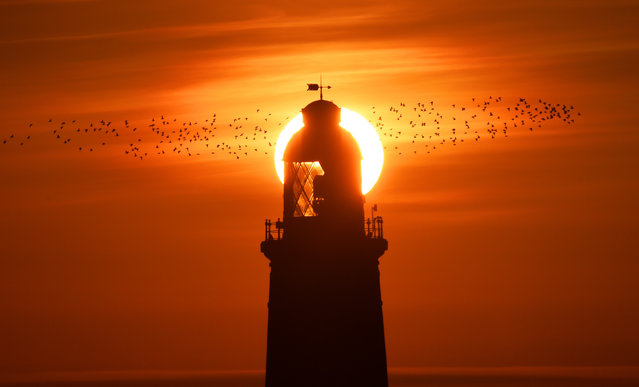
The sun rises over St Mary's Lighthouse in Whitley Bay on the Northumberland coast as a flock of Lapwing seabirds fly past on Wednesday, September 30, 2015. (Photo by Owen Humphreys/PA Wire)
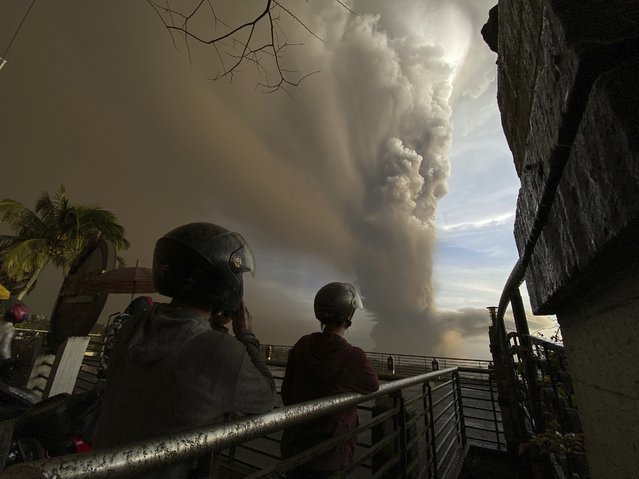
People watch plumes of smoke and ash rise from as Taal Volcano erupts Sunday January 12, 2020, in Tagaytay, Cavite province, outside Manila, Philippines. (Photo by Aaron Favila/AP Photo)
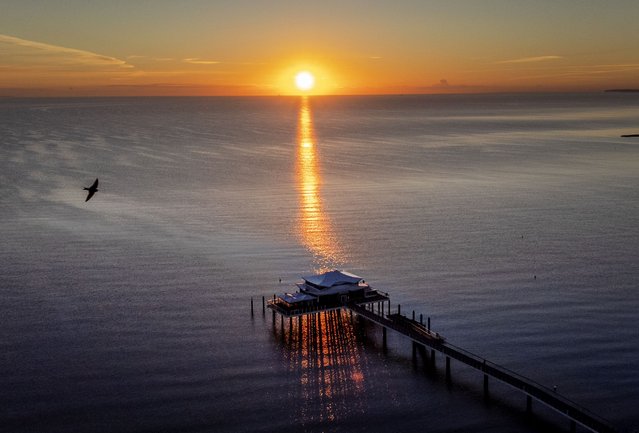
The sun rises over the Baltic Sea and a pier with a tea house in Timmendorfer Strand, Germany, Sunday, August 7, 2022. (Photo by Michael Probst/AP Photo)
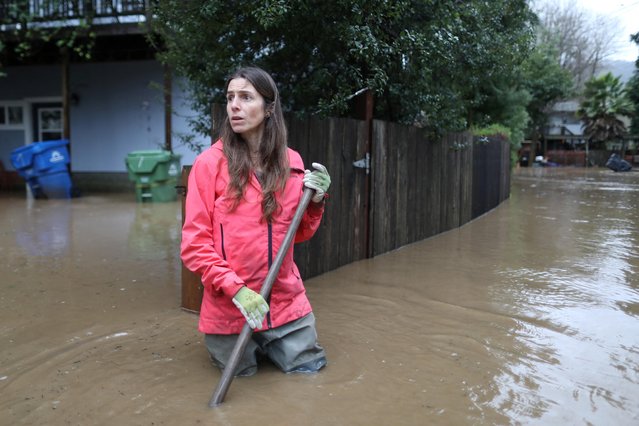
Melissa Foley clears debris and helps in her neighborhood as the San Lorenzo River rises with emergency evacuation orders in Felton Grove, California, U.S., January 14, 2023. (Photo by David Swanson/Reuters)
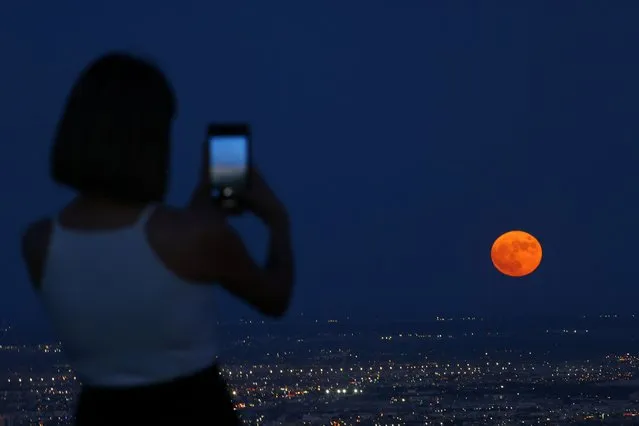
A woman takes a picture as a super moon, known as the Blue Moon, rises above Ciudad Juarez, Mexico on August 30, 2023. (Photo by Jose Luis Gonzalez/Reuters)
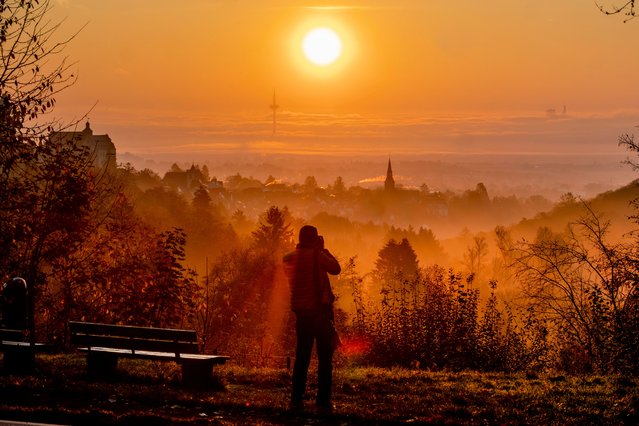
A photographer takes pictures as the sun rises over the city of Kronberg near Frankfurt, Germany, Monday, November 4, 2024. (Photo by Michael Probst/AP Photo)
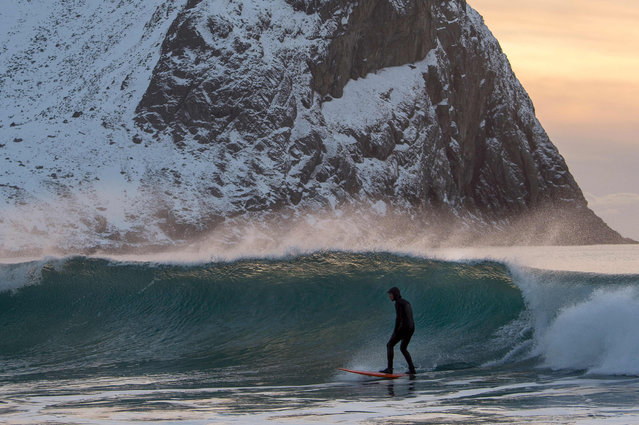
A surfer rides a wave at the snowy beach of Unstad, in Lofoten Island, Arctic Circle, on March 9, 2016. Surfers from all over the world comes to Lofoten island to surf in extrem conditions. Ocean temperature is 6-7 °C, air temperature around 0°C in spite of a weather very unstable. (Photo by Olivier Morin/AFP Photo)
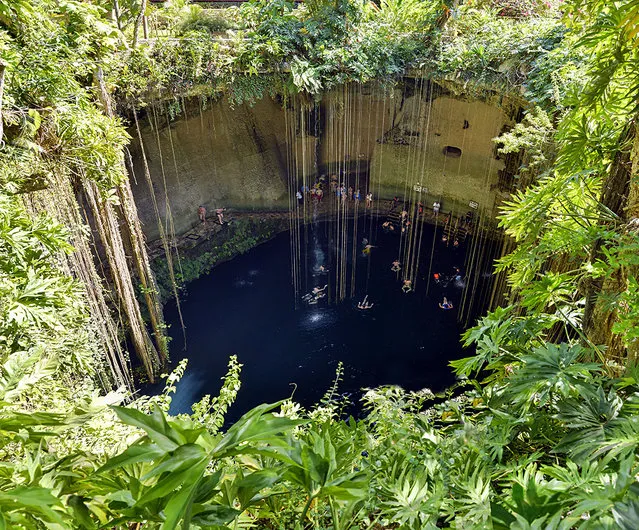
A cenote is a natural phenomenon, a sinkhole in the Earth’s surface. The Yucatan Peninsula in Mexico has an estimated 7,000 cenotes because it is primarily made up of porous limestone. For millions of years, rainfall slowly ate away at the limestone and a huge system of underground caves and caverns was formed. Many filled with water from rain or from the underground water table. When the roof of a water filled cave collapses, a cenote is born. The water found in a cenote may be fresh water, salt water, or both. Structurally it may be completely open, like a lake, almost completely closed with just a small opening at the top, or somewhere in between.