Loading...
Done
“Whether that means getting up way before the sun, like I do most days, going out somewhere that I’m not comfortable or just trying to get different angles or styles of photos, I am trying to display the crazy beauty of the ocean, and usually moments that literally last less than a split second”. (Photo by Ryan Pernoski/Caters News Agency)

These kaleidoscopic images are the work of one persistent photographer’s efforts to capture vibrant hues at the exact moment a wave breaks. Ryan Pernofski‘s stunning shots feature brilliant yellows, reds, blues and purples as an array of sunlight hits the water at the perfect time. What’s even more impressive: Ryan, a 27-year-old Australian, began shooting his popular masterpieces without using a professional camera, taking his iPhone out into the water instead. Ryan began experimenting with this method in 2012, using an underwater housing to protect his phone, as he could not afford a professional camera. (Photo by Ryan Pernoski/Caters News Agency)
Details
09 Jun 2018 00:05:00
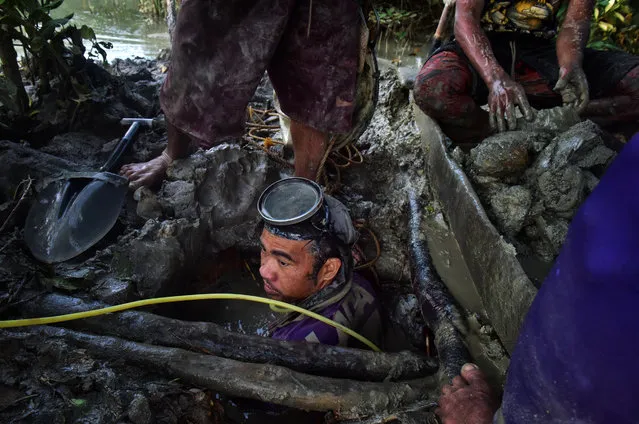
Christian Balderosdasco, 31, is being pulled up a mud pit after diving for 3 hours to look for gold on March 22, 2017 in Paracale, Philippines. (Photo by Jes Aznar/Getty Images)

Christian Balderosdasco, 31, is being pulled up a mud pit after diving for 3 hours to look for gold on March 22, 2017 in Paracale, Philippines. Apart from tunneling and sifting sand, locals dive down murky swamps with the aid of a compressor with air flowing in a small tube for breathing, as they blindly swim under the mud for up to four hours to look for tiny rocks containing gold particles. For decades, local residents at Paracale town work in hazardous conditions scavenging under the earth and diving into tunnels filled with mud using only makeshift tools to mine for gold, often placing their health and lives at risk. (Photo by Jes Aznar/Getty Images)
Details
06 Apr 2017 09:21:00
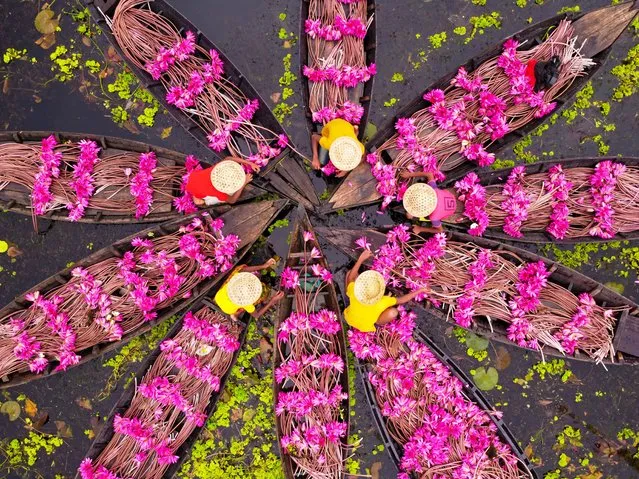
Farmers arrange bunches of water lilies after harvesting them from the wetlands in Barishal, Bangladesh on March 21, 2023. Floating through 10,000 acres of canal, farmers use their little boats to fetch the flowers. They break through the layer of water lilies on the surface of the water as they practice the traditional craft of picking water lilies by hand. Every flower is carefully hand-picked, collected inside the farmers' little wooden boat, tied in bundles, and sold to markets. After working for an entire day, a farmer can pick around 80 to 120 bundles of water lilies. Water lily harvesting is a major source of income for more than 250 families in the area. (Photo by Joy Saha/Cover Images)

Farmers arrange bunches of water lilies after harvesting them from the wetlands in Barishal, Bangladesh on March 21, 2023. Floating through 10,000 acres of canal, farmers use their little boats to fetch the flowers. (Photo by Joy Saha/Cover Images)
Details
01 May 2023 04:00:00
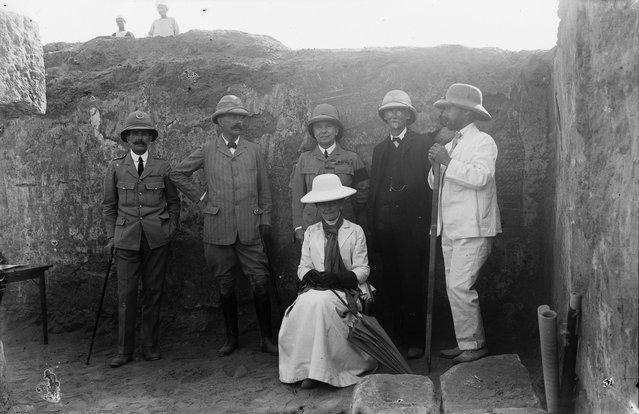
Remarkable discoveries were made, like the decapitated head of a bronze statue of Roman emperor Augustus, sacked from a raid on Roman garrisons further north in Egypt. Here: A group visiting the excavations at Meroë, including (from left) Midwinter Bey, director of Sudan Railways; Lord Kitchener; General Sir Francis Reginald Wingate, Sirdar of the Egyptian Army; Professor Archibald Sayce; John Garstang; and Lady Catherine Wingate, 1911. (Photo by Garstang Museum of Archaeology)

The city of Meroë laid undiscovered for two millennia before British archaeologist John Garstang excavated it in the early 20th century. Garstang took the radical decision to document his discoveries with photography – and immortalised an ancient world. “Meroë: Africa’s Forgotten Empire” is being shown until 14 September at Garstang Museum of Archaeology, Liverpool. Here: A group visiting the excavations at Meroë, including (from left) Midwinter Bey, director of Sudan Railways; Lord Kitchener; General Sir Francis Reginald Wingate, Sirdar of the Egyptian Army; Professor Archibald Sayce; John Garstang; and Lady Catherine Wingate, 1911. (Photo by Garstang Museum of Archaeology)
Details
15 Jun 2016 14:49:00
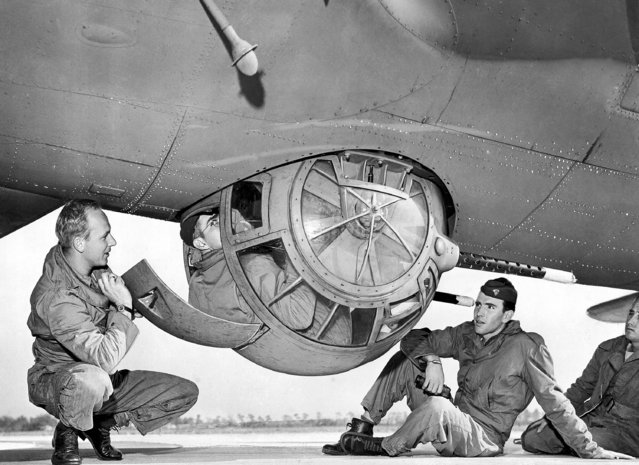
Private Harold L. Langhofer edges into the ball-turret, March 9, 1943. Curled in this position, he can turn the turret so that it fires in any direction. The turret can also be swung around so that the hatch opens into the plane, and the gunner can crawl into it while the Flying Fortress is in motion. (Photo by AP Photo)

Private Harold L. Langhofer edges into the ball-turret, March 9, 1943. Curled in this position, he can turn the turret so that it fires in any direction. The turret can also be swung around so that the hatch opens into the plane, and the gunner can crawl into it while the Flying Fortress is in motion. (Photo by AP Photo)
Details
05 Apr 2018 00:03:00
A wounded Syrian girl looks on at a make shift hospital in the rebel-held area of Douma, east of the capital Damascus, following shelling and air raids by Syrian government forces on August 22, 2015. (Photo by Abd Doumany/AFP Photo)

A wounded Syrian girl looks on at a make shift hospital in the rebel-held area of Douma, east of the capital Damascus, following shelling and air raids by Syrian government forces on August 22, 2015. At least 20 civilians and wounded or trapped 200 in Douma, a monitoring group said, just six days after regime air strikes killed more than 100 people and sparked international condemnation of one of the bloodiest government attacks in Syria's war. (Photo by Abd Doumany/AFP Photo)
Details
25 Aug 2015 10:52:00
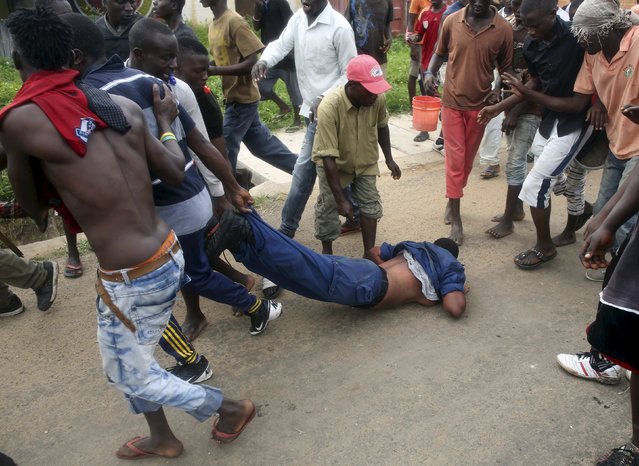
Protesters drag a female police officer accused of shooting a protester in the Buterere neighbourhood of Bujumbura, Burundi, May 12, 2015. (Photo by Goran Tomasevic/Reuters)

From house breaking in Johannesburg to hippos on the loose in Tbilisi to rioters attacking a policewoman in Burundi, Reuters photographers tell the story behind some of the most iconic pictures of the year. Here: Protesters drag a female police officer accused of shooting a protester in the Buterere neighbourhood of Bujumbura, Burundi, May 12, 2015. Goran Tomasevic: Protesters started throwing stones at a group of police, who then started to run away. The policewoman in the photo, Medikintos Inabeza, 33, got left behind and then some protesters started to push her, saying that she had shot a female protestor in the stomach with an AK47 rifle. I didn't see anything of that. There were 5 or 10 protesters pushing the policewoman at first, then others came and joined in. Up to 20 or 30 protesters were surrounding her at one point. The protesters kicked and beat her very badly; I also saw a couple of knives. I thought they were going to kill her... (Photo by Goran Tomasevic/Reuters)
Details
11 Dec 2015 08:06:00
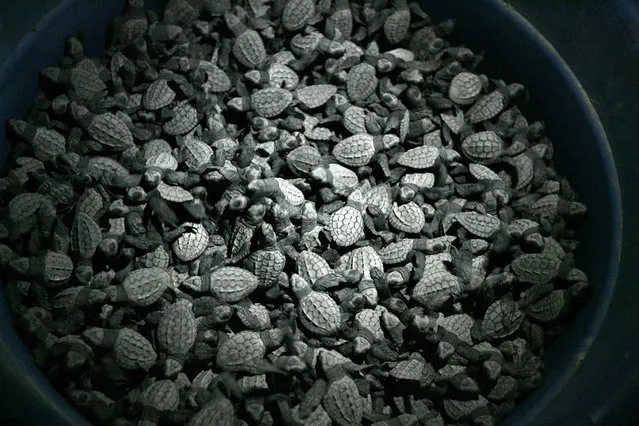
Olive Ridley turtle hatchlings (Lepidochelys olivacea) sit in baskets and trays at the turtle camp La Gloria, before their release into the ocean in Tomatlan November 15, 2013. (Photo by Alejandro Acosta/Reuters)

Olive Ridley turtle hatchlings (Lepidochelys olivacea) sit in baskets and trays at the turtle camp La Gloria, before their release into the ocean in Tomatlan November 15, 2013. Twenty years ago, Mexico's government implemented ecological plans to protect the sea turtles from being hunted for their leather and meat and established conservation areas and a pay system for local residents to protect turtle nests. Millions of baby turtles hatch on the shores in November and December, according to an environmental group. It is estimated that in 2012, there were 20 million newborns. Hatching season is still underway, but officials say they expect there will be even more turtles born this year. (Photo by Alejandro Acosta/Reuters)
Details
25 Nov 2013 08:54:00