Loading...
Done
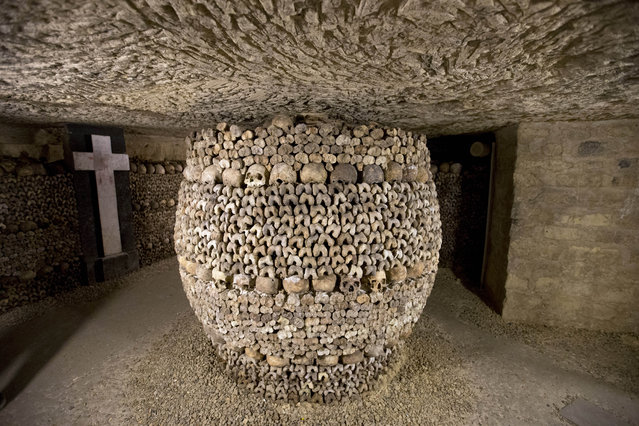
In this photo taken Tuesday, October 14, 2014, skulls and bones are stacked at the Catacombs in Paris, France. (Photo by Francois Mori/AP Photo)

In this photo taken Tuesday, October 14, 2014, skulls and bones are stacked at the Catacombs in Paris, France. The subterranean tunnels, stretching 2 kilometers (1.24 miles), cradle the bones of some 6 million Parisians from centuries past and once gave refuge to smugglers. The site used to close at 5 p.m., but is now staying open until 8 p.m. The change is mainly aimed at allowing more people to visit and reducing long lines, since it can only hold a limited number of people at a time and visits can't be reserved in advance. (Photo by Francois Mori/AP Photo)
Details
17 Oct 2014 13:27:00
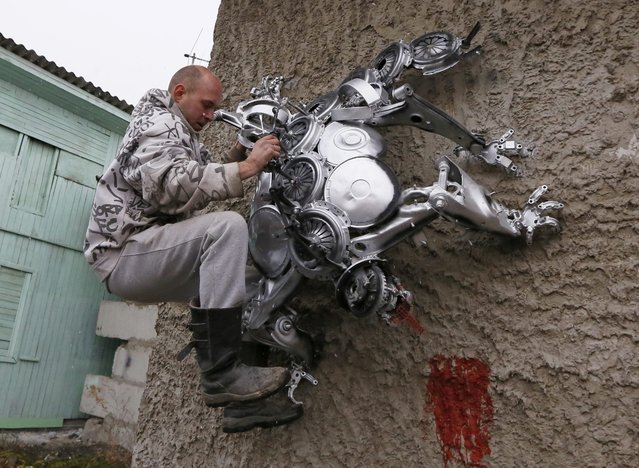
Mechanic and welder Sergei Kulagin, 32, strengthens the bracing of a spider sculpture, made by Kulagin, during a demonstration on the wall of an automobile repair workshop in the town of Divnogorsk outside Krasnoyarsk, Siberia, October 15, 2014. Enthusiast Kulagin, who works as a mechanic of an automobile service station, created about 20 sculptures made of used car parts and components during his non-working hours. (Photo by Ilya Naymushin/Reuters)

Mechanic and welder Sergei Kulagin, 32, strengthens the bracing of a spider sculpture, made by Kulagin, during a demonstration on the wall of an automobile repair workshop in the town of Divnogorsk outside Krasnoyarsk, Siberia, October 15, 2014. Enthusiast Kulagin, who works as a mechanic of an automobile service station, created about 20 sculptures made of used car parts and components during his non-working hours. (Photo by Ilya Naymushin/Reuters)
Details
18 Oct 2014 10:36:00
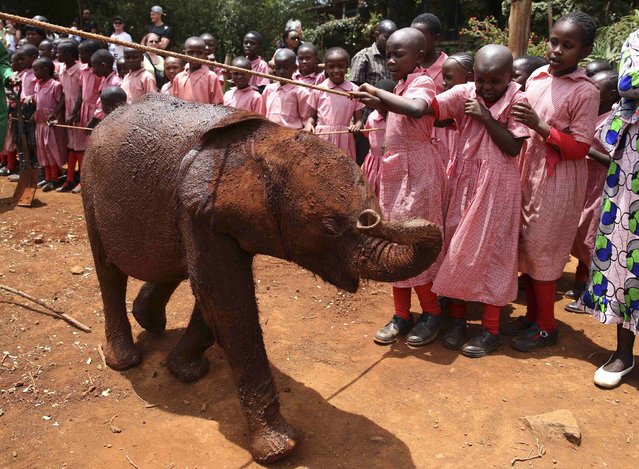
Pupils look at an orphaned baby elephant at the David Sheldrick Elephant Orphanage within the Nairobi National Park, near Kenya's capital Nairobi October 15, 2014. (Photo by Goran Tomasevic/Reuters)

Pupils look at an orphaned baby elephant at the David Sheldrick Elephant Orphanage within the Nairobi National Park, near Kenya's capital Nairobi October 15, 2014. The orphanage under the David Sheldrick Wildlife Trust is operated by Daphne Sheldrick, wife of late famous naturalist David William Sheldrick. The orphaned elephants raised by the trust will be returned to join the undomesticated elephant population in Tsavo National Park, where David was the founder warden from 1948 to 1976, when they mature, usually between eight to 10 years old. (Photo by Goran Tomasevic/Reuters)
Details
19 Oct 2014 12:47:00
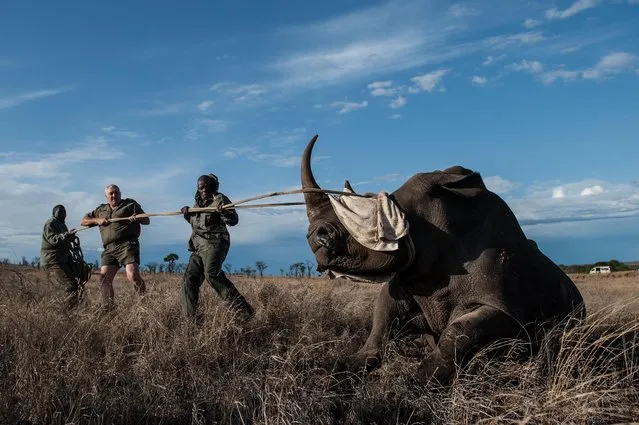
Dr. Marius Kruger (C) and memeber of the Kruger National Park keeps the head of a rhino up during a white rhino relocation capture on October 17, 2014. The Kruger National Park relocated four rhinoceros from a high risk poaching area to a safer area as part of ongoing strategic rhinoceros management plan. (Photo by Stefan Heunis/AFP Photo)

Dr. Marius Kruger (C) and memeber of the Kruger National Park keeps the head of a rhino up during a white rhino relocation capture on October 17, 2014. The Kruger National Park relocated four rhinoceros from a high risk poaching area to a safer area as part of ongoing strategic rhinoceros management plan. (Photo by Stefan Heunis/AFP Photo)
Details
20 Oct 2014 09:37:00
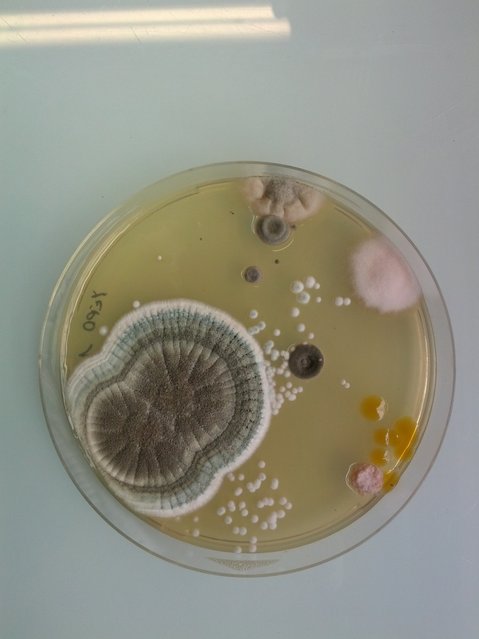
Magical Contamination By Antoine Bridier-Nahmias

Modern art is truly fascinating. Not in a way that it produces some novel things that will fascinate future generations for decades and even centuries to come. No, that is very far from the truth. On the contrary, modern art is essentially anything (yes, any little thing) that is a bit unusual and was created by a famous person. Let’s take the creation of Antoine Bridier-Nahmias for example. His brainchild is a set of pictures of petri dishes that were contaminated by various cultures of fungi. If this is art, I missed my chance of becoming famous when I accidentally left a piece of bread in a bag in a cupboard for about six months, and didn’t take a picture of the rather shocking results that awaited me when I finally discovered it. (Photo by Antoine Bridier-Nahmias)
Details
12 Dec 2014 13:03:00
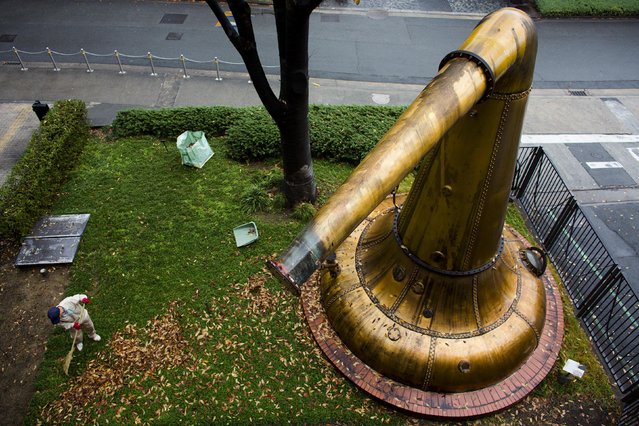
A worker sweeps leaves below a historic spirit still at Suntory Holdings' Yamazaki Distillery in Shimamoto town, Osaka prefecture, near Kyoto, December 1, 2014. Nestled at the foot of wooded hills near the ancient Japanese capital of Kyoto, the Yamazaki whisky distillery feels a long way from the northerly glens of Scotch's spiritual home. (Photo by Thomas Peter/Reuters)

A worker sweeps leaves below a historic spirit still at Suntory Holdings' Yamazaki Distillery in Shimamoto town, Osaka prefecture, near Kyoto, December 1, 2014. Nestled at the foot of wooded hills near the ancient Japanese capital of Kyoto, the Yamazaki whisky distillery feels a long way from the northerly glens of Scotch's spiritual home. Despite its unlikely birthplace, last month Yamazaki's Single Malt Sherry Cask 2013 trumped more than a thousand challengers to be named the world's best whisky by leading critic Jim Murray in his Whisky Bible 2015. (Photo by Thomas Peter/Reuters)
Details
05 Dec 2014 13:57:00
Chinese aids activists hand out condoms in a subway train in Wuhan, central China's Hubei province on December 1, 2014. The World Health Organization issued a call to action to China on December 1, 2014 over HIV/AIDS as government figures said nearly half a million people are living with the disease or its precursor, with hundreds of thousands more thought to be undiagnosed. (Photo by AFP Photo)

Chinese aids activists hand out condoms in a subway train in Wuhan, central China's Hubei province on December 1, 2014. The World Health Organization issued a call to action to China on December 1, 2014 over HIV/AIDS as government figures said nearly half a million people are living with the disease or its precursor, with hundreds of thousands more thought to be undiagnosed. (Photo by AFP Photo)
Details
06 Dec 2014 12:57:00
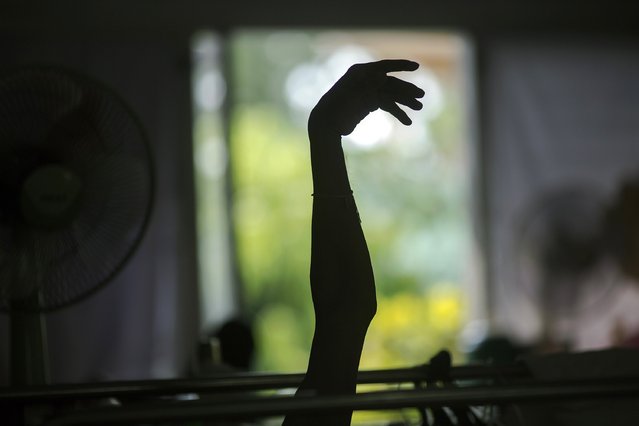
A terminally ill patient raises his arm in a hospice for those dying of AIDS at the Buddhist temple Wat Prabat Nampu in Lopburi province, north of Bangkok November 30, 2014. From 1992, the temple has provided housing for HIV positive patients and palliative care for those in the final stages of the AIDS disease. (Photo by Damir Sagolj/Reuters)

A terminally ill patient raises his arm in a hospice for those dying of AIDS at the Buddhist temple Wat Prabat Nampu in Lopburi province, north of Bangkok November 30, 2014. From 1992, the temple has provided housing for HIV positive patients and palliative care for those in the final stages of the AIDS disease. Data from 2013 estimates Thailand has 450,000 people living with HIV/AIDS, but only 353,000 have access to life-saving antiretroviral drugs. (Photo by Damir Sagolj/Reuters)
Details
08 Dec 2014 11:52:00