Loading...
Done
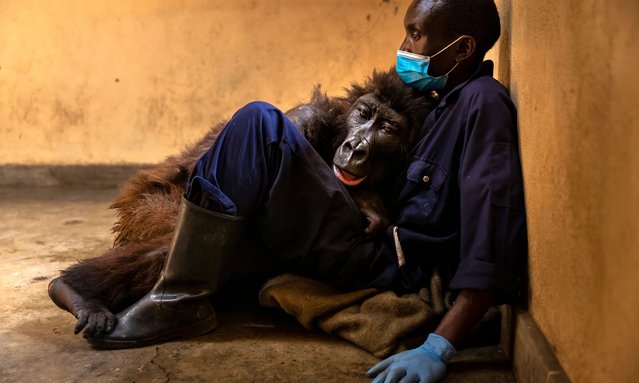
Orphaned mountain gorilla, Ndakasi, lies in the arms of her caregiver, Andre Bauma, on September 21, 2021 shortly before her death, which the park confirmed on September 26. Mr Bauma and others at the Senkwekwe Mountain Gorilla Center had cared for Ndakasi and other orphans for 13 years. Ndakasi had suffered a prolonged illness prior to her death. This is the only mountain gorilla orphanage in the world and takes in mountain gorilla orphans who have lost their families to poaching or conflict. A number of the orphans here were rescued from sales by poachers in sting operations carried out by Congolese National Park Authority (ICCN) rangers. (Photo by Brent Stirton/Getty Images)

Orphaned mountain gorilla, Ndakasi, lies in the arms of her caregiver, Andre Bauma, on September 21, 2021 shortly before her death, which the park confirmed on September 26. Mr Bauma and others at the Senkwekwe Mountain Gorilla Center had cared for Ndakasi and other orphans for 13 years. Ndakasi had suffered a prolonged illness prior to her death. This is the only mountain gorilla orphanage in the world and takes in mountain gorilla orphans who have lost their families to poaching or conflict. A number of the orphans here were rescued from sales by poachers in sting operations carried out by Congolese National Park Authority (ICCN) rangers. (Photo by Brent Stirton/Getty Images)
Details
17 Oct 2021 08:04:00
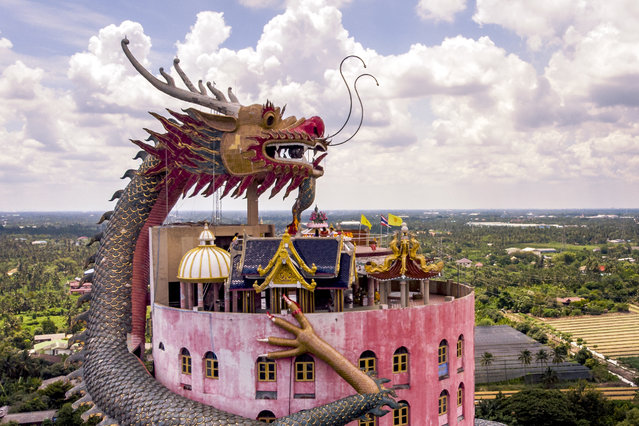
An aerial view taken on September 11, 2020 shows the Buddhist temple Wat Samphran (Dragon Temple) in Nakhon Pathom, some 40km west of Bangkok. Wat Samphran is a popular tourist destination with visitors coming to see the huge dragon figure curling around a pink cylindrical building next to the Buddha statues and places of worship of the traditional Buddhist temple complex. (Photo by Mladen Antonov/AFP Photo)

An aerial view taken on September 11, 2020 shows the Buddhist temple Wat Samphran (Dragon Temple) in Nakhon Pathom, some 40km west of Bangkok. Wat Samphran is a popular tourist destination with visitors coming to see the huge dragon figure curling around a pink cylindrical building next to the Buddha statues and places of worship of the traditional Buddhist temple complex. (Photo by Mladen Antonov/AFP Photo)
Details
25 Sep 2020 00:01:00
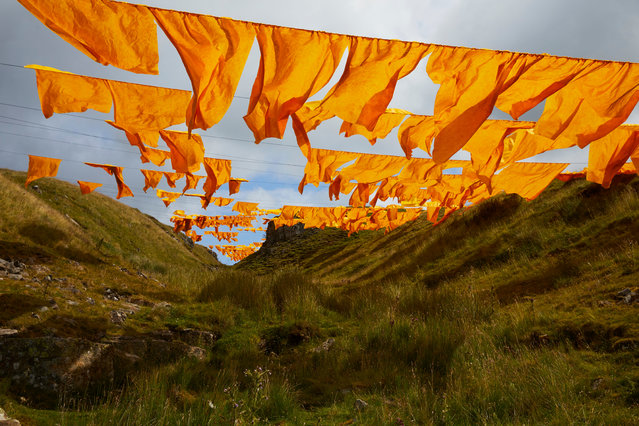
Monumental landscape artwork “Hush” by installation artist Steve Messam hangs in the moors of Teesdale on July 18, 2019 in Barnard Castle, England. The outdoor installation is inspired by the geology, mining history and landscape of the area. It hangs over Bales Hush, a deep gauge in the terrain created when miners flushed the area with water to reveal the geological riches below. Hundreds of metres of recyclable saffron yellow fabric blow in the wind. (Photo by Christopher Thomond/The Guardian)

Monumental landscape artwork “Hush” by installation artist Steve Messam hangs in the moors of Teesdale on July 18, 2019 in Barnard Castle, England. The outdoor installation is inspired by the geology, mining history and landscape of the area. It hangs over Bales Hush, a deep gauge in the terrain created when miners flushed the area with water to reveal the geological riches below. Hundreds of metres of recyclable saffron yellow fabric blow in the wind. (Photo by Christopher Thomond/The Guardian)
Details
20 Jul 2019 00:03:00
Revellers help a man crowdsurf as they watch The Slaves perform on The Other Stage at the Glastonbury Festival of Music and Performing Arts on Worthy Farm near the village of Pilton in Somerset, South West England, on June 30, 2019. (Photo by Oli Scarff/AFP Photo)

Revellers help a man crowdsurf as they watch The Slaves perform on The Other Stage at the Glastonbury Festival of Music and Performing Arts on Worthy Farm near the village of Pilton in Somerset, South West England, on June 30, 2019. (Photo by Oli Scarff/AFP Photo)
Details
02 Nov 2019 00:05:00
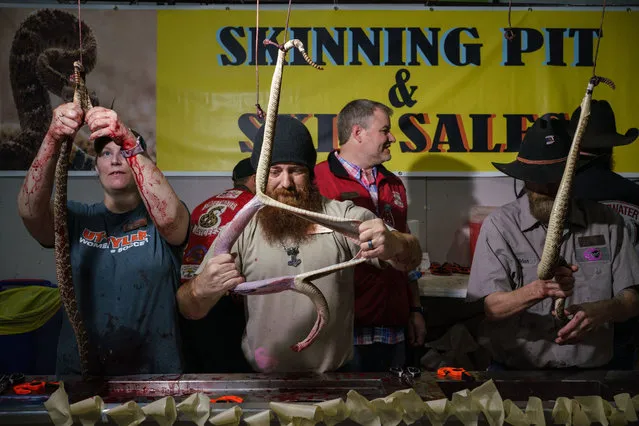
Volunteers skin western diamondback rattlesnakes during the 2021 Rattlesnake Roundup at the Nolan County Coliseum in Sweetwater, Texas on March 13, 2021. The town of Sweetwater holds the largest rattlesnake roundup in the world, launched in 1958 with the sole purpose of getting rid of rattlesnakes, killing an average of 5,000 pounds of snake each year. (Photo by Paul Ratje/AFP Photo)

Volunteers skin western diamondback rattlesnakes during the 2021 Rattlesnake Roundup at the Nolan County Coliseum in Sweetwater, Texas on March 13, 2021. The town of Sweetwater holds the largest rattlesnake roundup in the world, launched in 1958 with the sole purpose of getting rid of rattlesnakes, killing an average of 5,000 pounds of snake each year. (Photo by Paul Ratje/AFP Photo)
Details
22 Mar 2021 09:07:00
A woman arrives at the Shinto Meiji Shrine to pray on the first day of the new year in Tokyo, Japan, January 1, 2016. (Photo by Thomas Peter/Reuters)

A woman arrives at the Shinto Meiji Shrine to pray on the first day of the new year in Tokyo, Japan, January 1, 2016. (Photo by Thomas Peter/Reuters)
Details
03 Jan 2016 08:05:00
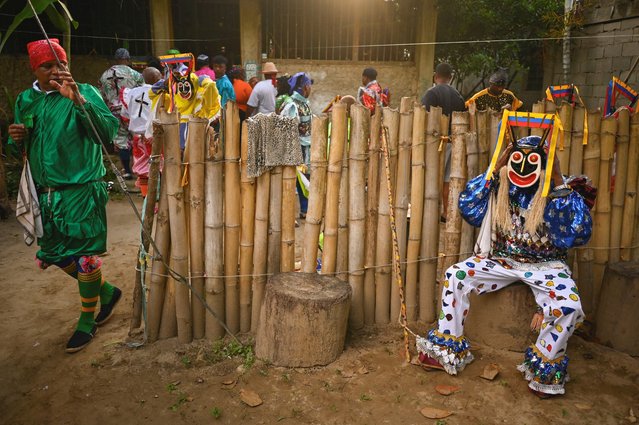
A member of the Brotherhood of the Diablos Danzantes de Chuao (Dancing Devils of Chuao) arranges his mask during the Corpus Christi festival in the town of Chuao, Aragua state, Venezuela on June 18, 2025. (Photo by Maxwell Briceno/Reuters)

A member of the Brotherhood of the Diablos Danzantes de Chuao (Dancing Devils of Chuao) arranges his mask during the Corpus Christi festival in the town of Chuao, Aragua state, Venezuela on June 18, 2025. (Photo by Maxwell Briceno/Reuters)
Details
15 Aug 2025 03:13:00
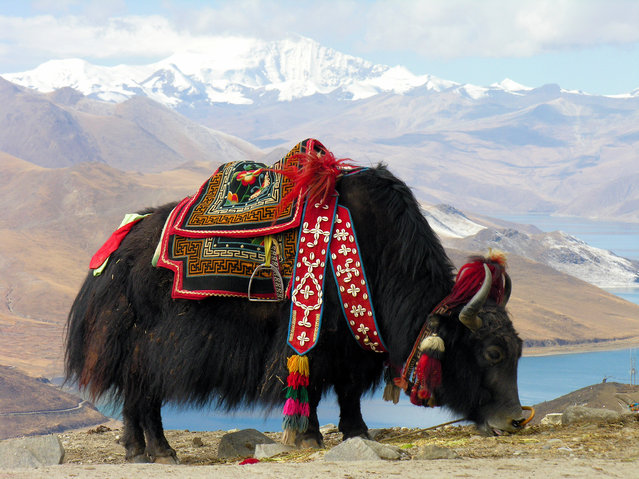
Yak near Yamdrok lake, Tibet. It is a long-haired bovinae found throughout the Himalayan region of south Central Asia, the Tibetan Plateau and as far north as Mongolia and Russia. The Tibetan economy is dominated by subsistence agriculture. Due to limited arable land, the primary occupation of the Tibetan Plateau is raising livestock, such as sheep, cattle, goats, camels, yaks, dzo, and horses. The Tibetan yak is an integral part of Tibetan life. (Photo by Dennis Jarvis)

Yak near Yamdrok lake, Tibet. It is a long-haired bovinae found throughout the Himalayan region of south Central Asia, the Tibetan Plateau and as far north as Mongolia and Russia. The Tibetan economy is dominated by subsistence agriculture. Due to limited arable land, the primary occupation of the Tibetan Plateau is raising livestock, such as sheep, cattle, goats, camels, yaks, dzo, and horses. The Tibetan yak is an integral part of Tibetan life. (Photo by Dennis Jarvis)
Details
10 Jun 2015 10:48:00