Loading...
Done
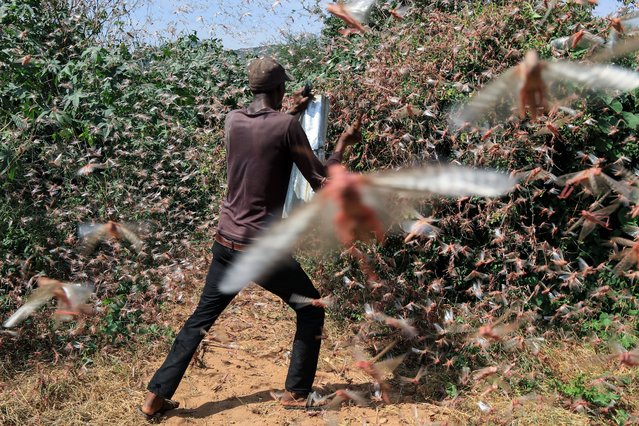
A man uses iron sheet to make noises, as a way of trying to disperse desert locusts that had invaded their farms during the second wave invasion in Kakongo village, in Nuu-Mwingi East, in Kitui, Kenya, 06 February 2021. The second wave invasion of the desert locusts in the country comes at a time where most famers are expecting to harvest their farm produce in the country. According to the United Nations Food and Agriculture Organization (FAO), on 04 February, warned numerous immature desert locust swarms persist in southern Ethiopia and Kenya. Some of the swarms are in community areas and therefore cannot be treated. In Kenya, immature swarms continue to spread westwards across northern and central counties where there are currently about 20 small swarms present, mostly about 50 hectares in size, it said. (Photo by Daniel Irungu/EPA/EFE)

A man uses iron sheet to make noises, as a way of trying to disperse desert locusts that had invaded their farms during the second wave invasion in Kakongo village, in Nuu-Mwingi East, in Kitui, Kenya, 06 February 2021. The second wave invasion of the desert locusts in the country comes at a time where most famers are expecting to harvest their farm produce in the country. (Photo by Daniel Irungu/EPA/EFE)
Details
25 Feb 2021 08:17:00
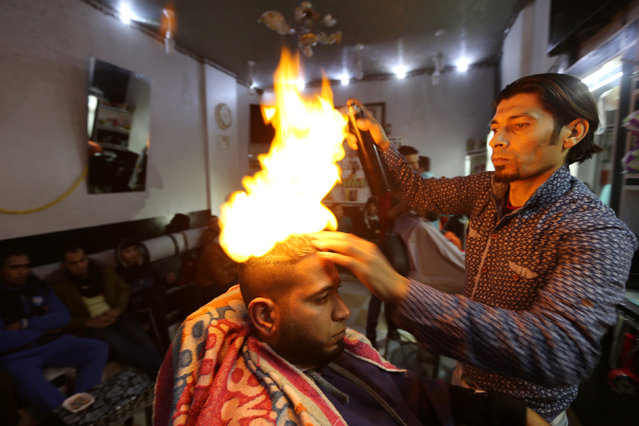
Palestinian barber Ramadan Odwan styles and straightens the hair of a customer with fire at his salon in Rafah, in the southern Gaza Strip February 2, 2017. In Ramadan Odwan's barbershop in Gaza, hair isn't just blow-dried, it's blowtorch-dried. “People have gone crazy about it, many people are curious to go through the experience and they are not afraid”, he told Reuters. “People here love adventures”. Odwan, 37, is not the first stylist in the world to use flame to straighten hair, but his craft is unique in the Gaza Strip. In his salon in the southern Gaza town of Rafah, Odwan applied what he described as a protective liquid coating to a customer's hair – he declined to disclose its contents – before aiming for the head and pressing the button on a small blowtorch. “I control how long I apply fire, I keep it on and off for 10 seconds or 15 seconds. It is completely safe and I have not encountered any accident since I started it two months ago”, Odwan added. Odwan charges 20 shekels ($5.20) for a haircut and fire-straightening. A barber for the past 18 years, he said part of the reason he uses the technique is to show that Palestinian barbers are as “professional as those out there around the world”. (Photo by Ibraheem Abu Mustafa/Reuters)

Palestinian barber Ramadan Odwan styles and straightens the hair of a customer with fire at his salon in Rafah, in the southern Gaza Strip February 2, 2017. In Ramadan Odwan's barbershop in Gaza, hair isn't just blow-dried, it's blowtorch-dried. “People have gone crazy about it, many people are curious to go through the experience and they are not afraid”, he told Reuters. “People here love adventures”. (Photo by Ibraheem Abu Mustafa/Reuters)
Details
11 Feb 2017 00:05:00
Patarawan fixes her boots as her parrot, Sim sits on her head as she goes shopping for dinner at a busy flooded market near the Chao Phraya river

Patarawan fixes her boots as her parrot, Sim sits on her head as she goes shopping for dinner at a busy flooded market near the Chao Phraya river October 27, 2011 in Bangkok, Thailand. Hundreds of factories closed in the central Thai province of Ayutthaya and Nonthaburi as the flood waters began to reach Bangkok. Around 350 people have died in flood-related incidents since late July according to the Department of Disaster Prevention and Mitigation, with Thailand experiencing the worst flooding in 50 years. (Photo by Paula Bronstein/Getty Images)
Details
28 Oct 2011 13:14:00
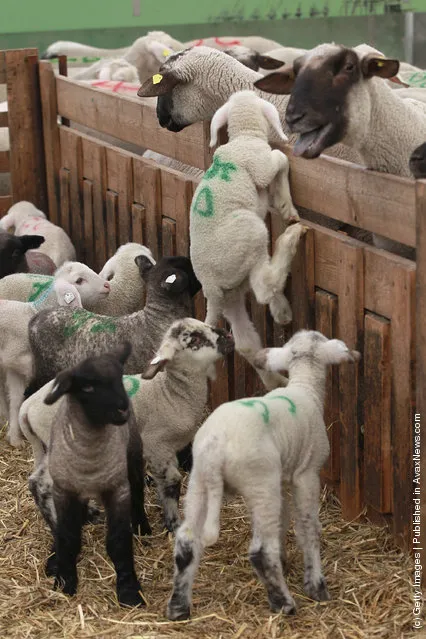
Easter Lamb

A merino lamb attempts to jump out of its enclosure to find its mother shortly before feeding time at the Educational and Reserach Station for Animal Breeding (Lehr- und Versuchsanstalt fuer Tierzucht und Tierhaltung, or LVAT) in Brandenburg state on January 27, 2012 in Gross Kreutz, Germany. Hundreds of lambs have been born at the LVAT in recent weeks in the midst of the station's lambing season. Many of the lambs will be sold just before Easter, when they will have grown to a weight of over 40kg, as lamb is the traditional German Easter meal. (Photo by Sean Gallup/Getty Images)
Details
29 Jan 2012 12:12:00
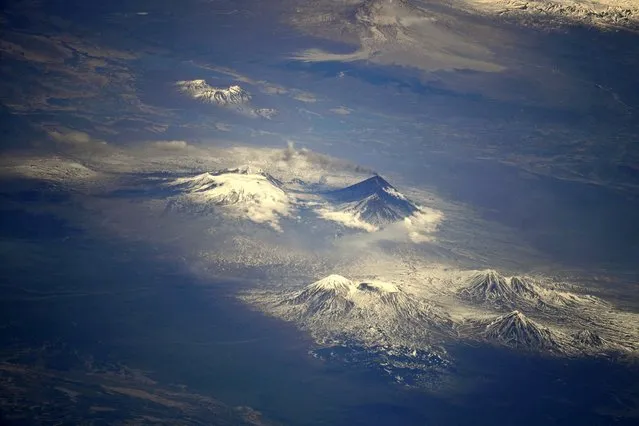
Kamchatka

Kamchatka

Oleg Valeriyevich Kotov was born October 27, 1965, in Simferopol, Crimean oblast in Ukrainian SSR. After a career as a physican assigned to space program, he joined the Russian cosmonaut corps. He has flown two long duration spaceflight on the International Space Station logging just short of a year in space. Kotov is currently assigned to the Soyuz TMA-10M/Expedition 37/Expedition 38 long duration spaceflight scheduled for 2013-2014.
Details
03 Apr 2015 09:25:00


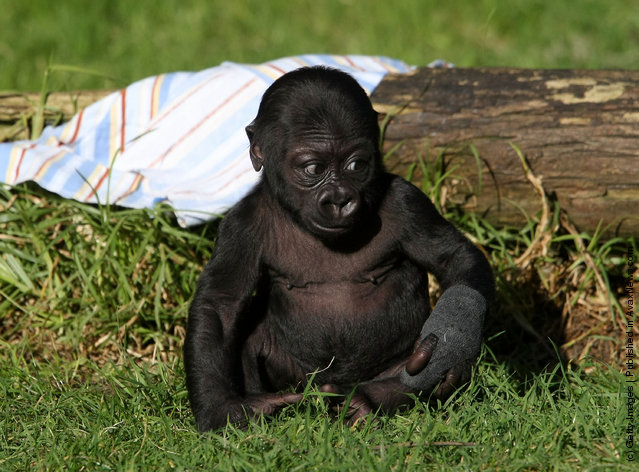
A three month-old baby gorilla named Hasani sits in the grass March 11, 2009 at the San Francisco Zoo in San Francisco, California. The newborn gorilla was given the name Hasani. Hasani's father, a twenty seven year-old gorilla named Oscar Jonsey, picked between five color coded cantaloupes representing the five name finalists to come up with the newborn's name that was submitted by Amanda VerPloeg of Oskaloosa, Iowa. (Photo by Justin Sullivan/Getty Images)
Details
30 Mar 2011 13:46:00


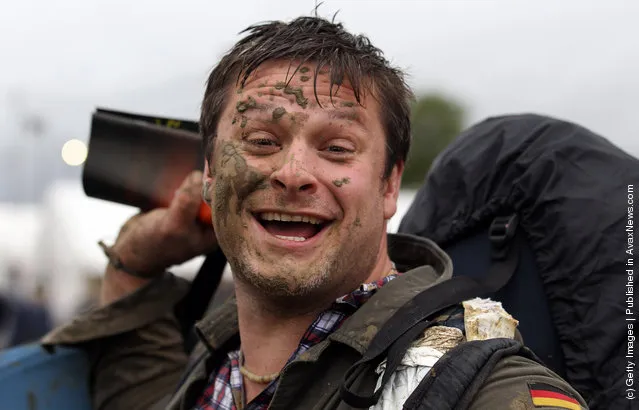
Music fans arrive in the mud and the rain at the Glastonbury Festival site at Worthy Farm, Pilton on June 22, 2011 in Glastonbury, England. Heavy rain and mud greeted music fans as the gates to the five-day festival opened to the public this morning. This year the festival will feature headline acts U2, Coldplay and Beyonce. The festival, which started in 1970 when several hundred hippies paid 1 GBP to watch Marc Bolan, has grown into Europe's largest music festival attracting more than 175,000 people over five days. (Photo by Matt Cardy/Getty Images)
Details
22 Jun 2011 12:13:00


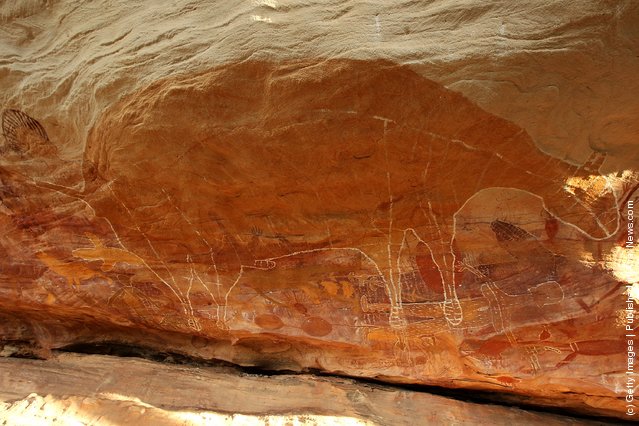
The artwork of Giant Horse Aboriginal rock art galleries in the Quinkan Country is seen on June 19, 2011 in Laura, Australia. The ancient aboriginal rock art in this region is some of the largest and oldest in the world, dating back over 15,000 years. Paintings, stencil art and engravings cover thelands traditionally home to the Kuku, Yalanji, Guugu Yimithirr and Kuku Thaypan people. As a UNESCO-identified top 10 rock art site in the world, international travelers visit the area to learn and understand the aboriginal culture through the artwork. (Photo by Mark Kolbe/Getty Images)
Details
23 Jun 2011 10:12:00