Following a large air raid by German bombers, local people, coming out of their air raid shelters found a bus standing on end in a large crater, in Balham, London, October 15, 1940. (Photo by AP Photo)
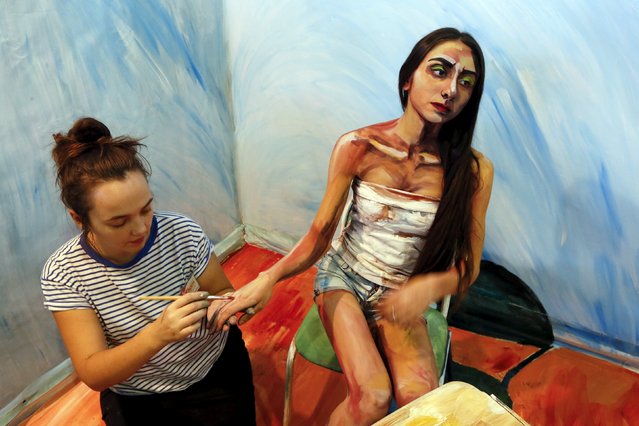
Russian artist Maria Gazanova (L) works on her "The Alive Painting" art work during the Art Krasnoyarsk annual festival in Siberian city of Krasnoyarsk, Russia November 4, 2015. (Photo by Ilya Naymushin/Reuters)
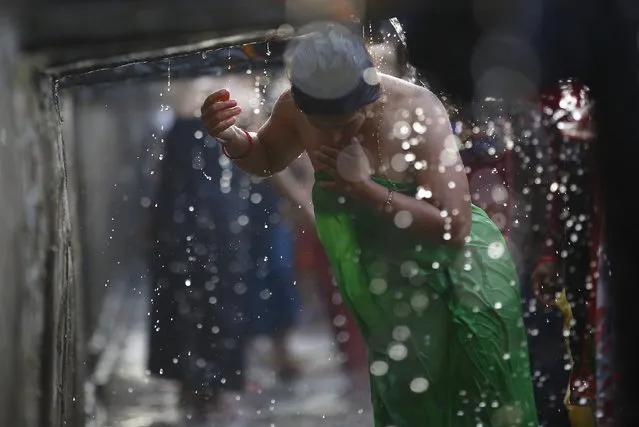
A devotee takes a holy bath at the Balaju Baise Dhara (22 water spouts) during the Baishak Asnan festival in Kathmandu April 4, 2015. Devotees believe that the water from these stone spouts, which is collected from the catchment area of the Nagarjun forest behind the spouts, will cure pains and skin diseases. (Photo by Navesh Chitrakar/Reuters)
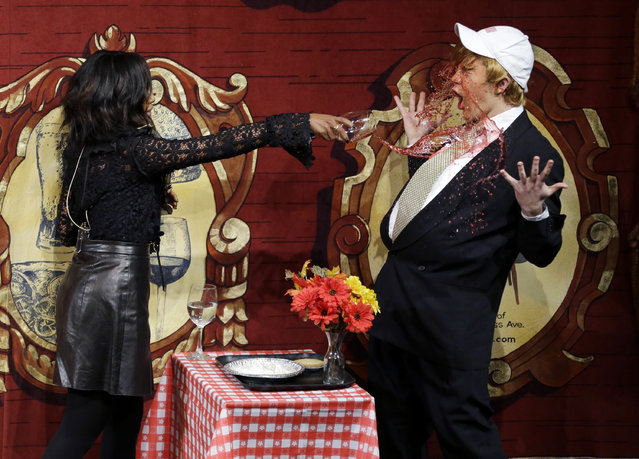
Actress Kerry Washington, Harvard University's Hasty Pudding Theatricals' Woman of the Year, throws wine in the face of an actor playing Republican presidential candidate Donald Trump, Thursday, January 28, 2016, as she is roasted in Cambridge, Mass. (Photo by Elise Amendola/AP Photo)
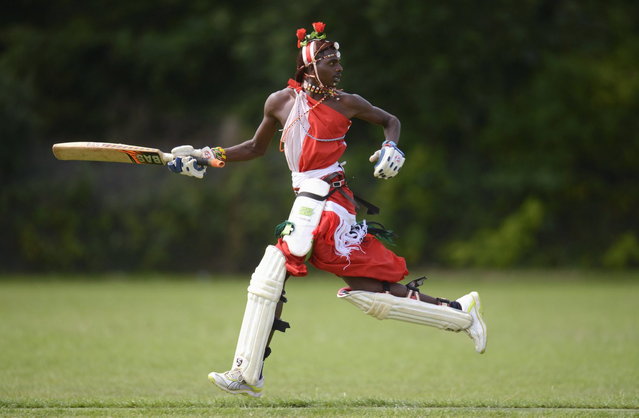
Papai Simon Ole Mamai of the Maasai Cricket Warriors team from Kenya runs during a match against English team “The Shed” during “The Last Man Stands” cricket tournament at Dulwich sports ground in South London September 1, 2013. (Photo by Philip Brown/Reuters)
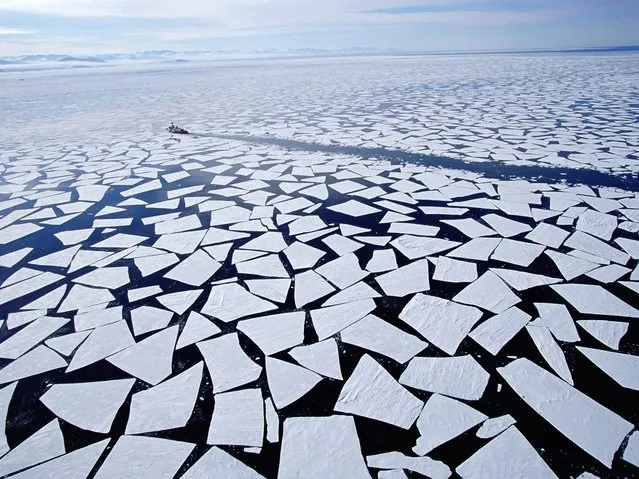
McMurdo Station is a U.S. Antarctic research centre located on the southern tip of Ross Island, which is in the New Zealand-claimed Ross Dependency on the shore of McMurdo Sound in Antarctica. It is operated by the United States through the United States Antarctic Program, a branch of the National Science Foundation. The station is the largest community in Antarctica, capable of supporting up to 1,258 residents, and serves as the United States Antarctic science facility. All personnel and cargo going to or coming from Amundsen–Scott South Pole Station first pass through McMurdo.
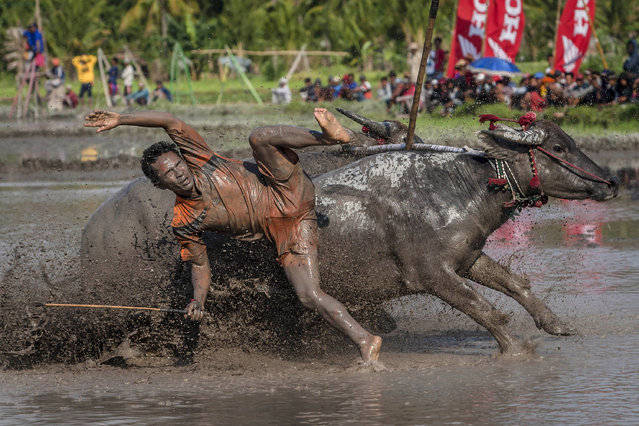
A jockey falls from his buffalos during Barapan Kebo or buffalo races as part of the Moyo festival on September 30, 2014 in Sumbawa Island, West Nusa Tenggara, Indonesia. The traditional Buffalo races, known as Barapan Kebo, are held by Samawa tribes in muddy rice fields to celebrate and provide entertainment ahead of the annual planting season. Jockeys secure themselves on a wooden structure attached to the buffalo, and maneuver across the mud in a race to the finish line. The jockeys weild long sticks, in a similar style to jousting, and direct them towards targets called “Saka”. (Photo by Ulet Ifansasti/Getty Images)
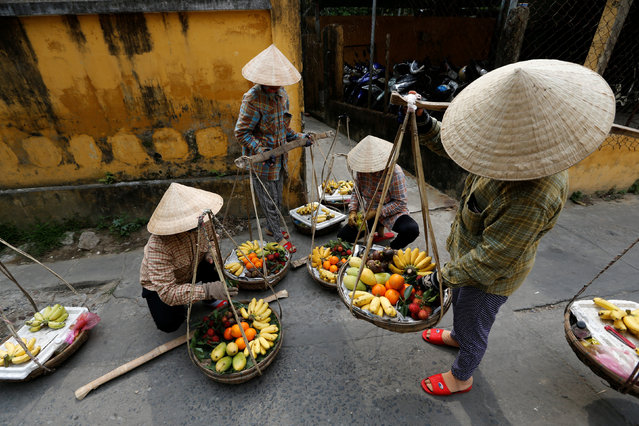
Women wearing traditional hats, known as a non la, sell fruits in Hoi An, Vietnam April 4, 2016. The non la hats are made of readily available materials such as palm leaves, tree bark and bamboo and are visible everywhere in the city, a UNESCO World Heritage site. Hoi An's history as a busy trading port is evident throughout its architecture, a mix of eras and styles, with traditional wooden Vietnamese houses, Chinese temples and French colonial buildings. (Photo by Jorge Silva/Reuters)