Loading...
Done
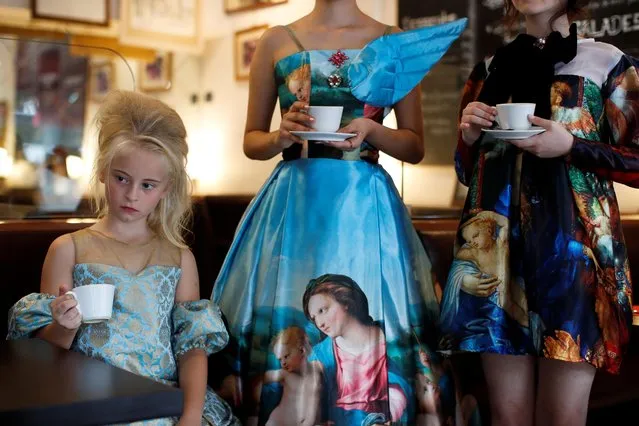
Model Daisy-May Demetre, 9 year-old double amputee who will walk the runway during Paris Fashion Week, is seen during a photo shoot a day before the show of luxury children's wear label Lulu et Gigi in Paris, France, September, 26, 2019. (Photo by Gonzalo Fuentes/Reuters)

Model Daisy-May Demetre, 9 year-old double amputee who will walk the runway during Paris Fashion Week, is seen during a photo shoot a day before the show of luxury children's wear label Lulu et Gigi in Paris, France, September, 26, 2019. (Photo by Gonzalo Fuentes/Reuters)
Details
29 Oct 2019 00:05:00
US President Donald J. Trump holds a roundtable meeting with Hispanic leaders in the cabinet room before signing an Executive Order in the Rose Garden of the White House in Washington, DC, USA, on 09 July 2020. (Photo by Samuel Corum/EPA/EFE/Pool)

US President Donald J. Trump holds a roundtable meeting with Hispanic leaders in the cabinet room before signing an Executive Order in the Rose Garden of the White House in Washington, DC, USA, on 09 July 2020. (Photo by Samuel Corum/EPA/EFE/Pool)
Details
18 Jul 2020 00:05:00
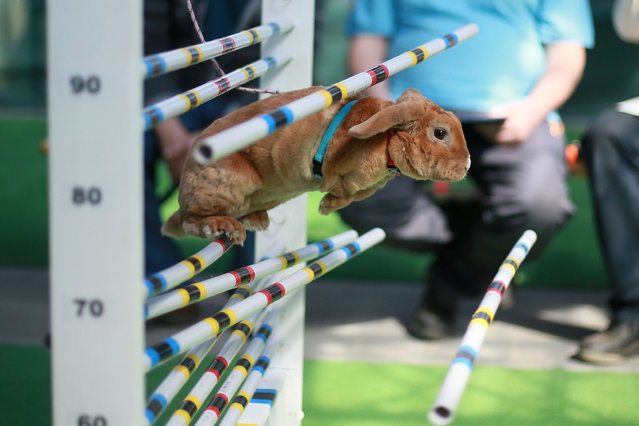
A rabbit fails to jump over an obstacle during a rabbit track and field competition on the sidelines of a hunting exhibition in Kromeriz, about 60 km east of Prague, on April 1, 2017. Circa 100 rabbits took part in the competition, including disciplines as long jump, high jump and running on a flat track. (Photo by  Radek Mica/AFP Photo)

A rabbit fails to jump over an obstacle during a rabbit track and field competition on the sidelines of a hunting exhibition in Kromeriz, about 60 km east of Prague, on April 1, 2017. Circa 100 rabbits took part in the competition, including disciplines as long jump, high jump and running on a flat track. (Photo by Radek Mica/AFP Photo)
Details
09 Apr 2017 09:49:00
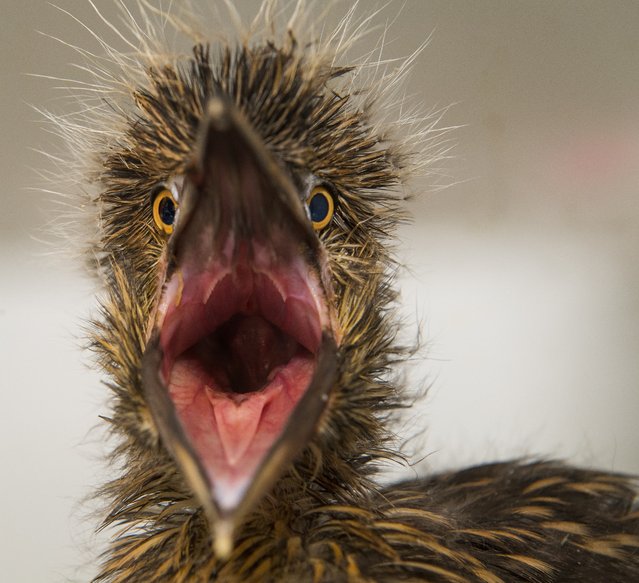
A baby Black-crowned Night Heron squawks in its incubator while being cared for at City Wildlife rescue and rehabilitation center in Washington, DC on May 31, 2017. The heron is one of several that have been brought to CW by the staff at The National Zoo over the past few years. The heron is a native bird and has made an established rookery inside the zoo grounds over a hundred years ago.  Every year at this time, some of the chicks get pushed or fall out of the nest and require human care.  Because the birds are native and not part of the Smithsonian collection, they partnered with CW to rehabilitate the herons for re-release back to the flock inside Zoo. They're reintroduced back to their flock so that they can migrate together in the Fall. The Black-crowned heron usually migrates from the DC area down to southeast North Carolina, some going as far as Jacksonville, FL in winter. The Black-crowned heron is the species of greatest conservation need in the District of Columbia because their numbers are in such rapid decline due to habitat loss. (Photo Linda Davidson/The Washington Post)

A baby Black-crowned Night Heron squawks in its incubator while being cared for at City Wildlife rescue and rehabilitation center in Washington, DC on May 31, 2017. The heron is one of several that have been brought to CW by the staff at The National Zoo over the past few years. (Photo Linda Davidson/The Washington Post)
Details
04 Jun 2017 08:04:00
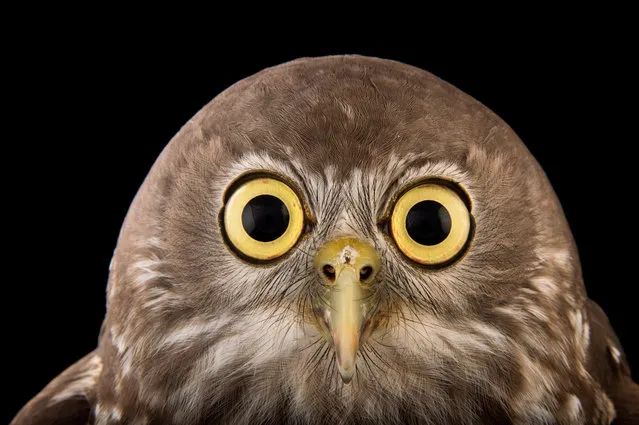
The National Geographic Photo Ark is a travelling exhibition of photographer Joel Sartore’s quest to create a photo archive of biodiversity around the world. So far, Sartore has captured studio portraits of more than 6,000 species – a number that he hopes to double. On 1 July, the ark will open at Melbourne zoo – the first time it has been exhibited in the southern hemisphere. More than 50 portraits will be on display, including many of Australian endangered animals being protected by programs at the zoo itself. These captions have been edited from text supplied by Melbourne zoo. Here: Barking owl. So-named because its call sounds like a barking dog, these birds are native to Australia, Indonesia and Papua New Guinea. In Victoria they are listed as an endangered species, and in 2003 there were estimated to be fewer than 50 breeding pairs. The main threat to the species in Victoria is loss of habitat, especially large trees with hollows in which they can nest and on which many of their prey depend. Apart from a bark, they may utter a chilling scream when they feel threatened. (Photo by Joel Sartore/National Geographic Photo Ark/The Guardian)

The National Geographic Photo Ark is a travelling exhibition of photographer Joel Sartore’s quest to create a photo archive of biodiversity around the world. So far, Sartore has captured studio portraits of more than 6,000 species – a number that he hopes to double. On 1 July, the ark will open at Melbourne zoo – the first time it has been exhibited in the southern hemisphere. More than 50 portraits will be on display, including many of Australian endangered animals being protected by programs at the zoo itself. These captions have been edited from text supplied by Melbourne zoo. Here: Barking owl. (Photo by Joel Sartore/National Geographic Photo Ark/The Guardian)
Details
01 Jul 2017 07:45:00
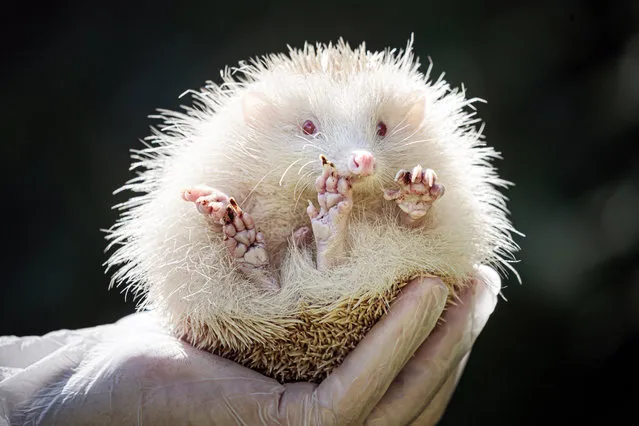
Jack Frost, an ultra rare albino Hedgehog, that has been rescued by Prickly Pigs Hedgehog Rescue in Otley, West Yorkshire on August 23, 2020. (Photo by Danny Lawson/PA Images via Getty Images)

Jack Frost, an ultra rare albino Hedgehog, that has been rescued by Prickly Pigs Hedgehog Rescue in Otley, West Yorkshire on August 23, 2020. (Photo by Danny Lawson/PA Images via Getty Images)
Details
30 Aug 2020 00:03:00
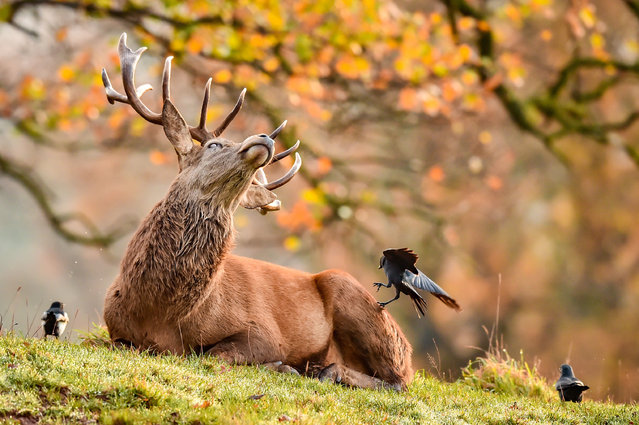
A stag reacts as magpies and crows fuss over a resting stag as they feed on ticks from the fur of the deer herd roaming on the Ashton Court Estate, Bristol, in crisp and cold Autumnal weather on November 23, 2020. (Photo by Ben Birchall/PA Images via Getty Images)

A stag reacts as magpies and crows fuss over a resting stag as they feed on ticks from the fur of the deer herd roaming on the Ashton Court Estate, Bristol, in crisp and cold Autumnal weather on November 23, 2020. (Photo by Ben Birchall/PA Images via Getty Images)
Details
29 Nov 2020 00:03:00
The Soyuz 2.1b rocket with a Fregat-M booster and meteorology and emergency communications satellite Arktika-M No 1 launches from Baikonur Cosmodrome in Baikonur, Kazakhstan on February 28, 2021. Arktika-M No 1 is the first of ten Arktika satellites to be launched by Roscosmos into orbit. (Photo by Roscomos/TASS)

The Soyuz 2.1b rocket with a Fregat-M booster and meteorology and emergency communications satellite Arktika-M No 1 launches from Baikonur Cosmodrome in Baikonur, Kazakhstan on February 28, 2021. Arktika-M No 1 is the first of ten Arktika satellites to be launched by Roscosmos into orbit. (Photo by Roscomos/TASS)
Details
10 Mar 2021 10:12:00