Loading...
Done
A dog walks on the street as it snows in Kyoto on January 25, 2024. (Photo by Philip Fong/AFP Photo)

A dog walks on the street as it snows in Kyoto on January 25, 2024. (Photo by Philip Fong/AFP Photo)
Details
31 Jan 2024 08:48:00
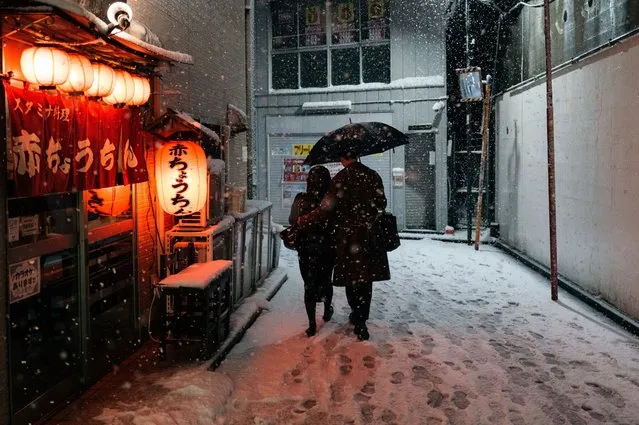
People are walking with umbrellas on a snow-covered street during the first snowfall of the year in Tokyo, Japan, on February 5, 2024. (Photo by Jerome Gilles/NurPhoto/Rex Features/Shutterstock)

People are walking with umbrellas on a snow-covered street during the first snowfall of the year in Tokyo, Japan, on February 5, 2024. (Photo by Jerome Gilles/NurPhoto/Rex Features/Shutterstock)
Details
10 Feb 2024 09:22:00
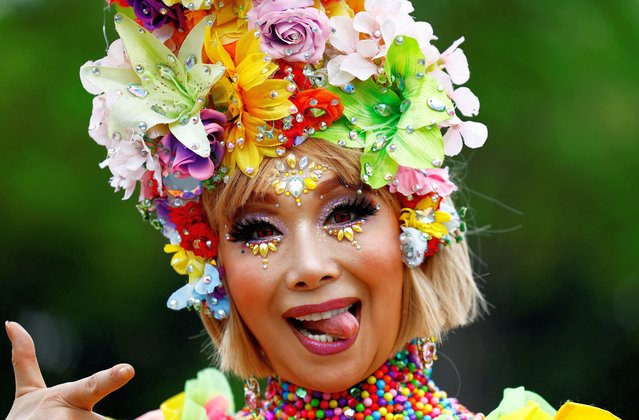
A participant marches during the Tokyo Rainbow Pride parade, celebrating advances in LGBTQ+ rights and calling for marriage equality, in Tokyo, Japan on April 21, 2024. (Photo by Issei Kato/Reuters)

A participant marches during the Tokyo Rainbow Pride parade, celebrating advances in LGBTQ+ rights and calling for marriage equality, in Tokyo, Japan on April 21, 2024. (Photo by Issei Kato/Reuters)
Details
09 May 2024 05:15:00
A performer dressed as a zombie performs inside a “Zombie Shinkansen” bullet train bound for Osaka from Tokyo, inspired by the South Korean movie “Train to Busan” ahead of the Halloween season, Japan, on October 19, 2024. (Photo by Kim Kyung-Hoon/Reuters)

A performer dressed as a zombie performs inside a “Zombie Shinkansen” bullet train bound for Osaka from Tokyo, inspired by the South Korean movie “Train to Busan” ahead of the Halloween season, Japan, on October 19, 2024. (Photo by Kim Kyung-Hoon/Reuters)
Details
02 Dec 2024 02:11:00
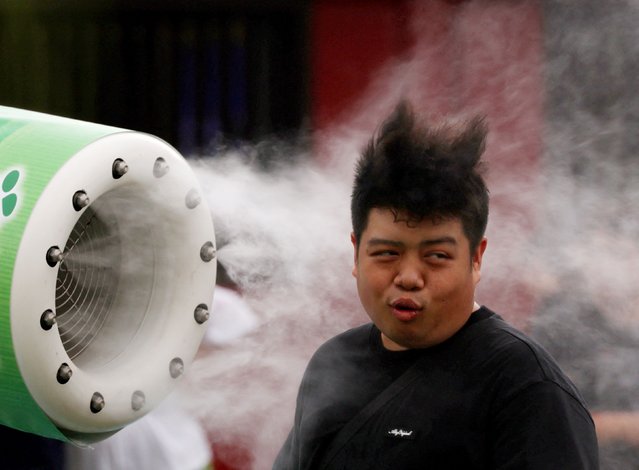
A tourist cools off in front of a misting fan near a venue of the Hozuki-Ichi (Japanese lantern plant fair), at Sensoji temple, in Tokyo, Japan, on July 10, 2025. (Photo by Kim Kyung-Hoon/Reuters)

A tourist cools off in front of a misting fan near a venue of the Hozuki-Ichi (Japanese lantern plant fair), at Sensoji temple, in Tokyo, Japan, on July 10, 2025. (Photo by Kim Kyung-Hoon/Reuters)
Details
05 Aug 2025 04:01:00
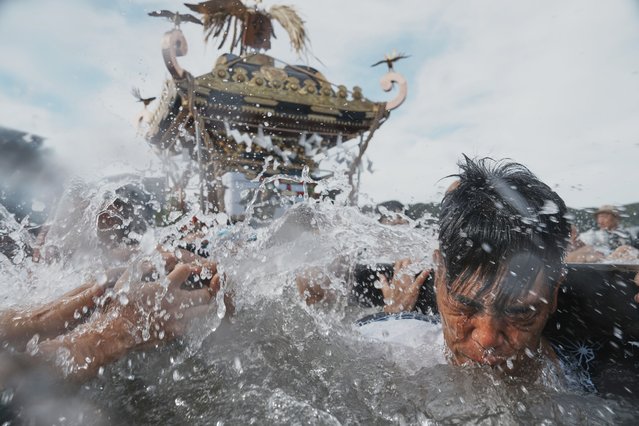
Participants carry a portable shrine, or mikoshi, into the sea during a purification rite at the annual Kurihama Sumiyoshi Shrine Festival at Kurihama, Yokosuka city, south of Tokyo Sunday, July 27, 2025. (Photo by Eugene Hoshiko/AP Photo)

Participants carry a portable shrine, or mikoshi, into the sea during a purification rite at the annual Kurihama Sumiyoshi Shrine Festival at Kurihama, Yokosuka city, south of Tokyo Sunday, July 27, 2025. (Photo by Eugene Hoshiko/AP Photo)
Details
10 Sep 2025 04:03:00
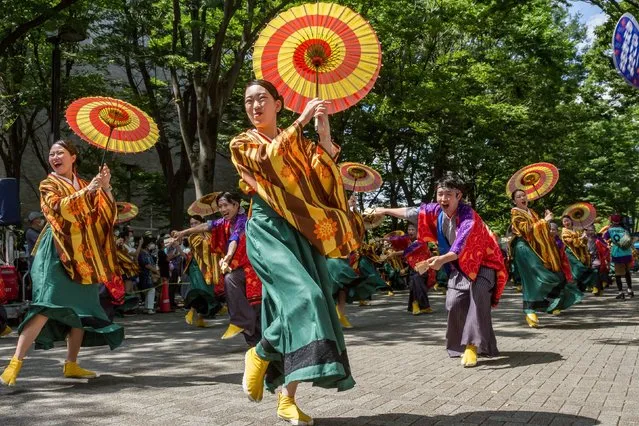
Dancers perform at the Harajuku Omotesando Super Yosakoi Dance festival in Shibuya, Tokyo on August 27, 2022. Super Yosakoi festival, is a two day festival that sees thousands of dancers, in hundreds of teams, energetically perform this unique Japanese dance style that combines traditional and more modern elements of movement and costume. (Photo by Damon Coulter/SOPA Images/Rex Features/Shutterstock)

Dancers perform at the Harajuku Omotesando Super Yosakoi Dance festival in Shibuya, Tokyo on August 27, 2022. Super Yosakoi festival, is a two day festival that sees thousands of dancers, in hundreds of teams, energetically perform this unique Japanese dance style that combines traditional and more modern elements of movement and costume. (Photo by Damon Coulter/SOPA Images/Rex Features/Shutterstock)
Details
07 Sep 2022 05:17:00
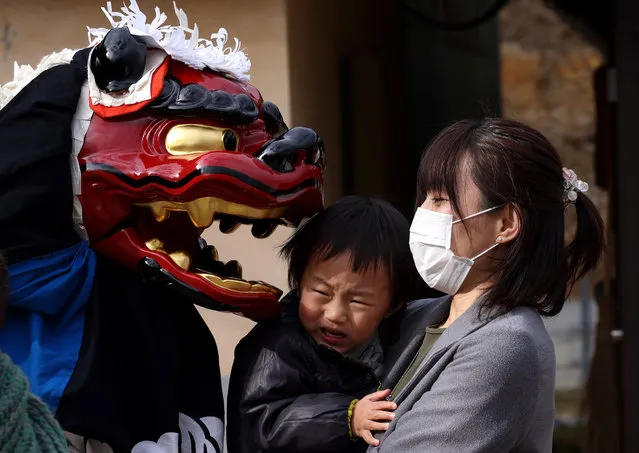
A performer wearing a lion mask performs the Ise Daikagura lion dance at the remote village of Yamanawa on February 08, 2021 in Ryuo, Japan. Ise Daikagura is a group of traditional Lion Dance performers who pray in front of farmers houses and businesses for good grain harvests and disease-free lives. Performers play sacred music using drums and flutes with two lion mask dancers. A lion mask is considered a symbol of God, who enters the house and performs in front of the Shinto God, a statue placed inside the house, mostly in the kitchen. These prayers are called “Kamodo Barai”. After the prayers, they are gifted with money, rice, sake and Japanese sweets from the householders. A group can travel for more than one hundred days to thousands of households and businesses throughout rural-villages in western Japan, and pray to those who are unable to visit the country’s most sacred shrine, the Grand Ise Shrine in Mie Prefecture. The group started its performance in the Edo era between 1603 to 1868 according to Japanese history. The Japanese government designated it as an important folk cultural national property in 1981. (Photo by Buddhika Weerasinghe/Getty Images)

A performer wearing a lion mask performs the Ise Daikagura lion dance at the remote village of Yamanawa on February 08, 2021 in Ryuo, Japan. Ise Daikagura is a group of traditional Lion Dance performers who pray in front of farmers houses and businesses for good grain harvests and disease-free lives. (Photo by Buddhika Weerasinghe/Getty Images)

Details
18 Feb 2021 09:27:00