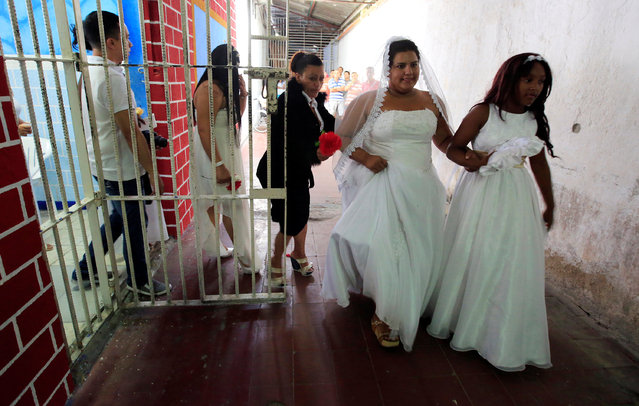
A woman in a wedding gown walks to a mass wedding ceremony, held 17 male inmates, in the Carcel Villa Hermosa prison in Cali, Colombia, August 19, 2016. (Photo by Jaime Saldarriaga/Reuters)
Colombia midfielder Natalia Gaitan (3) goes up for a header against Mexico midfielder Nayeli Rangel (7) in Moncton, June 9, 2015. (Photo by Matt Kryger/USA TODAY Sports)
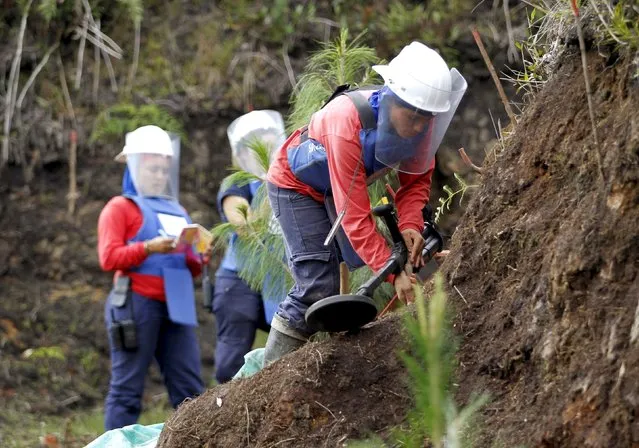
Natalia Arango works with her mine detector in a zone of landmines planted by rebels groups near Sonson in Antioquia province, November 19, 2015. Women's work takes on a nontraditional meaning for fifteen Colombian women who work to rid the Antioquia Mountains of deadly landmines as the country edges closer to a peace agreement with Marxist rebels to end over a decade of conflict which has claimed 220,000 lives. (Photo by Fredy Builes/Reuters)
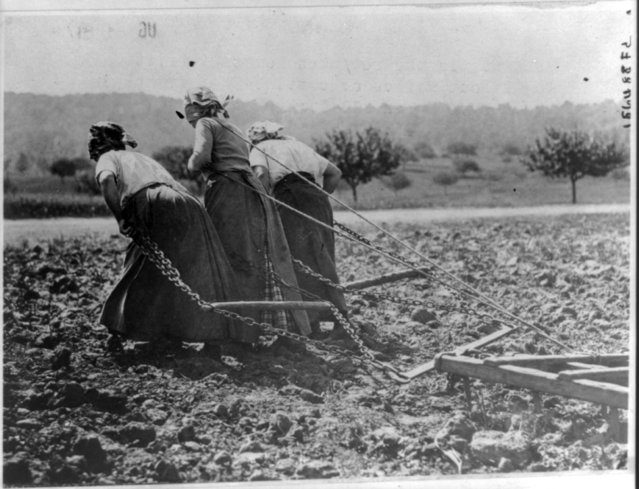
Peasants in the re-taken Somme District work in the fields, circa 1916- 1917, in this Library of Congress handout photo. For women 100 years ago, opportunities to work beyond the home and take part in political life were very limited. As the 20th century progressed, hard-won progress included gradually improved voting rights, while the upheaval of war pushed doors ajar as women worked as part of the war effort. U.S. Library of Congress archive photos show women's workplaces ranging from a flour mill in England to a coal mine in Belgium or Lincoln Motor Co.'s welding department in Detroit. International Women's Day is celebrated on March 8. (Photo by Reuters/Bain Collection/Library of Congress)
A woman walks at the Boulevard of the River the eve of the International Women's Day, in Cali, Colombia, 07 March 2019. (Photo by Ernesto Guzman Jr./EPA/EFE)
In this photo taken Sunday, May 6, 2012, Denis Lutskevich, left, is detained by police during an opposition rally in Bolotnaya Square in Moscow. The former naval cadet and first-year student, 21-year-old Lutskevich was attending his first protest when he was detained, and is still in prison Monday May 6, 2013, on the first year anniversary of the protest. (Photo by Pavel Golovkin/AP Photo)
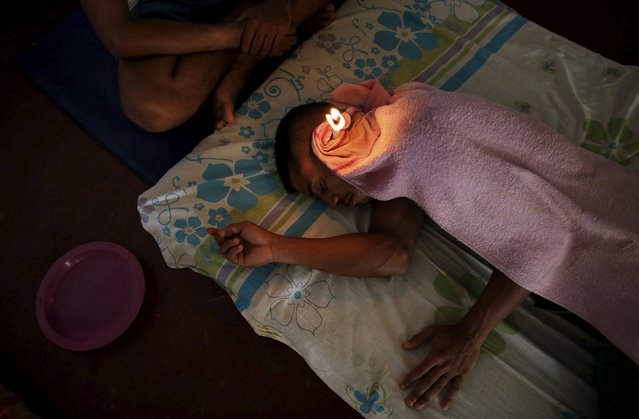
An inmate (L) tends to a fellow prisoner while performing ear candling during an alternative therapy session as part of the ACUDA programme, at a complex of ten prisons in Porto Velho, Rondonia State, Brazil, August 27, 2015. Ear candling, which involves inserting a hollow cone-shaped device into the ear canal and lighting the exposed end, is believed by practitioners to draw out earwax. According to ACUDA the therapy is beneficial for the inmates' emotional health. (Photo by Nacho Doce/Reuters)