Loading...
Done
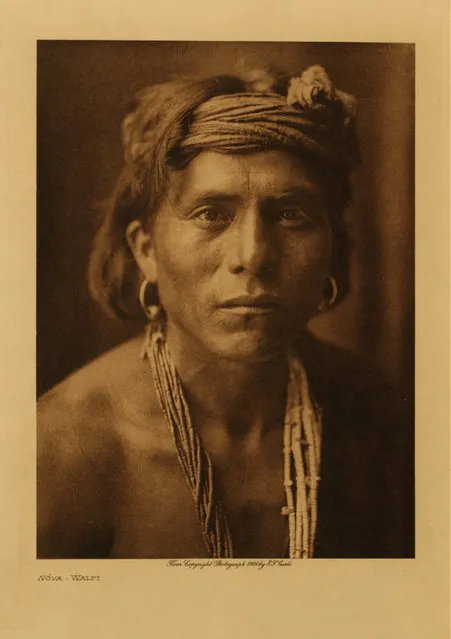
Nova, a Walpi, in 1906. (Photo by Edward S. Curtis)

At the beginning of the 20th century, Edward S. Curtis set out to document what he saw as a disappearing race: the Native American. From 1907 to 1930, Curtis took more than 2,000 photos of 80 tribes stretching from the Great Plains to the Pacific Northwest and Alaska. He then published and sold these photos, along with narrative text, in 20 volumes of work known as “The North American Indian”. It is one of the most significant collections of its kind, “probably the most important photographic document of its age and its topic,” said Jeffrey Garrett, associate university librarian for Special Libraries at Northwestern University. (Photo by Edward S. Curtis)
Details
07 Sep 2014 12:57:00
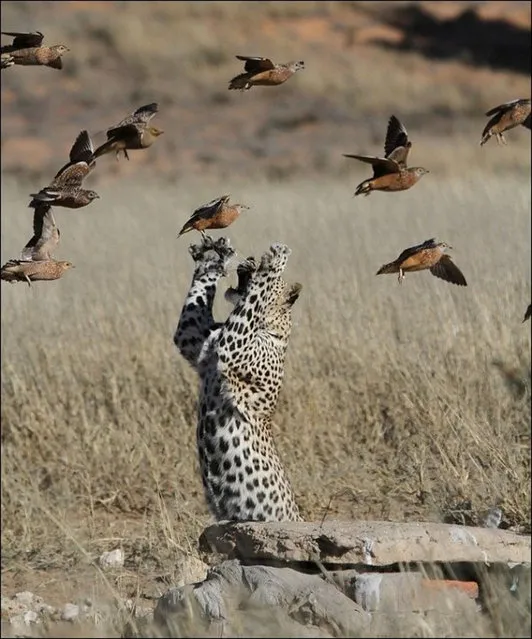
South African Leopard Catches Sandgrouse

Deftly he finished with a birdie that they fly so low?
Details
24 Sep 2012 15:41:00
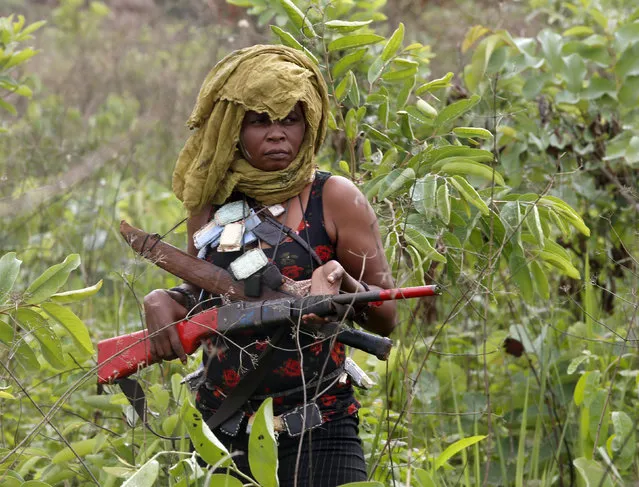
A female member of the anti-balaka, a Christian militia, patrols with other militiamen outside village of Zawa April 8, 2014. (Photo by Goran Tomasevic/Reuters)

Anti-balaka militia originally sprang up to protect the Christian population of the Central African Republic, but now stand accused of human rights abuses themselves. Last month, the African Union branded militia targeting Muslims in Central African Republic as “terrorists” and said they would be treated as enemy combatants, a day after killing a Congolese peacekeeper and amid deepening international frustration at continuing violence in the impoverished and landlocked country. Photo: A female member of the anti-balaka, a Christian militia, patrols with other militiamen outside village of Zawa April 8, 2014. (Photo by Goran Tomasevic/Reuters)
Details
10 Apr 2014 10:26:00
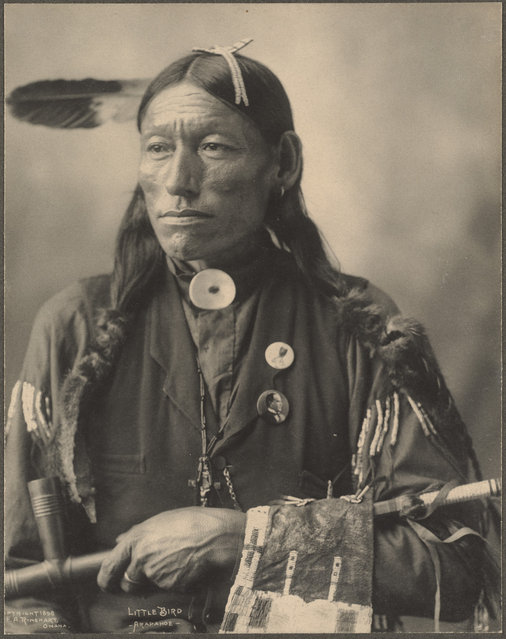
Little Bird, Arapahoe, 1899. (Photo by Frank A. Rinehart)

Frank A. Rinehart, a commercial photographer in Omaha, Nebraska, was commissioned to photograph the 1898 Indian Congress, part of the Trans-Mississippi International Exposition. More than five hundred Native Americans from thirty-five tribes attended the conference, providing the gifted photographer and artist an opportunity to create a stunning visual document of Native American life and culture at the dawn of the 20th century. Photo: Little Bird, Arapahoe, 1899. (Photo by Frank A. Rinehart)
Details
25 Apr 2013 11:30:00
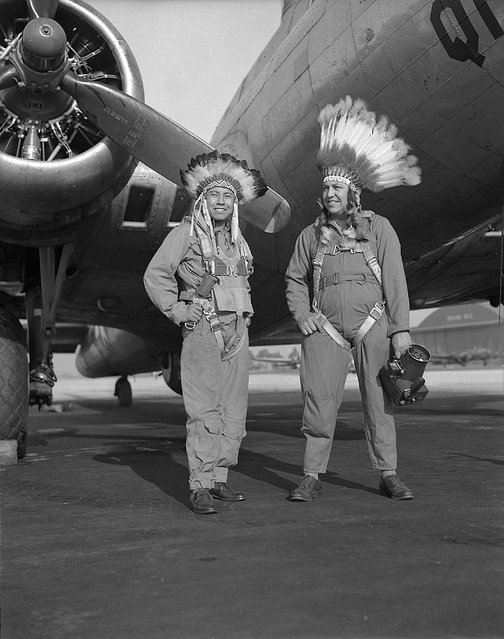
Gus Palmer (Kiowa, at left), side gunner, and Horace Poolaw (Kiowa), aerial photographer, in front of a B-17 Flying Fortress. MacDill Field, Tampa, Florida, ca. 1944. (Photo and caption by 2014 Estate of Horace Poolaw)

Gus Palmer (Kiowa, at left), side gunner, and Horace Poolaw (Kiowa), aerial photographer, in front of a B-17 Flying Fortress. MacDill Field, Tampa, Florida, ca. 1944. (Photo and caption by 2014 Estate of Horace Poolaw)
Details
03 Sep 2014 10:38:00
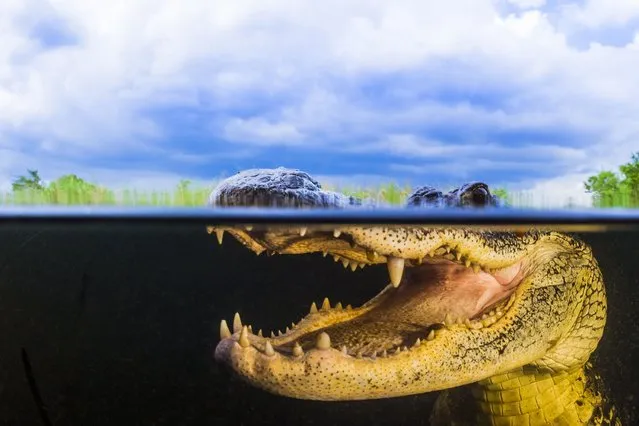
American Alligator By Masa Ushioda

Brave photographer Masa Ushioda captured the shots of this wild gator in vast marsh land in the Everglades National Park, in Florida, USA. He said: “Bright sunlight and blue sky were critical elements in this picture – in addition to getting a wild 10-foot alligator in the middle of the viewfinder with a perfect angle”.

Details
29 Mar 2014 12:02:00
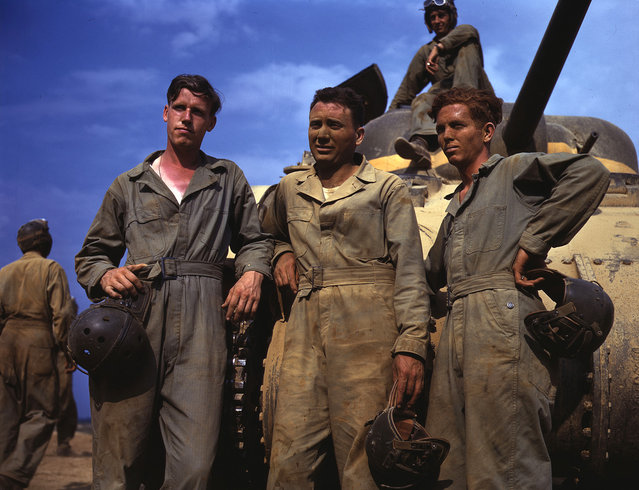
Tank crew standing in front of M-4 tank, Ft. Knox, Kentucky, June, 1942

Tank crew standing in front of M-4 tank, Ft. Knox, Kentucky, June, 1942. (Alfred Palmer/OWI/LOC)
Details
04 May 2012 12:12:00
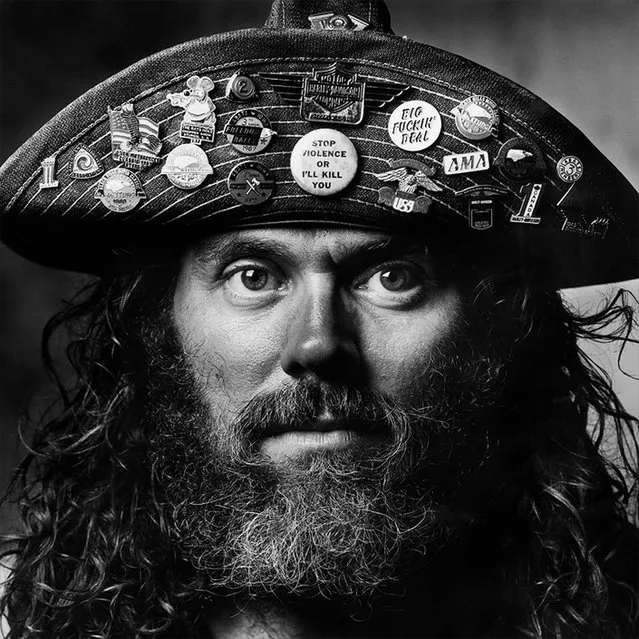
American Bikers By Sandro Miller

Bikers are the knights of the modern times. They ride their steel horses; they drink and brawl and have their own strict code of honor. Some people view them as land-dwelling pirates; however, they are so much more than that. Photographer Sandro Miller is one of the few people who decided to look deeper than their rugged exterior, realizing that it takes more than a Harley Davidson bike and a leather jacket to make a biker. A true biker cannot be chained to a single place. The spirit of the true biker demands change, it seeks adventure, and it thirsts for freedom! (Photo by Sandro Miller)
Details
26 Nov 2014 14:50:00