Loading...
Done
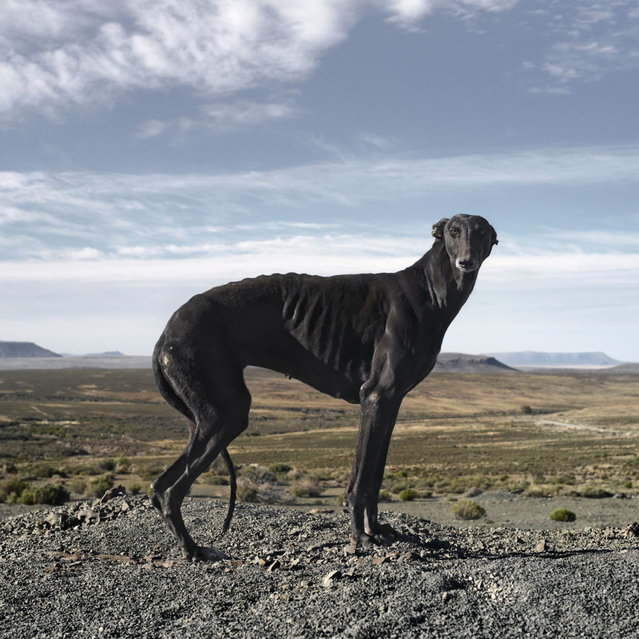
Africanis 18. Murraysburg, Western Cape, May 10, 2010. (Photo by Daniel Naudé)

“The Africanis is a landrace of South African dogs. It is believed to be of ancient origin, directly descended from hounds and pariah dogs of ancient Africa, introduced into the Nile Valley from the Levant. The Swahili name for the breed is umbwa wa ki-shenzi meaning common or mongrel or “traditional dog”. Africanis is also an umbrella name for all the aboriginal dogs in southern Africa”. – Wikipedia. Photo: Africanis 18. Murraysburg, Western Cape, May 10, 2010. (Photo by Daniel Naudé)
Details
19 May 2013 11:51:00
Residents (R to L) Luiza, Janubie, Leiticia and Lucas sit beneath an overpass near their houses in an impoverished area in the unpacified Complexo da Mare slum complex, one of the largest “favela” complexes in Rio de Janeiro. (Photo by Mario Tama/Getty Images)

Residents (R to L) Luiza, Janubie, Leiticia and Lucas sit beneath an overpass near their houses in an impoverished area in the unpacified Complexo da Mare slum complex, one of the largest “favela” complexes in Rio, on March 18, 2014 in Rio de Janeiro, Brazil. (Photo by Mario Tama/Getty Images)
Details
21 Mar 2014 06:07:00
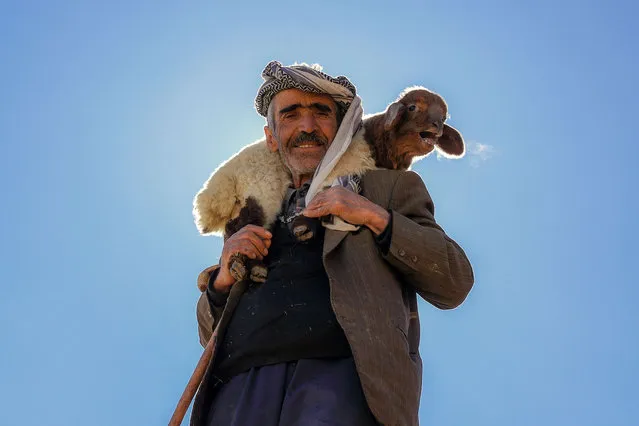
A shepherd, holding a lamb, is seen in Gurpinar district of Van, Turkiye on March 30, 2022. Norduz sheep, which are among the significant germplasm of Turkiye and therefore the number of which is aimed to be increased with the state-funded projects. Directorate of Agriculture and Forestry of Van has started work to protect the breed and increase the number of Norduz sheep, which have one more rib than regular sheep and have higher meat and milk yield. Projects are impelling to rise the number of small cattle and to protect local breeds due to the fact that Van ranks first in Turkiye in terms of small cattle. (Photo by Ozkan Bilgin/Anadolu Agency via Getty Images)

A shepherd, holding a lamb, is seen in Gurpinar district of Van, Turkiye on March 30, 2022. Norduz sheep, which are among the significant germplasm of Turkiye and therefore the number of which is aimed to be increased with the state-funded projects. Directorate of Agriculture and Forestry of Van has started work to protect the breed and increase the number of Norduz sheep, which have one more rib than regular sheep and have higher meat and milk yield. Projects are impelling to rise the number of small cattle and to protect local breeds due to the fact that Van ranks first in Turkiye in terms of small cattle. (Photo by Ozkan Bilgin/Anadolu Agency via Getty Images)
Details
09 Apr 2022 05:29:00
A spectator at the Maslenitsa car battle, reacts during a clash, in the village of Goroshki, some 35 kilometers from Minsk, Belarus, 12 March 2016. The battle which is held at the Historical and Cultural Complex, Stalin line, is a small local competition, with participants from Belarus and Russia. (Photo by Tatyana Zenkovich/EPA)

A spectator at the Maslenitsa car battle, reacts during a clash, in the village of Goroshki, some 35 kilometers from Minsk, Belarus, 12 March 2016. The battle which is held at the Historical and Cultural Complex, Stalin line, is a small local competition, with participants from Belarus and Russia. (Photo by Tatyana Zenkovich/EPA)
Details
13 Mar 2016 10:54:00
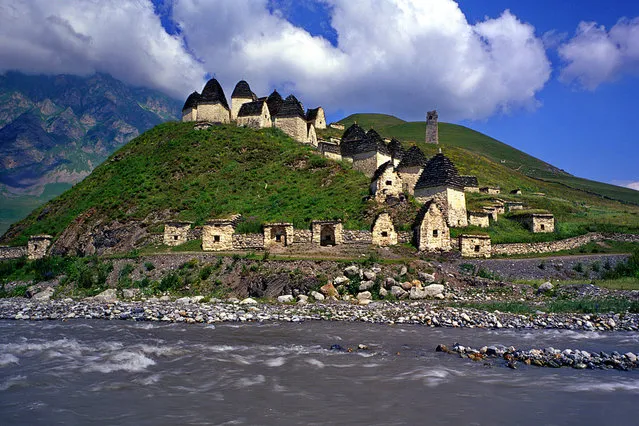
City Of The Dead In Dargavs, North Ossetia

Dargavs is a small necropolis outside the village of Dargavs in North Ossetia-Alania. It comprises 99 different tombs and crypts. It is often called city of the dead. Some sources say the oldest of the crypts dates back to the 12th century, though others say the oldest crypt dates back to 14th century and some say it dates to the 16th century. At the back of the complex there is a tower, though the top of it is destroyed.
Details
11 Oct 2014 10:41:00
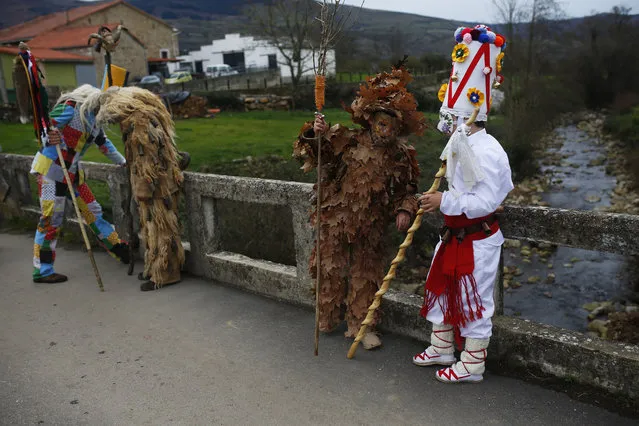
People dressed in costumes have a break while marching during the Vijanera Festival, in the small village of Silio, northern Spain, Sunday, January 3, 2016. The Vijanera masquerade, of pre-Roman origin, is the first carnival of the year in Europe symbolizing the triumph of good over evil and involving the participation of crowds of residents wearing different masks, animal skins and brightly coloured clothing with its own complex function and symbolism and becoming the living example of the survival of archaic cults to nature. (Photo by Francisco Seco/AP Photo)

People dressed in costumes have a break while marching during the Vijanera Festival, in the small village of Silio, northern Spain, Sunday, January 3, 2016. The Vijanera masquerade, of pre-Roman origin, is the first carnival of the year in Europe symbolizing the triumph of good over evil and involving the participation of crowds of residents wearing different masks, animal skins and brightly coloured clothing with its own complex function and symbolism and becoming the living example of the survival of archaic cults to nature. (Photo by Francisco Seco/AP Photo)
Details
04 Jan 2016 10:17:00
Customers take photos of a snake at the Tokyo Snake Center, a snake cafe, in Tokyo's Harajuku shopping district  August 14, 2015. (Photo by Toru Hanai/Reuters)

Customers take photos of a snake at the Tokyo Snake Center, a snake cafe, in Tokyo's Harajuku shopping district August 14, 2015. The cafe has on display 35 non-venomous snakes of 20 different breeds. Open six days a week, the cafe allows customers to enjoy food and beverages while watching a small snake slither around in a cage on their table for a 1,000 yen (8.04 dollars). By paying an additional fee, customers get to hold and pet the snake. (Photo by Toru Hanai/Reuters)
Details
15 Aug 2015 11:42:00


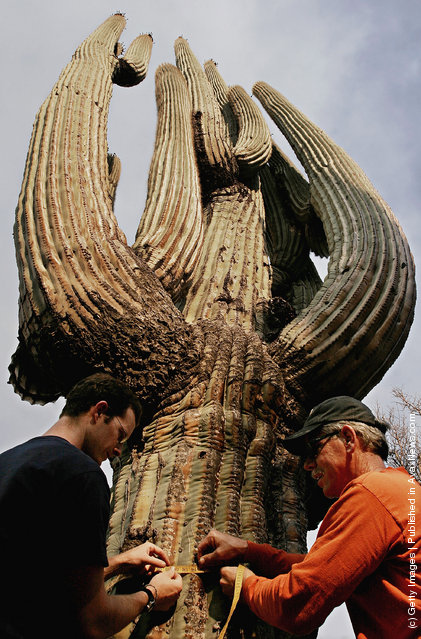
“The saguaro (scientific name Carnegiea gigantea) is a large, tree-sized cactus species in the monotypic genus Carnegiea. It is native to the Sonoran Desert in the U.S. state of Arizona, the Mexican state of Sonora, a small part of Baja California in the San Felipe Desert and an extremely small area of California, U.S. The saguaro blossom is the State Wildflower of Arizona”. – Wikipedia

Photo: Daniel Appel (L), a firefighter with Engine 84 from the Lassen National Forest in California and Mike Hallen, (R), Arizona representative of the National Register of Big Trees, measure the circumference of this Saguaro cactus called the "Grand One," in the Tonto National Forest on July 1, 2005 35 miles north of Phoenix, near Carefree, Arizona. The cactus, estimated to be more than 200 years old, measures a circumference of 7 feet, 10 inches (2.4 meters) and stands 46 feet high (14 meters). The cactus was burned in the Cave Creek Complex fire and may not survive. It was once the largest Saguaro in the world, two others have been found recently that have tied it's measurements. The fire has burned more than 214,000 acres of the Sonoran desert. (Photo by Jeff Topping/Getty Images)

Details
26 Jul 2011 12:27:00