Loading...
Done
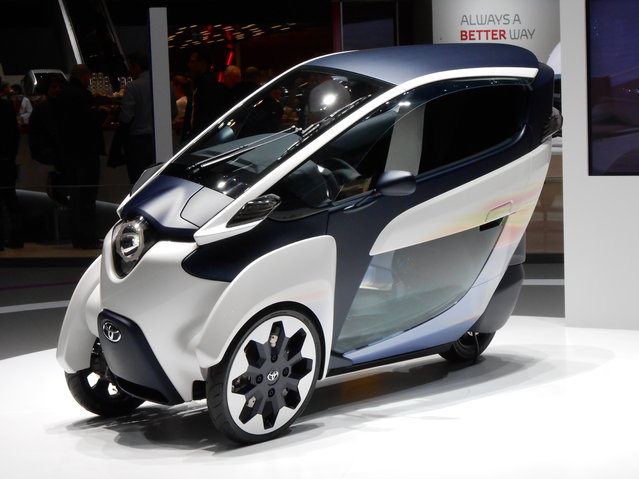
Toyota revealed its i-Road concept, a three-wheeled all-electric motorcycle of sorts that seats two. The unique design is only 33 inches wide, which would make it tops in buzzing in through and around traffic. An Active Lean system tilts the i-Road through corners like a motorbike, while the cabin (which seats two in a tandem layout) is fully enclosed. Maximum range is about 30 miles. (Photo by Luis Fernando Ramos/G1)

Toyota revealed its i-Road concept, a three-wheeled all-electric motorcycle of sorts that seats two. The unique design is only 33 inches wide, which would make it tops in buzzing in through and around traffic. An Active Lean system tilts the i-Road through corners like a motorbike, while the cabin (which seats two in a tandem layout) is fully enclosed. Maximum range is about 30 miles. (Photo by Luis Fernando Ramos/G1)
Details
08 Mar 2013 12:29:00


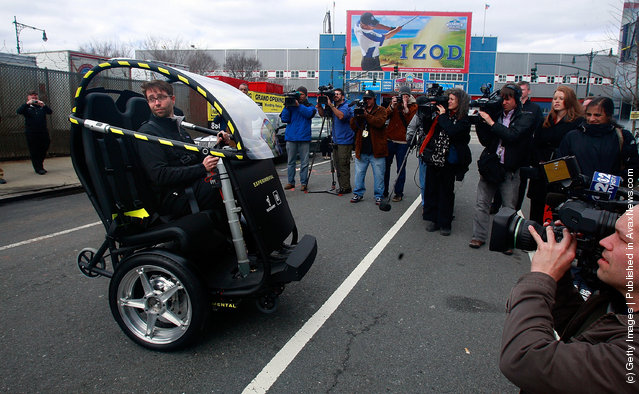
“The Personal Urban Mobility and Accessibility (PUMA) is an experimental electrically powered road vehicle created by Segway and adopted by General Motors as a concept vehicle representing the future of urban transportation. It operates on two wheels placed side-by-side, a layout that differs in placement from motorcycles which instead have their two wheels placed at the front and rear”. – Wikipedia

The Project P.U.M.A. (Personal Urban Mobility and Accessibility) prototype is displayed for the media April 7, 2009 in New York City. (Photo by Mario Tama/Getty Images)
Details
21 Jul 2011 14:32:00
A Munduruku Indian child is pictured at the Planalto Palace, where a meeting with Minister of the General Secretariat of the Presidency of Brazil Gilberto Carvalho was being held with other Munduruku Indians, in Brasilia, June 4, 2013. (Photo by Ueslei Marcelino/Reuters)

A Munduruku Indian child is pictured at the Planalto Palace, where a meeting with Minister of the General Secretariat of the Presidency of Brazil Gilberto Carvalho was being held with other Munduruku Indians, in Brasilia, June 4, 2013. President Dilma Rousseff's government sought on Tuesday to defuse mounting conflicts with indigenous groups over its decision to stop setting aside farm land for Indians and plans to build more hydroelectric dams in the Amazon. The government flew 144 Munduruku Indians to Brasilia for talks to end a week-long occupation of the controversial Belo Monte dam on the Xingu river, a huge project aimed at feeding Brazil's fast-growing demand for electricity. (Photo by Ueslei Marcelino/Reuters)
Details
06 Jun 2013 09:25:00
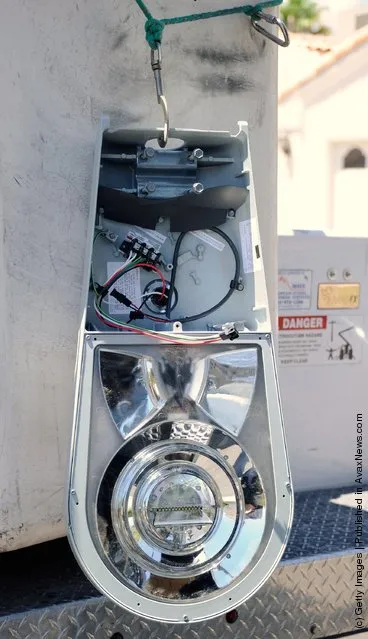
A new LED light fixture is secured to the side of a lift as crews replace existing street lights

A new LED light fixture is secured to the side of a lift as crews replace existing street lights August 1, 2011 in Las Vegas, Nevada. The new energy-efficient fixtures are expected to reduce the city's annual electricity use by eight million kilowatt hours, saving about USD 400,000. The city estimates the LEDs will last about 15 years, nine years longer than the current lights. Funding for the project comes from federal energy conservation bonds and an American Recovery & Reinvestment Act grant. The city plans to replace all of its 50,000 streetlights after more funding is secured. (Photo by Ethan Miller/Getty Images)
Details
02 Aug 2011 14:27:00


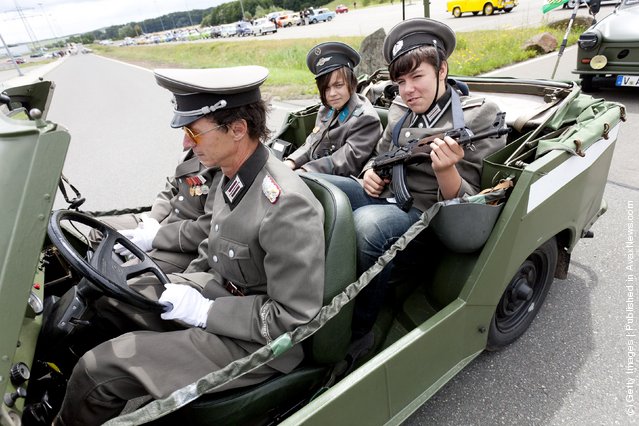
“The Trabant is a car that was produced by former East German auto maker VEB Sachsenring Automobilwerke Zwickau in Zwickau, Sachsen. It was the most common vehicle in East Germany, and was also exported to countries both inside and outside the communist bloc. The main selling points was that it had room for four adults and luggage in a compact, light and durable shell and that it was fast (when introduced) and durable. With its mediocre performance, smoky two-stroke engine, and production shortages, the Trabant is often cited as an example of the disadvantages of centralized planning; on the other hand, it is regarded with derisive affection as a symbol of the failed former East Germany and of the fall of communism (in former West Germany, as many East Germans streamed into West Berlin and West Germany in their Trabants after the opening of the Berlin Wall in 1989). It was in production without any significant changes for nearly 30 years with 3,096,099 Trabants produced in total”. – Wikipedia

Photo: Enthusiasts weared in uniforms of the former eastern german army trive in a military Trabant car as fans and owners of East German-era Trabant cars gather at the 2011 International Trabantfahrer Treffen (International Trabant Drivers Meeting) on June 26, 2011 in Zwickau, Germany. The Trabant, also known as the Trabi, was among the main cars produced in communist East Germany and built by VEB Sachsenring Automobilwerke in Zwickau for 30 years until 1989. Today the car has cult status for many followers and one company, IndiKar, is even seeking to revive the brand in a modern, electric version. (Photo by Carsten Koall/Getty Images)

Details
27 Jun 2011 12:21:00
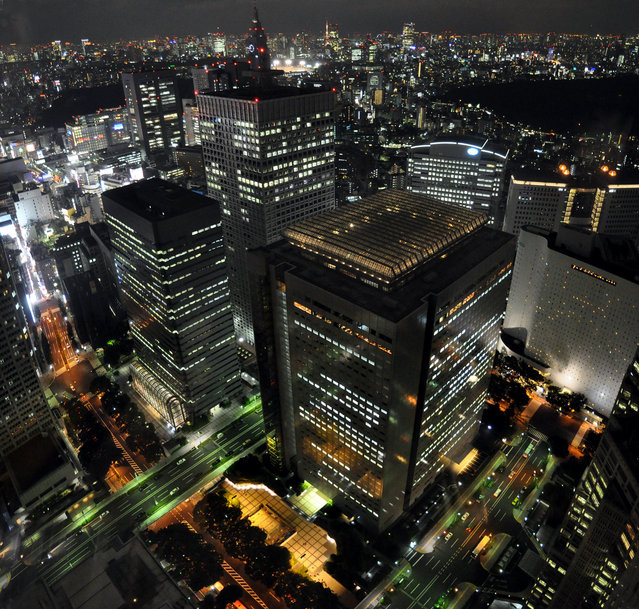
Tokyo, “Electric City”

Tokyo, “Electric City”. August 24, 2009. (Photo by Caribb; Source: Flickr)
Details
01 May 2012 11:15:00
Two men using an electric power saw to fell a tree circa 1940's

Two men using an electric power saw to fell a tree circa 1940's. (Photo by Keystone View/FPG/Getty Images)
Details
18 Sep 2011 11:53:00
Visitors browse in the starry Art Museum. Shanghai, China, May 13, 2020. The exhibition hall uses a large number of mirror devices, combined with the layout of acousto-optic, to create a visual scene and spatial effect. (Photo by Costfoto/Barcroft Media via Getty Images)

Visitors browse in the starry Art Museum. Shanghai, China, May 13, 2020. The exhibition hall uses a large number of mirror devices, combined with the layout of acousto-optic, to create a visual scene and spatial effect. (Photo by Costfoto/Barcroft Media via Getty Images)
Details
21 May 2020 00:05:00