Loading...
Done
A general view of Edinburgh Castle

A general view of Edinburgh Castle on February 7, 2012 in Edinburgh, Scotland. The castle dominates the city skyline was built on top of an extinct volcano, and has had a human settlement on the castle site since 900BC. (Photo by Jeff J. Mitchell/Getty Images)
Details
08 Feb 2012 10:58:00
A policeman stops a cyclist as demonstrators from Extinction Rebellion (XR) protest during the NATO Summit by blocking the A12 highway in The Hague, The Netherlands, 25 June 2025. The Netherlands, for the first time in NATO's history of existence, is hosting a NATO summit. (Photo by Sebastiaan Barel/EPA)

A policeman stops a cyclist as demonstrators from Extinction Rebellion (XR) protest during the NATO Summit by blocking the A12 highway in The Hague, The Netherlands, 25 June 2025. The Netherlands, for the first time in NATO's history of existence, is hosting a NATO summit. (Photo by Sebastiaan Barel/EPA)
Details
13 Jul 2025 00:39:00
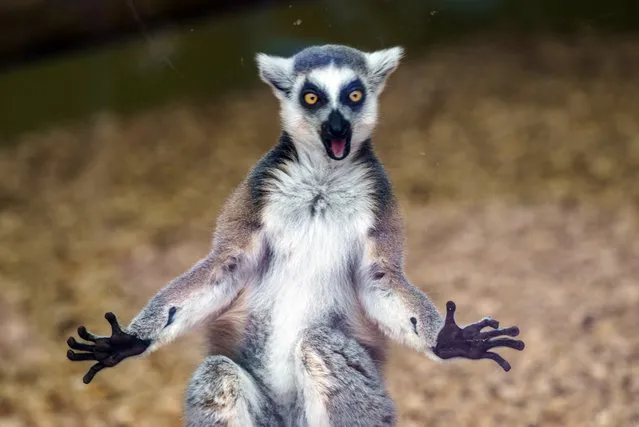
A calico sits in its enclosure and suns itself in Hessen, Germany on May 28, 2021. The Opel Zoo presents a walk-in Madagascar aviary for caltas and varis. The primate species is native to Madagascar and is threatened with extinction. (Photo by Andreas Arnold/dpa)

A calico sits in its enclosure and suns itself in Hessen, Germany on May 28, 2021. The Opel Zoo presents a walk-in Madagascar aviary for caltas and varis. The primate species is native to Madagascar and is threatened with extinction. (Photo by Andreas Arnold/dpa)
Details
30 May 2021 09:19:00
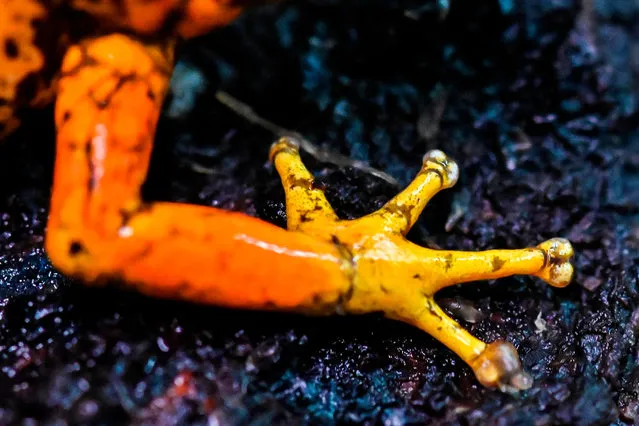
A leg of a “diablito” frog (Oophaga sylvatica) is photographed in a laboratory at a laboratory in the zoo of Cali, Colombia, on July 19, 2019. Colombia is the second country with the largest number of amphibians in the world after Brazil. More than 40% of amphibian species worldwide are in danger of extinction. (Photo by Luis Robayo/AFP Photo)

A leg of a “diablito” frog (Oophaga sylvatica) is photographed in a laboratory at a laboratory in the zoo of Cali, Colombia, on July 19, 2019. Colombia is the second country with the largest number of amphibians in the world after Brazil. More than 40% of amphibian species worldwide are in danger of extinction. (Photo by Luis Robayo/AFP Photo)
Details
28 Nov 2020 00:03:00
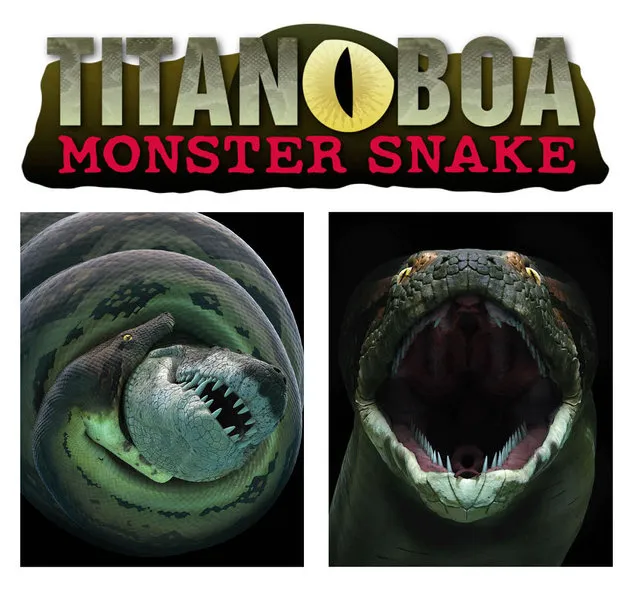
Titanoboa: Monster Snake

Titanoboa, meaning "titanic boa," is an extinct genus of snake that lived approximately 60–58 million years ago, during the Paleocene epoch, a 10-million-year period immediately following the dinosaur extinction event. The only known species is Titanoboa cerrejonensis, the largest, longest, and heaviest snake ever discovered, which supplanted the previous record holder, Gigantophis.

A full-scale model of the snake was unveiled at New York City's Grand Central station before the exhibit opens at the Smithsonian in Washington DC.
Details
06 Feb 2014 12:38:00
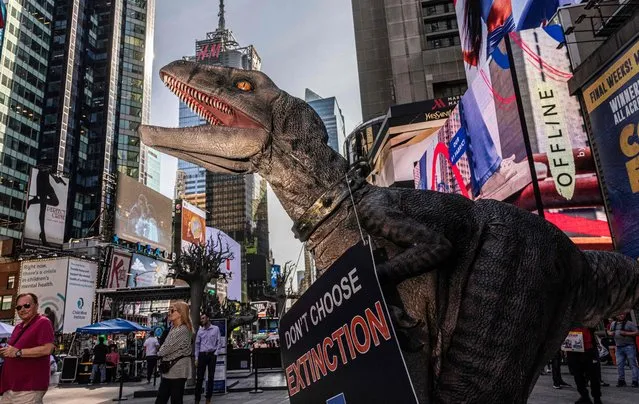
Frankie the Dinosaur, mascot of the United Nations Development Program “Don't Choose Extinction” visits Times Square spreading his climate-related message in New York on September 21, 2022. (Photo by Alex Kent/AFP Photo)

Frankie the Dinosaur, mascot of the United Nations Development Program “Don't Choose Extinction” visits Times Square spreading his climate-related message in New York on September 21, 2022. (Photo by Alex Kent/AFP Photo)
Details
29 Sep 2022 03:52:00
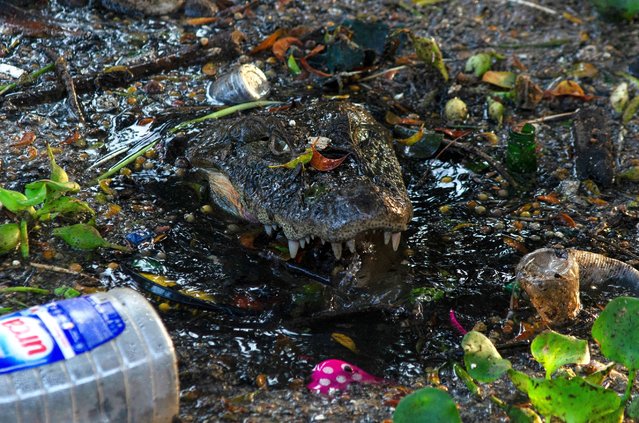
A caiman swims amidst trash in Canal das Taxas at the Recreio dos Bandeirantes neighborhood in west Rio de Janeiro, Brazil, on November 22, 2023. The urban expansion of the area and the resulting pollution have put the yacare caiman (Caiman latirostris) “in danger of extinction”. (Photo by Tercio Teixeira/AFP Photo)

A caiman swims amidst trash in Canal das Taxas at the Recreio dos Bandeirantes neighborhood in west Rio de Janeiro, Brazil, on November 22, 2023. The urban expansion of the area and the resulting pollution have put the yacare caiman (Caiman latirostris) “in danger of extinction”. (Photo by Tercio Teixeira/AFP Photo)
Details
12 Jun 2024 03:33:00
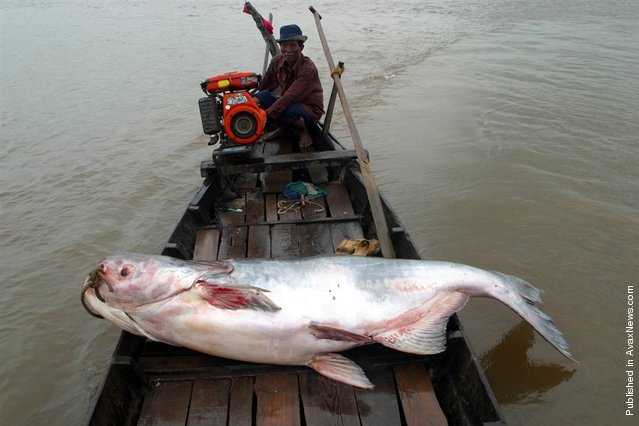
Among the fish populations that could be harmed by the Xayaburi dam in Laos is the critically endangered Mekong giant catfish, considered by the Guinness Book of World Records to be the world’s largest freshwater fish. The fish, which grows to 650 pounds and about 10 feet long, is only found in the Mekong River. It is migratory, moving between downstream habitats in Cambodia upstream to northern Thailand and Laos each year to spawn. Some experts fear the Xayaburi dam could block the migration and drive the giant catfish to extinction

Among the fish populations that could be harmed by the Xayaburi dam in Laos is the critically endangered Mekong giant catfish, considered by the Guinness Book of World Records to be the world’s largest freshwater fish. The fish, which grows to 650 pounds and about 10 feet long, is only found in the Mekong River. It is migratory, moving between downstream habitats in Cambodia upstream to northern Thailand and Laos each year to spawn. Some experts fear the Xayaburi dam could block the migration and drive the giant catfish to extinction. (Photo by Courtesy of Zeb Hogan/University of Nevada, Reno)
Details
20 Apr 2012 13:10:00