Loading...
Done
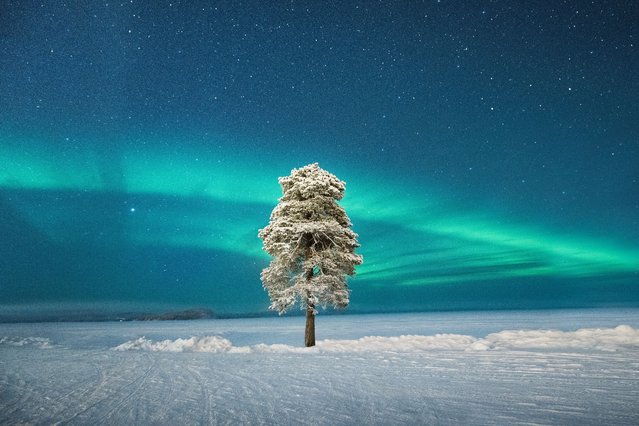
Aurorae category runner-up: Lone Tree under a Scandinavian Aurora by Tom Archer (UK). The photographer decided to explore the area around the hotel on a very crisp -35C evening in Finnish Lapland. When he found this tree, he decided to wait for the misty conditions to change and could not believe his luck when the sky cleared and the aurora came out in the perfect spot. Archer spent about an hour photographing it before his camera started to lock up because of the harsh conditions, but by then he was happy to call it a night. (Photo by Tom Archer/2020 Astronomy Photographer of the Year)

Aurorae category runner-up: Lone Tree under a Scandinavian Aurora by Tom Archer (UK). The photographer decided to explore the area around the hotel on a very crisp -35C evening in Finnish Lapland. When he found this tree, he decided to wait for the misty conditions to change and could not believe his luck when the sky cleared and the aurora came out in the perfect spot. Archer spent about an hour photographing it before his camera started to lock up because of the harsh conditions, but by then he was happy to call it a night. (Photo by Tom Archer/2020 Astronomy Photographer of the Year)
Details
17 Sep 2020 00:03:00
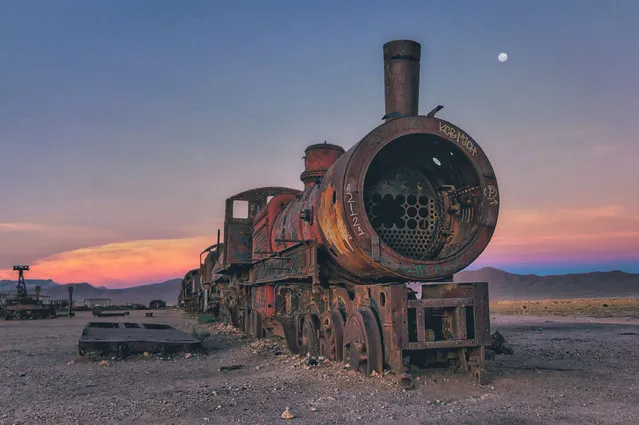
Many of the trains and locomotives are British imports and have been eroded by the harsh Bolivian climate. (Photo by Chris Staring/Rex Features/Shutterstock)

Chris Staring photographs a mysterious train graveyard in the heart of southern Bolivia, where the skeletons of British steam locomotives and rail cars rust away on the edge of the world’s largest salt flats. More than 100 rail cars and locomotives can be found in different states of decay in the train graveyard. (Photo by Chris Staring/Rex Features/Shutterstock)
Details
03 Jul 2016 10:46:00
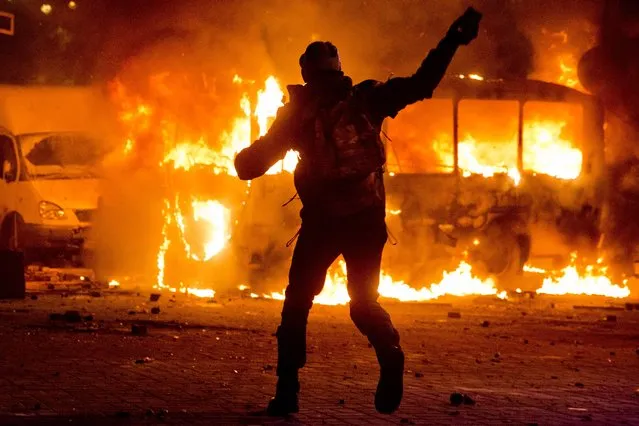
A protester  throws  a stone towards a burning police bus in front of him, during clashes with police,  in central Kiev, Ukraine, Sunday, January 19, 2014. (Photo by Evgeny Feldman/AP Photo)

A protester throws a stone towards a burning police bus in front of him, during clashes with police, in central Kiev, Ukraine, Sunday, January 19, 2014. Hundreds of protesters on Sunday clashed with riot police in the center of the Ukrainian capital, after the passage of harsh anti-protest legislation last week seen as part of attempts to quash anti-government demonstrations. The violent scenes further escalated this ex-Soviet republic's political crisis and showed a rift among opposition leaders, one of whom fought bravely to stop the violence, while others condemned the events from afar. (Photo by Evgeny Feldman/AP Photo)
Details
20 Jan 2014 09:54:00
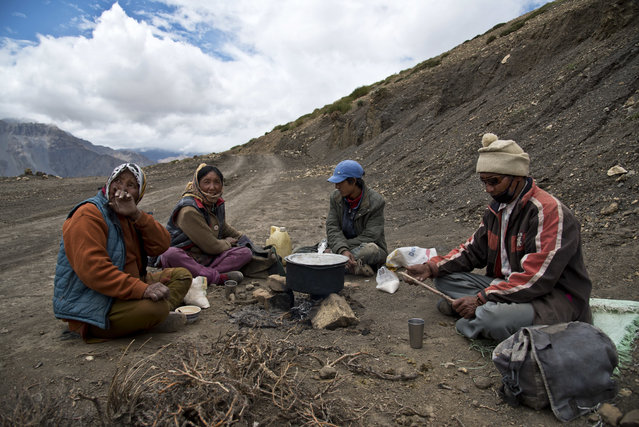
In this August 17, 2016, photo, from left to right, Chhering Chodom, 60, Tashi Yangzom, 50, Lobsang Chhering, 27, and Dorje Tandup, 58, drink milk tea on the side of the road. For centuries, the sleepy valley nestled in the Indian Himalayas remained a hidden Buddhist enclave forbidden to outsiders. Enduring the harsh year-round conditions of the high mountain desert, the people of Spiti Valley lived by a simple communal code – share the Earth's bounty, be hospitable to neighbors, and eschew greed and temptation at all turns. That's all starting to change, for better or worse. Since India began allowing its own citizens as well as outsiders to visit the valley in the early 1990s, tourism and trade have boomed. And the marks of modernization, such as solar panels, asphalt roads and concrete buildings, have begun to appear around some of the villages that dot the remote landscape at altitudes above 4,000 meters (13,000 feet). (Photo by Thomas Cytrynowicz/AP Photo)

In this August 17, 2016, photo, from left to right, Chhering Chodom, 60, Tashi Yangzom, 50, Lobsang Chhering, 27, and Dorje Tandup, 58, drink milk tea on the side of the road. For centuries, the sleepy valley nestled in the Indian Himalayas remained a hidden Buddhist enclave forbidden to outsiders. Enduring the harsh year-round conditions of the high mountain desert, the people of Spiti Valley lived by a simple communal code – share the Earth's bounty, be hospitable to neighbors, and eschew greed and temptation at all turns. That's all starting to change, for better or worse. (Photo by Thomas Cytrynowicz/AP Photo)
Details
15 Sep 2016 09:22:00
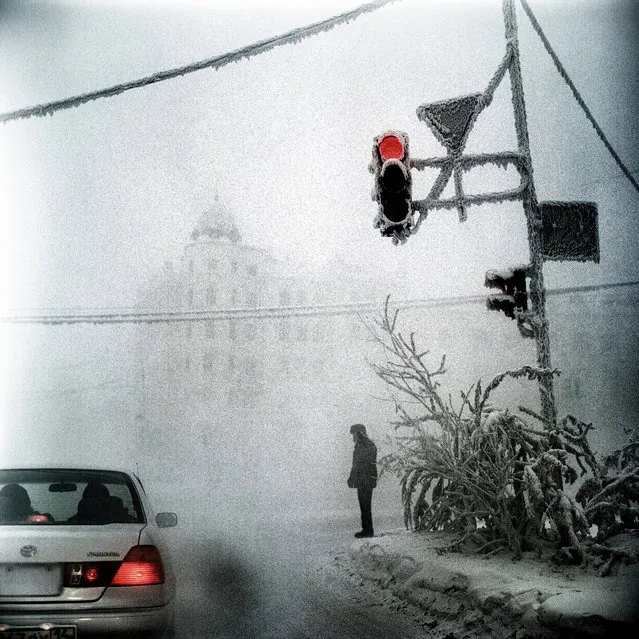
January 2013. A scene in Yakutsk, Siberia, the coldest city in the world. (Photo by Steeve Iuncker/Agence VU)

Yakutsk, a remote city in Eastern Siberia along the Lena River, is the coldest city in the world. Located 1840 km away from Irkoustk and 5000 km away from Moscow, this city founded in 1632 by the Cossacks imposes upon its inhabitants an extreme way of life. And yet, despite particularly harsh conditions, Yakutsk boasts a population of 270,000, or a quarter of the entire population of Siberia. No other place on the planet experiences the temperature extreme found here: in winter, the temperatures regularly fall to minus 40° (the coldest temperature recorded was –64°C) and in summer often reaches temperatures above 30°C. Photo: January 2013. A scene in Yakutsk, Siberia, the coldest city in the world. (Photo by Steeve Iuncker/Agence VU)
Details
29 Apr 2013 10:30:00
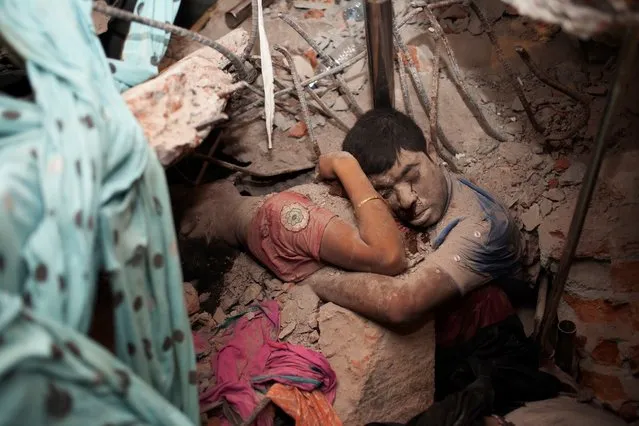
Two victims amid the rubble of a garment factory building collapse in Savar, near Dhaka, Bangladesh, April 25, 2013. (Photo by Taslima Akhter)

Many powerful photographs have been made in the aftermath of the devastating collapse of a garment factory on the outskirts of Dhaka, Bangladesh. But one photo, by Bangladeshi photographer Taslima Akhter, has emerged as the most heart wrenching, capturing an entire country’s grief in a single image... Photo: Two victims amid the rubble of a garment factory building collapse in Savar, near Dhaka, Bangladesh, April 25, 2013. (Photo by Taslima Akhter)
Details
10 May 2013 11:19:00
A Hole in Mars

“What created this unusual hole in Mars? The hole was discovered by chance on images of the dusty slopes of Mars' Pavonis Mons volcano taken by the HiRISE instrument aboard the robotic Mars Reconnaissance Orbiter currently circling Mars”. (Photo by NASA/JPL/University of Arizona)
Details
22 Jul 2012 07:49:00
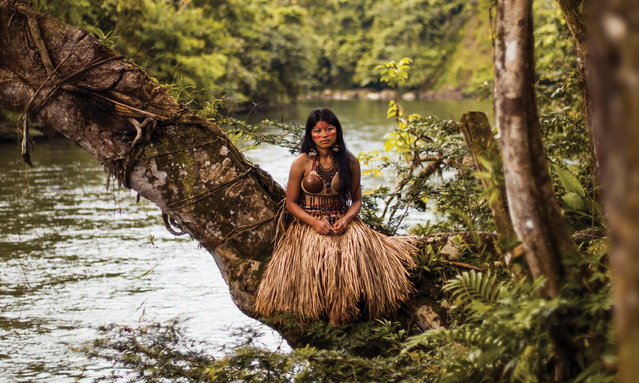
Ecuador: “More and more tribes of Amazonia are starting to adopt modern clothes for everyday life. But they are still keeping their traditional clothes for important events. I photographed this young woman in her wedding outfit”. (Photo by Mihaela Noroc/The Guardian)

Photographer Mihaela Noroc travelled the world from Ethiopia to the US and from Guatemala to France in search of natural and authentic beauty. She introduces some of the inspiring women she met on her journey. Here: Ecuador. “More and more tribes of Amazonia are starting to adopt modern clothes for everyday life. But they are still keeping their traditional clothes for important events. I photographed this young woman in her wedding outfit”. (Photo by Mihaela Noroc/The Guardian)
Details
27 Sep 2017 08:29:00