Loading...
Done
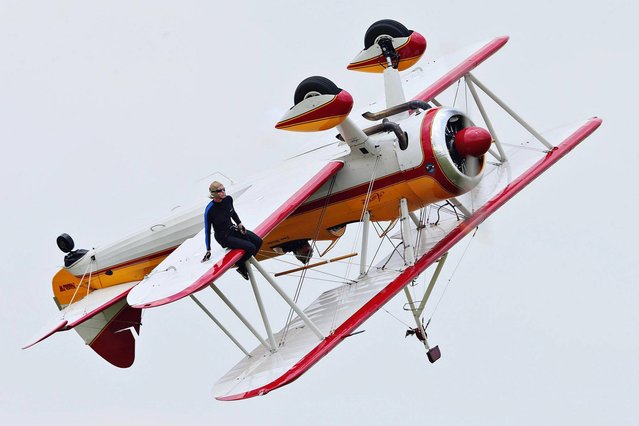
A wing walker performs at the Vectren Air Show just before crashing, Saturday, June 22, 2013, in Dayton, Ohio. The crash killed the pilot and the stunt walker instantly, authorities said. (Photo by Thanh V. Tran/AP Photo)

A plane carrying a wing walker crashed at an air show and exploded into flames Saturday, killing the pilot and stunt walker, authorities said. The crash of the 450 HP Stearman happened at around 12:45 p.m. at the Vectren Air Show near Dayton in front of thousands of horrified spectators. No one else was hurt.

Photo: A wing walker performs at the Vectren Air Show just before crashing, Saturday, June 22, 2013, in Dayton, Ohio. The crash killed the pilot and the stunt walker instantly, authorities said. (Photo by Thanh V. Tran/AP Photo)
Details
25 Jun 2013 14:07:00
A girl on a swing in the sky. (Photo by Ali Jardine/Caters News)

A stay-at-home mom's surreal iPhone snaps of her children have seen her rack up more than a half-million Instagram fans. Ali Jardine, 42, photographs silhouettes of her two kids in fairy-tale environments, from a spiraling night sky to sunsets. The creative mom has gained more than 519,000 followers online since she got her first iPhone in November 2010. And due to her success, Ali, who is from Petaluma, Calif., has been able to monetize her work, helping the likes of HP and Samsung with Instagram campaigns. Here: a girl on a swing in the sky. (Photo by Ali Jardine/Caters News)
Details
03 Apr 2015 13:09:00
[Battle Of Helm’s Deep Made From Lego

Based on the layout of Helm’s Deep featured in Peter Jackson’s film adaptation, this 150,000 brick set piece is astounding. The artists, who go by the names Rich-K and Big J, apparently, nail the atmosphere and scale of the conflict of one Lord of the Rings most iconic scenes. At the time these photos were taken, the model was about 90% complete, with an estimated four months worth of work. The time, money and personal investment that must have gone into this project is impressive.
Details
19 Sep 2013 10:22:00
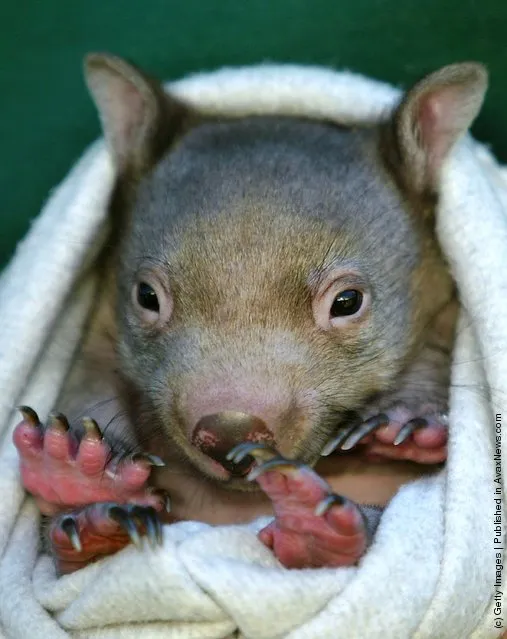
A baby Common Wombat

“Wombats are Australian marsupials; they are short-legged, muscular quadrupeds, approximately 1 metre (39 in) in length with a short, stubby tail. They are adaptable in their habitat tolerances, and are found in forested, mountainous, and heathland areas of south-eastern Australia, including Tasmania, as well as an isolated patch of about 300 ha in Epping Forest National Park in central Queensland”. – Wikipedia

Photo: “Abdul”, a baby Common Wombat, is one of the marsupials on show during the spring baby boom at Taronga Zoo September 1, 2005 in Sydney, Australia. “Abdul” was orphaned when his mother was killed by a car. (Photo by Mark Nolan/Getty Images)
Details
20 Aug 2011 11:23:00
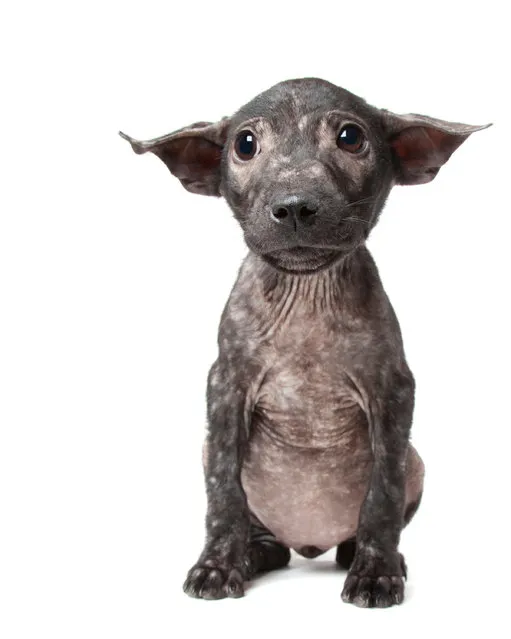
“Bali Pip”. Bali street dog. Had the skin condition mange. (Photo by Alex Cearns/The Guardian)

For her book “Perfect Imperfection”, the Australian pet photographer Alex Cearns set out to capture the personalities of animals who adapt to their damaged or different bodies without complaint. Part of the proceeds from sales of Perfect Imperfection go to the Australian Animal Cancer Foundation. Here: “Bali Pip”. Bali street dog. Had the skin condition mange. (Photo by Alex Cearns/The Guardian)
Details
06 Apr 2018 00:03:00
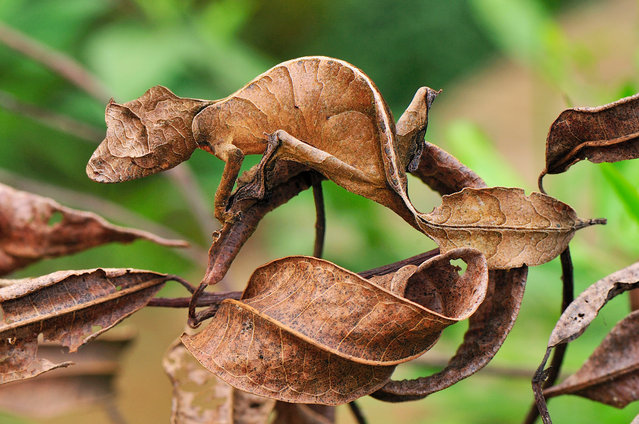
Is it a leaf? Is it tree bark? No, it’s the Satanic leaf-tailed gecko. Cleverly disguised as a rotting leaf, Madagascar’s camouflage king has red eyes, pointy horns and a taste for night hunting: it’s nature’s most devilish deceiver. (Photo by Thomas Marent/ARDEA)

Is it a leaf? Is it tree bark? No, it’s the Satanic leaf-tailed gecko. Cleverly disguised as a rotting leaf, Madagascar’s camouflage king has red eyes, pointy horns and a taste for night hunting: it’s nature’s most devilish deceiver. The twisted body and veiny skin echo the detail of a dry leaf, which ensures the gecko blends in with its forest home. The mottled tail appears to have sections missing, as though it has withered over time. This mini-monster epitomises survival of the fittest, having adapted gradually to become today’s extraordinary leaf impersonator. (Photo by Thomas Marent/ARDEA)
Details
20 Nov 2015 08:03:00
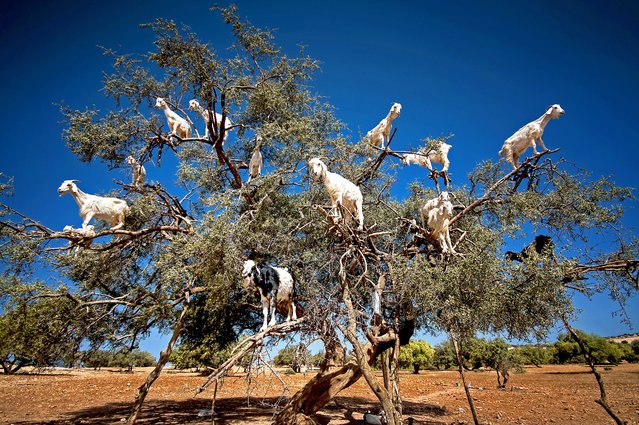
These goats threw caution to the wind and scaled this Argan tree right to the very top, even balancing on the most unsturdy of branches. It looks like a bit of a baa-lancing act, but the goats hooves are perfectly adapted to climbing the trees, where they graze on the Argan fruit. Amateur photographer Burak Senbak, 51, took these photos whilst travelling through Morocco in July 2016. Burak is originally from Turkey and works as a mechanical engineer, but has pursued his passion for photography for 10 years. Intrigued by the sight of goats in a tree, Burak couldnt resist the opportunity to take some photos, and said the goats proved a perfect subject. (Photo by Burak Senbak/Caters News)

These goats threw caution to the wind and scaled this Argan tree right to the very top, even balancing on the most unsturdy of branches. It looks like a bit of a baa-lancing act, but the goats hooves are perfectly adapted to climbing the trees, where they graze on the Argan fruit. Amateur photographer Burak Senbak, 51, took these photos whilst travelling through Morocco in July 2016. Burak is originally from Turkey and works as a mechanical engineer, but has pursued his passion for photography for 10 years. Intrigued by the sight of goats in a tree, Burak couldnt resist the opportunity to take some photos, and said the goats proved a perfect subject. (Photo by Burak Senbak/Caters News)
Details
27 Aug 2017 07:00:00
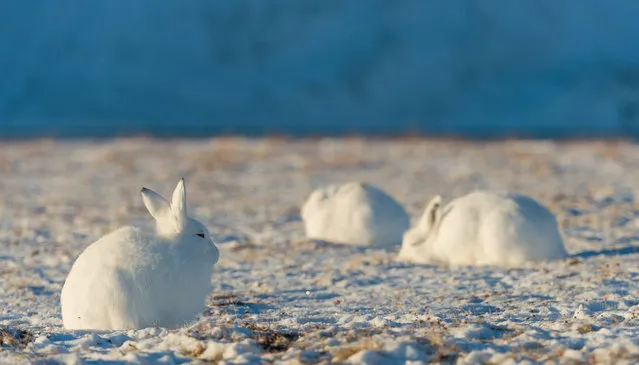
Arctic Hare

The arctic hare, or polar rabbit, is a species of hare which is adapted largely to polar and mountainous habitats. The arctic hare survives with a thick coat of fur and usually digs holes in the ground or under snow to keep warm and sleep. Arctic hares look like rabbits but have shorter ears, are taller when standing, and, unlike rabbits, can thrive in cold climates. They can travel together with many other hares, sometimes huddling with dozens or more, but are usually found alone, taking, in some cases, more than one partner. The arctic hare can run up to 60 kilometres per hour (40 mph). Its predators include the arctic wolf, arctic fox, and ermine.
Details
17 Mar 2014 13:56:00