Loading...
Done
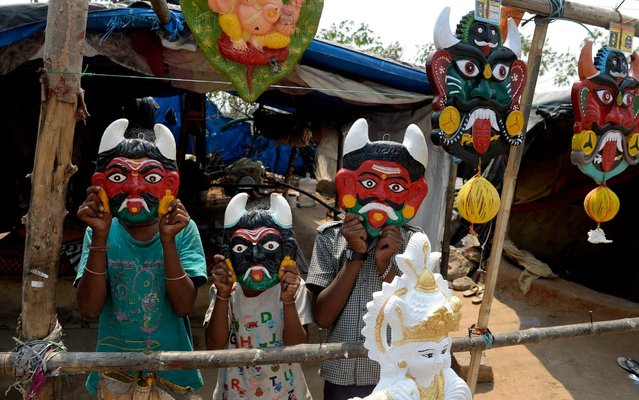
Children of a vendor pose with demon-masks to be hung outside homes believed to ward off negative energy during a government-imposed nationwide lockdown as a preventive measure against the COVID-19 coronavirus, at a roadside stall in Hyderabad, on April 18, 2020. (Photo by Noah Seelam/AFP Photo)

Children of a vendor pose with demon-masks to be hung outside homes believed to ward off negative energy during a government-imposed nationwide lockdown as a preventive measure against the COVID-19 coronavirus, at a roadside stall in Hyderabad, on April 18, 2020. (Photo by Noah Seelam/AFP Photo)
Details
24 Apr 2020 00:03:00
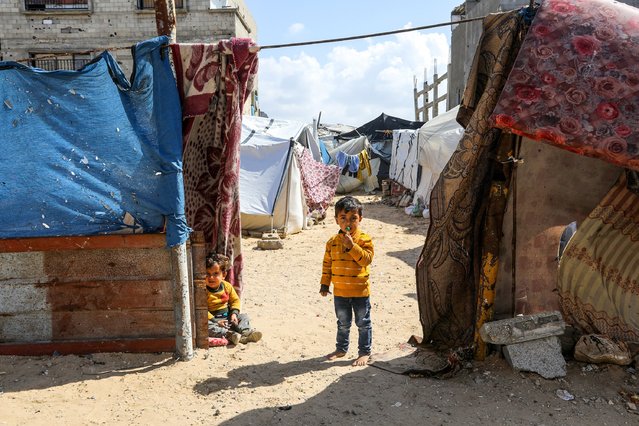
Palestinians living in the rubble of destroyed houses or in makeshift tents in the city of Khan Yunis, which suffered great destruction during the 15-month-long attacks of the Israeli army, continue their daily life despite all the negativities on February 16, 2025 in Khan Yunis, Gaza. (Photo by Abed Rahim Khatib/Anadolu via Getty Images)

Palestinians living in the rubble of destroyed houses or in makeshift tents in the city of Khan Yunis, which suffered great destruction during the 15-month-long attacks of the Israeli army, continue their daily life despite all the negativities on February 16, 2025 in Khan Yunis, Gaza. (Photo by Abed Rahim Khatib/Anadolu via Getty Images)
Details
08 Mar 2025 04:02:00
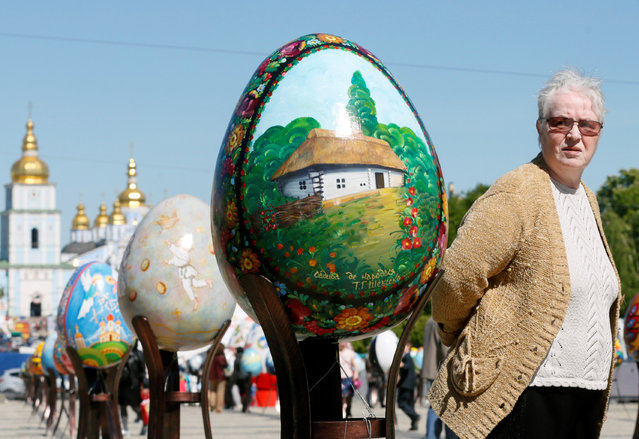
A woman looks at traditional Ukrainian Easter eggs “Pysanka”, installed as part of the upcoming celebrations of Easter, in central Kiev, Ukraine, April 29, 2016. A pysanka is a Ukrainian Easter egg, decorated with traditional Ukrainian folk designs using a wax-resist (batik) method. The word pysanka comes from the verb pysaty, “to write”, as the designs are not painted on, but written with beeswax. Many other eastern European ethnic groups decorate eggs using wax resist for Easter. These include the Belarusians, Bulgarians, Croats, Czechs, Hungarians, Lithuanians, Poles, Romanians, Serbs, Slovaks, Slovenes and Sorbs. (Photo by Valentyn Ogirenko/Reuters)

A woman looks at traditional Ukrainian Easter eggs “Pysanka”, installed as part of the upcoming celebrations of Easter, in central Kiev, Ukraine, April 29, 2016. A pysanka is a Ukrainian Easter egg, decorated with traditional Ukrainian folk designs using a wax-resist (batik) method. The word pysanka comes from the verb pysaty, “to write”, as the designs are not painted on, but written with beeswax. Many other eastern European ethnic groups decorate eggs using wax resist for Easter. These include the Belarusians, Bulgarians, Croats, Czechs, Hungarians, Lithuanians, Poles, Romanians, Serbs, Slovaks, Slovenes and Sorbs. (Photo by Valentyn Ogirenko/Reuters)
Details
30 Apr 2016 09:00:00
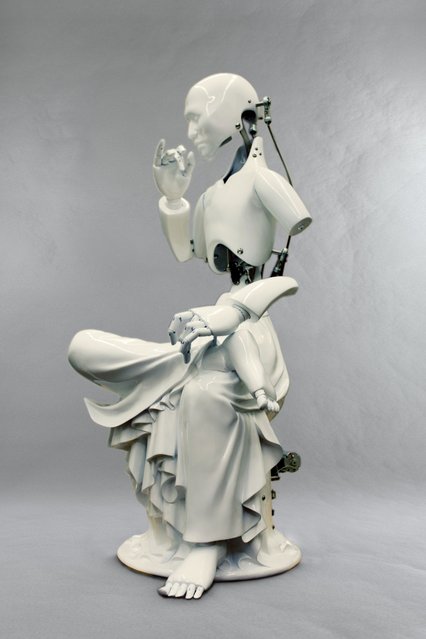
Wang Zi Won’s Mechanical Buddhas

South Korean artist Wang Zi Won creates enlightened robots, including the Buddha and an idealized mechanical doll based upon himself, as a guidepost for a future in which technology lead to self-actualization.
Humans will evolve and adapt themselves to enhanced science and technology just as men and animals in the past evolved to adapt themselves to their natural circumstances. The artist sees this as our destiny, not as a negative, gloomy dystopia.
Details
22 Mar 2013 12:02:00
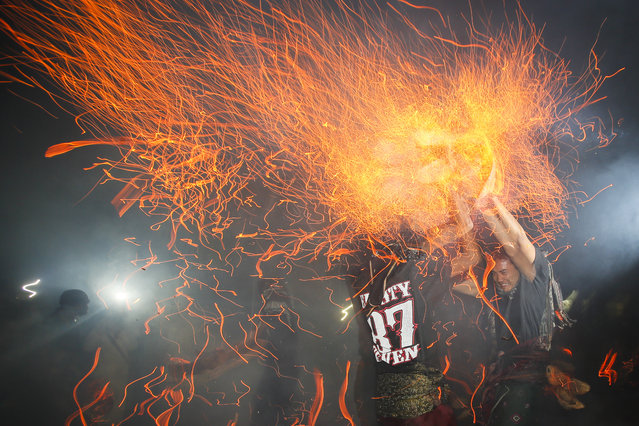
Balinese men throw fire on each other during a sacred ritual called “Mesabatan Api” or a fire fight at a temple in Tuban, Bali, Indonesia, 09 October 2014. October 9, 2014. (Photo by Made Nagi/EPA)

Balinese men throw fire on each other during a sacred ritual called “Mesabatan Api” or a fire fight at a temple in Tuban, Bali, Indonesia, 9 October 2014. October 9, 2014. During the ritual Balinese Hindu men took the blazing coconut husks barehanded, swinging and throwing them each other. Balinese believe that fire can destroy evil, and the ritual is aimed to get rid of the negative forces. (Photo by Made Nagi/EPA)
Details
12 Oct 2014 12:32:00
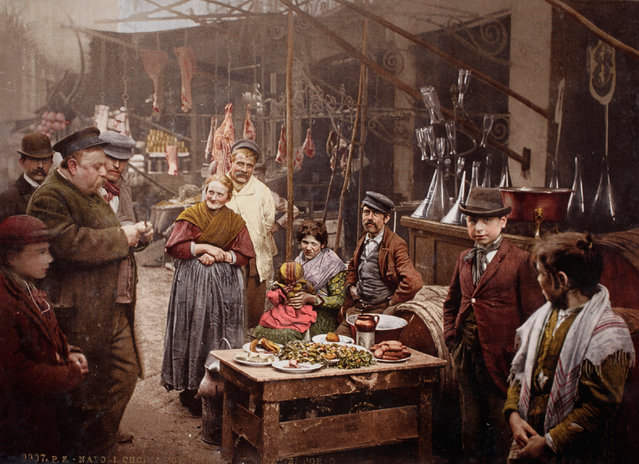
The finished photochromes were produced using at least six different tint stones, although many more were often used. Here: Street food in the Strada del Porto in Naples, Italy, 1899. (Photo by Swiss Camera Museum/The Guardian)

Photochromes are vibrant and nuanced prints hand-coloured from black-and-white negatives. Created using a process pioneered in the 1880s, these images offer a fascinating insight into the world when colour photography was still in its infancy. A Tour of the World in Photochromes is at the Swiss Camera Museum, Vevey, until 21 August. Here: Street food in the Strada del Porto in Naples, Italy, 1899. (Photo by Swiss Camera Museum/The Guardian)
Details
07 Jul 2016 10:56:00
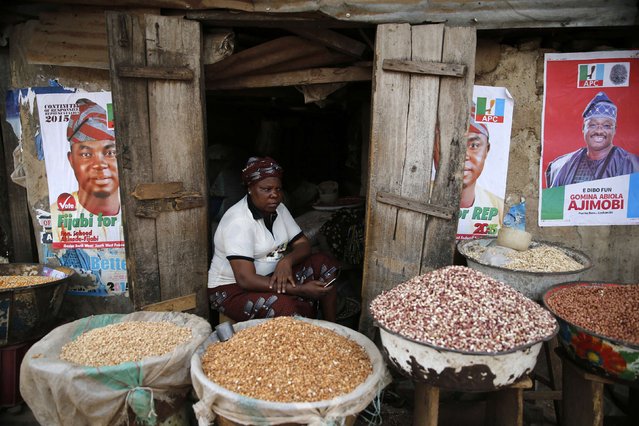
Latefat Alao, 56, a ethnic Yoruba Muslim woman, waits for customers in front of her in Beere market in Ibadan, southwest Nigeria, January 29, 2015. Much of the grain and wheat traders like Alao sell comes from the north and Boko Haram's campaign has negatively affected farmers and food markets. (Photo by Akintunde Akinleye/Reuters)

Latefat Alao, 56, a ethnic Yoruba Muslim woman, waits for customers in front of her in Beere market in Ibadan, southwest Nigeria, January 29, 2015. Much of the grain and wheat traders like Alao sell comes from the north and Boko Haram's campaign has negatively affected farmers and food markets. Reuters photographer Akintunde Akinleye photographed Nigerians and asked them about their views on the elections as well as their hopes and concerns for the country. (Photo by Akintunde Akinleye/Reuters)
Details
12 Feb 2015 12:44:00
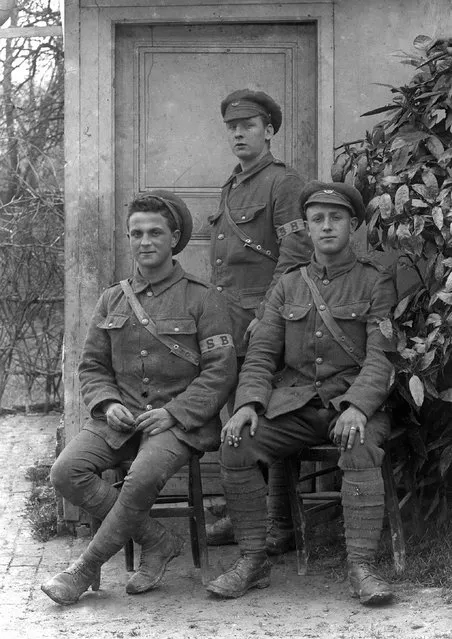
These images, scanned from old glass negatives which had surfaced in northern France, were believed to have been taken by a local amateur photographer in 1916. They showed British and a few Australian soldiers, in formal or informal poses, during or just before the most murderous battle in the history of the British Empire – Battle of the Somme. Who are these British and British Empire soldiers? The identity of the soldiers is, and may always remain, a mystery. (Property of Bernard Gardin/Dominique Zanardi/Joel Scribe/The Independent Magazine)

These images, scanned from old glass negatives which had surfaced in northern France, were believed to have been taken by a local amateur photographer in 1916. They showed British and a few Australian soldiers, in formal or informal poses, during or just before the most murderous battle in the history of the British Empire – Battle of the Somme. Who are these British and British Empire soldiers? The identity of the soldiers is, and may always remain, a mystery... (Property of Bernard Gardin/Dominique Zanardi/Joel Scribe/The Independent Magazine)
Details
04 Aug 2014 14:06:00