A man walks into the The Life Tabernacle megachurch as local residents attend Sunday service challenging state orders against assembling in large groups to prevent the spread of coronavirus disease (COVID-19) in Baton Rouge, Louisiana U.S., April 5, 2020. (Photo by Carlos Barria/Reuters)
Members of the LSU Golden Girls dance team sit spaced apart wearing masks, under COVID-19 restrictions, requiring social distancing and masks, before an NCAA college football game between the LSU and the Mississippi State in Baton Rouge, La., Saturday, September 26, 2020. (Photo by Gerald Herbert/AP Photo)
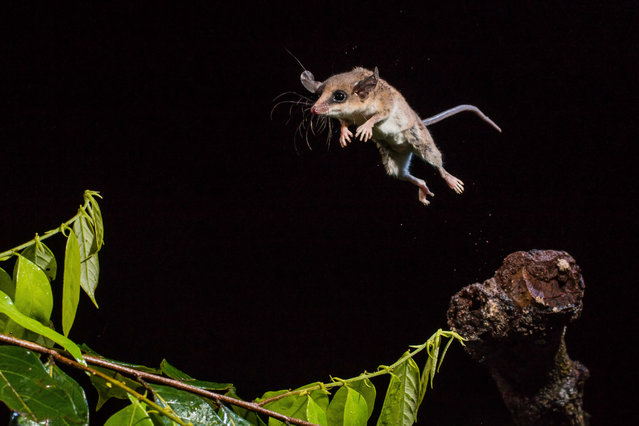
Tropical acrobatics by Adrià López Baucells in Manaus, Brazil. An unidentified South American marsupial, although the characteristic black markings on its face indicate it may be a mouse opossum. These small creatures are nocturnal and feed on bugs, fruit and bird eggs. (Photo by Adrià López Baucells/2019 Royal Society of Biology Photography Competition)
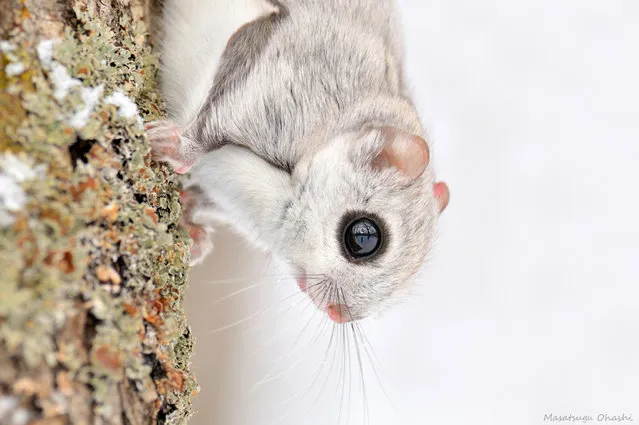
A photographer has taken pictures of the Siberian flying squirrel. The adorable nocturnal animal was snapped on the Japanese island of Hokkaido by Masatsugu Ohashi.
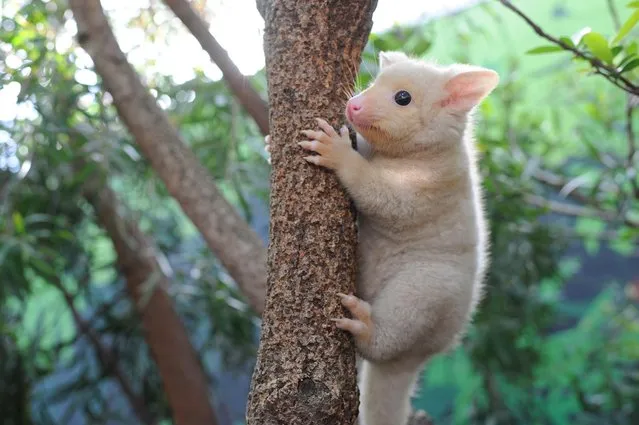
The common brushtail possum (Trichosurus vulpecula, from the Greek for "furry tailed" and the Latin for "little fox", previously in the genus Phalangista) is a nocturnal, semi-arboreal marsupial of the family Phalangeridae, it is native to Australia, and the second largest of the possums.
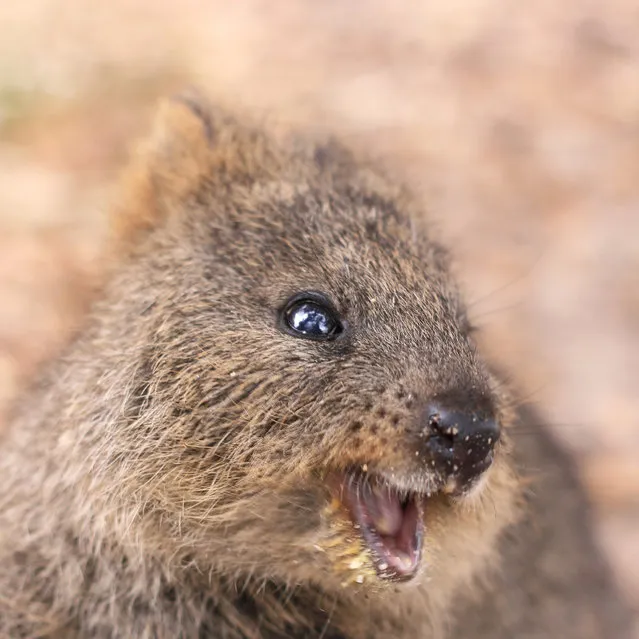
The quokka the only member of the genus Setonix, is a small macropod about the size of a domestic cat. Like other marsupials in the macropod family (such as the kangaroos and wallabies), the quokka is herbivorous and mainly nocturnal.
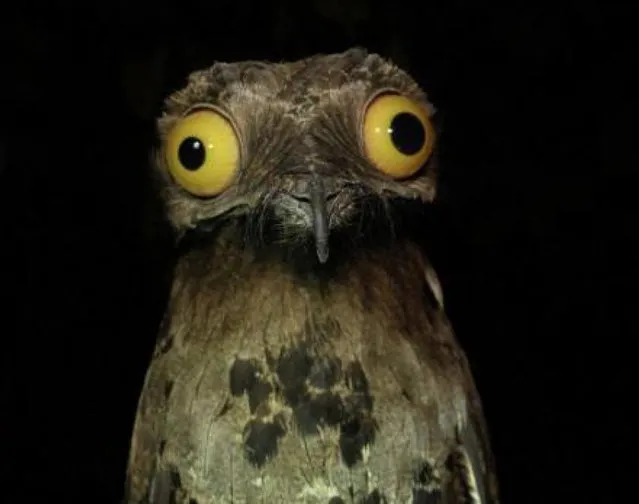
Potoos (family Nyctibiidae) are a group of near passerine birds related to the nightjars and frogmouths. They are sometimes called Poor-me-ones, after their haunting calls. There are seven species in one genus, Nyctibius, in tropical Central and South America.
These are nocturnal insectivores which lack the bristles around the mouth found in the true nightjars. They hunt from a perch like a shrike or flycatcher. During the day they perch upright on tree stumps, camouflaged to look like part of the stump. The single spotted egg is laid directly on the top of a stump.