Loading...
Done
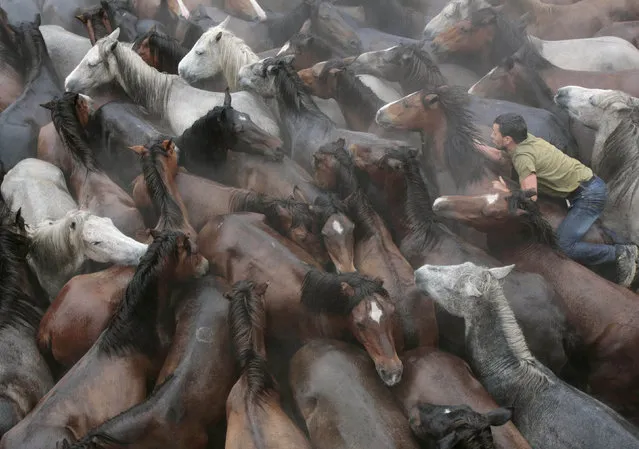
A reveller tries to hold on to a wild horse during the “Rapa Das Bestas” traditional event in the Spanish northwestern village of Sabucedo July 5, 2014. (Photo by Miguel Vidal/Reuters)

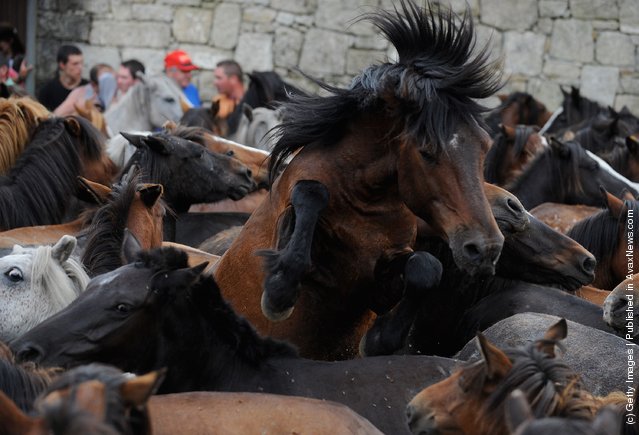
A reveller tries to hold on to a wild horse during the “Rapa Das Bestas” traditional event in the Spanish northwestern village of Sabucedo July 5, 2014. On the first weekend of the month of July, hundreds of wild horses are rounded up, trimmed and groomed in different villages in the Spanish northwestern region of Galicia. (Photo by Miguel Vidal/Reuters)
Details
07 Jul 2014 12:58:00
Revelers participate in the traditional Bloco da Lama (Mud block) carnival in Parati, Rio de Janeiro State, Brazil, on February 9, 2013. The event, which was begun by two men in a playful manner in 1986, has now become a traditional carnival in which participants disguised as primitives with rags, lianas or skulls and bones, dive in the mud. (Photo by Victor Moriyama/AFP Photo)

Revelers participate in the traditional Bloco da Lama (Mud block) carnival in Parati, Rio de Janeiro State, Brazil, on February 9, 2013. The event, which was begun by two men in a playful manner in 1986, has now become a traditional carnival in which participants disguised as primitives with rags, lianas or skulls and bones, dive in the mud. (Photo by Victor Moriyama/AFP Photo)
Details
12 Feb 2013 14:10:00


“Rapa das Bestas is the name of an operation that involves cutting the manes of the horses that are performed in the curros (enclosed which retain the horses) held in various locations in Galicia (Spain).

The best known is the Rapa das Bestas of Sabucedo, in the city hall of A Estrada, which lasts three days: the First Saturday, Sunday and Monday in July. In fact, the name given to the celebration (Rapa das Bestas of Sabucedo), while in most places speaking about curros, including curros de Valga, etc”. – Wikipedia

Photo: A wild horse leaps up during the Rapa das Bestas (shearing of the beasts) festival on July 2, 2011 in Sabucedo, Spain. Hundreds of wild horses are rounded up from the mountains and trimmed and marked in the corral. (Photo by Denis Doyle/Getty Images)
Details
03 Jul 2011 12:30:00
Members of a music band rest before the procession of “Nossa Senhora da Boa Viagem”, in Constancia April 6, 2015. (Photo by Rafael Marchante/Reuters)

Members of a music band rest before the procession of “Nossa Senhora da Boa Viagem”, in Constancia April 6, 2015. This benediction has been held annually for about 200 years. In the past, goods were transported by the Tagus river in small boats to Lisbon, 100 km south. The sailors, as the navigation was dangerous, blessed their boats every year during the festivity of “Nossa Senhora da Boa Viagem”. (Photo by Rafael Marchante/Reuters)
Details
07 Apr 2015 11:14:00
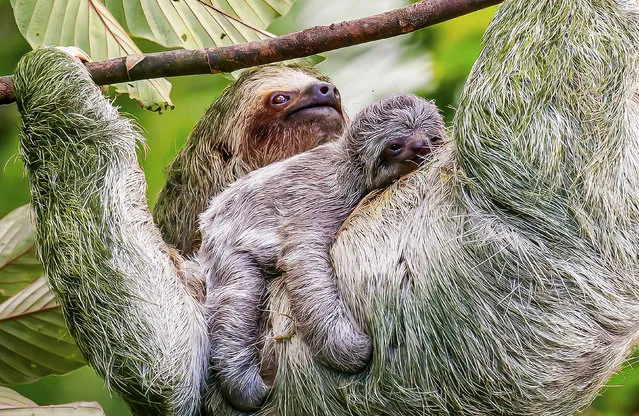
A baby sloth uses his mother as a hammock while she feasts on papayas in Heredia province in Costa Rica in April 2023. (Photo by William Steele/Solent News)

A baby sloth uses his mother as a hammock while she feasts on papayas in Heredia province in Costa Rica in April 2023. (Photo by William Steele/Solent News)
Details
30 Apr 2023 03:22:00
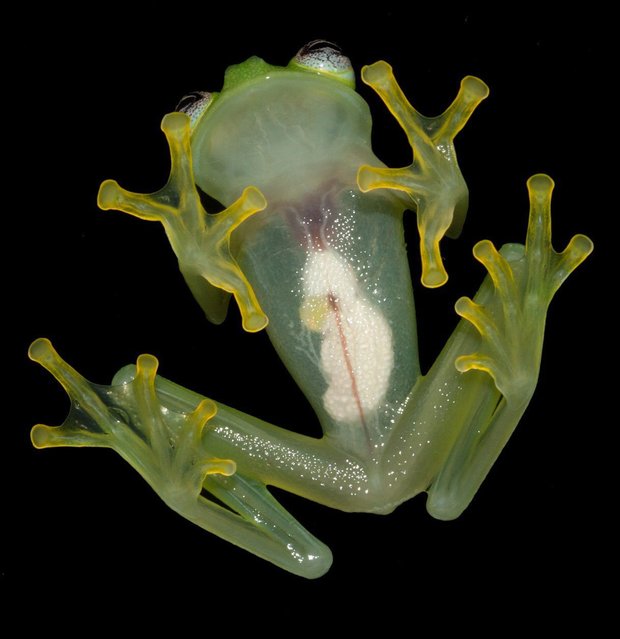
A handout photograph provided by Brian Kubicki of Costa Rican Amphibian Research Center on 26 April 2016 shows a “Crystal frog”, Hyalinobatrachium dianae (H. diane). This frog was discovered by US biologist Brian Kubicki and Costa Ricans Stanley Salazar and Robert Puschendorf in a rainy forest of Costa Rican caribbean after 40 years without notice of any new example of this kind. (Photo by Brian Kubicki/EPA/Costa Rican Amphibian Research Center)

A handout photograph provided by Brian Kubicki of Costa Rican Amphibian Research Center on 26 April 2016 shows a “Crystal frog”, Hyalinobatrachium dianae (H. diane). This frog was discovered by US biologist Brian Kubicki and Costa Ricans Stanley Salazar and Robert Puschendorf in a rainy forest of Costa Rican caribbean after 40 years without notice of any new example of this kind. (Photo by Brian Kubicki/EPA/Costa Rican Amphibian Research Center)
Details
02 May 2015 15:23:00
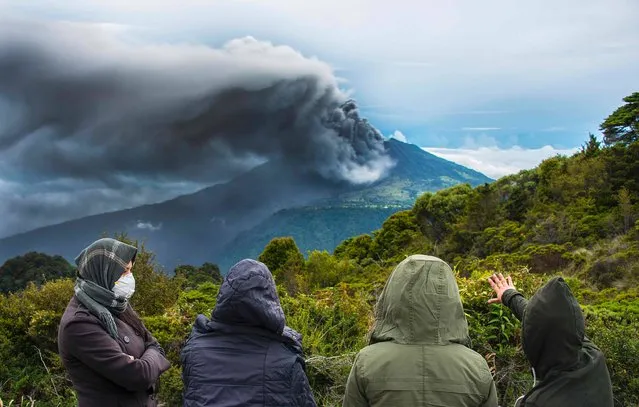
People look at the Turrialba volcano as it spewes ashes on May 20, 2016, in Cartago, Costa Rica. The Turrialba volcano started erupting columns of smoke and ash that the wind extended towards the Costa Rican capital, in what according to experts is the strongest eruption in the past six years. (Photo by Ezequiel Becerra/AFP Photo)

People look at the Turrialba volcano as it spewes ashes on May 20, 2016, in Cartago, Costa Rica. The Turrialba volcano started erupting columns of smoke and ash that the wind extended towards the Costa Rican capital, in what according to experts is the strongest eruption in the past six years. (Photo by Ezequiel Becerra/AFP Photo)
Details
22 May 2016 07:31:00
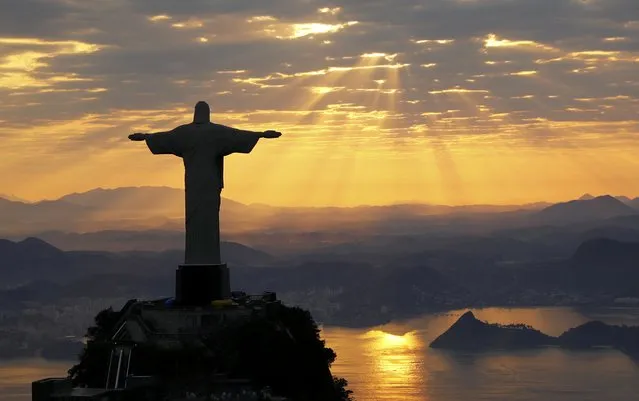
Jesus Christ The Redeemer is seen during sunrise in Rio de Janeiro, Brazil August 2, 2016. (Photo by Wolfgang Rattay/Reuters)

Jesus Christ The Redeemer is seen during sunrise in Rio de Janeiro, Brazil August 2, 2016. Christ the Redeemer is an Art Deco statue of Jesus Christ in Rio de Janeiro, Brazil, created by Polish-French sculptor Paul Landowski and built by the Brazilian engineer Heitor da Silva Costa, in collaboration with the French engineer Albert Caquot. The face was created by the Romanian artist Gheorghe Leonida1. (Photo by Kai Pfaffenbach/Reuters)
Details
03 Aug 2016 11:33:00