Loading...
Done
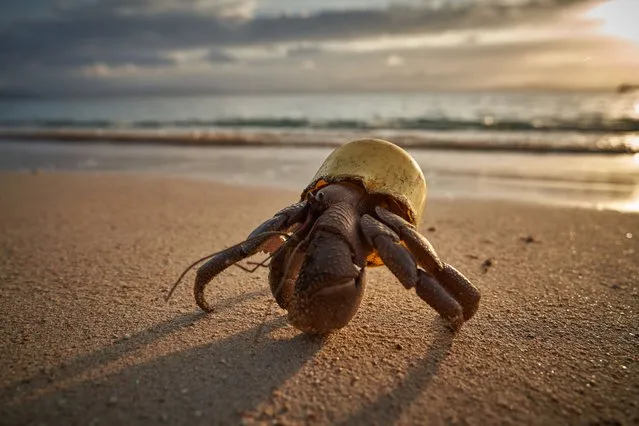
This shot, which was announced the winner by the on December 2, 2022 came top in the People and Nature category of the British Ecological Society’s Capturing Ecology photography competition. (Photo by British Ecological Society)

This shot, which was announced the winner by the on December 2, 2022 came top in the People and Nature category of the British Ecological Society’s Capturing Ecology photography competition. (Photo by British Ecological Society)
Details
06 Jan 2023 05:06:00
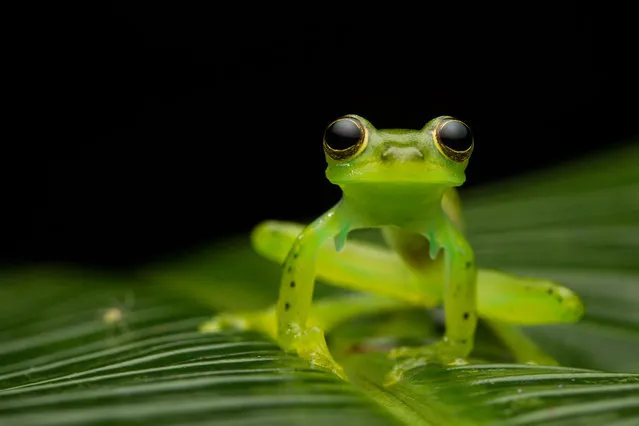
An image captured by Jasmine Vink, the winner of the wildlife and animal category and overall winner in Australian Photography’s 2018 Photographer of the Year competition. (Photo by Jasmine Vink/Australia's 2018 Photographer of the Year by Panasonic)

An image captured by Jasmine Vink, the winner of the wildlife and animal category and overall winner in Australian Photography’s 2018 Photographer of the Year competition. (Photo by Jasmine Vink/Australia's 2018 Photographer of the Year by Panasonic)
Details
06 Feb 2019 00:03:00
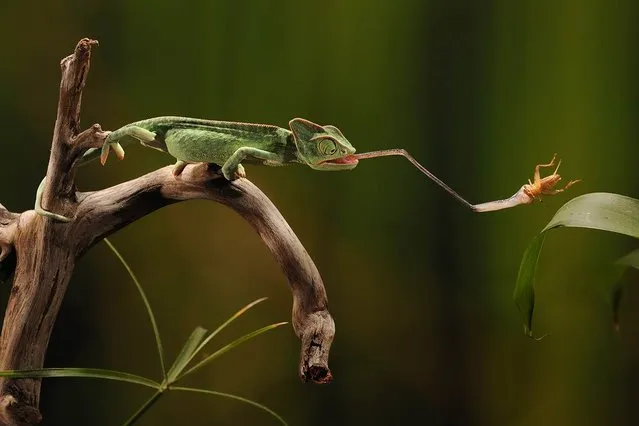
A veiled chameleon extends its tongue to catch a cricket

“Scott Linstead is an internationally published, freelance wildlife photographer/writer. His clients include Natural History Magazine, Hewlett Packard, Ranger Rick Magazine and a number of wildlife publications in North America and Europe. Scott's column on the techniques of bird photography appears in every issue of Outdoor Photography Canada”.

Photo: A veiled chameleon extends its tongue to catch a cricket. Canadian wildlife photographer Scott Linstead, formerly an aerospace engineer and high school teacher, uses a device called Phototrap “to not only photograph the elusive, but also the unimaginably quick”. (Photo by Scott Linstead)

Details
22 May 2012 11:32:00
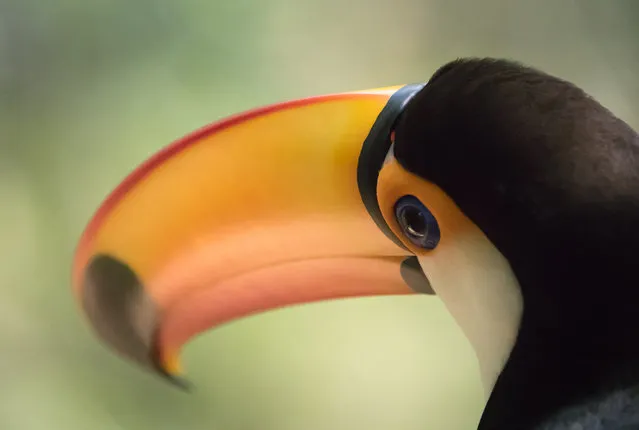
Overall runner-up: Toucan, Mark Tatchell. (Photo by Mark Tatchell/British Ecological Society)

The British Ecological Society has announced the winners of its annual photography competition, Capturing Ecology. Taken by international ecologists and students, the winning images will be exhibited at the society’s joint annual meeting in Ghent in December. Here: Overall runner-up; Toucan, Mark Tatchell. (Photo by Mark Tatchell/British Ecological Society)
Details
05 Dec 2017 08:05:00
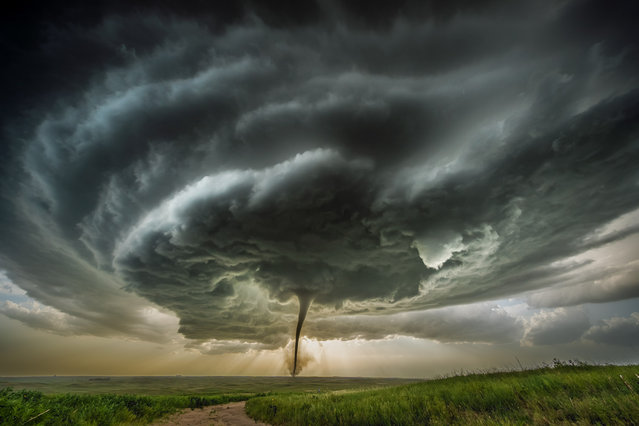
A powerful tornado with winds of up to 134mph was captured in Nebraska on June 16, 2025 by a British storm chaser. The tornado moved south for three miles on Monday and tore down power lines, but no injuries were reported. (Photo by Jam Press/David Mayhew Photography)

A powerful tornado with winds of up to 134mph was captured in Nebraska on June 16, 2025 by a British storm chaser. The tornado moved south for three miles on Monday and tore down power lines, but no injuries were reported. (Photo by Jam Press/David Mayhew Photography)
Details
01 Jul 2025 03:01:00
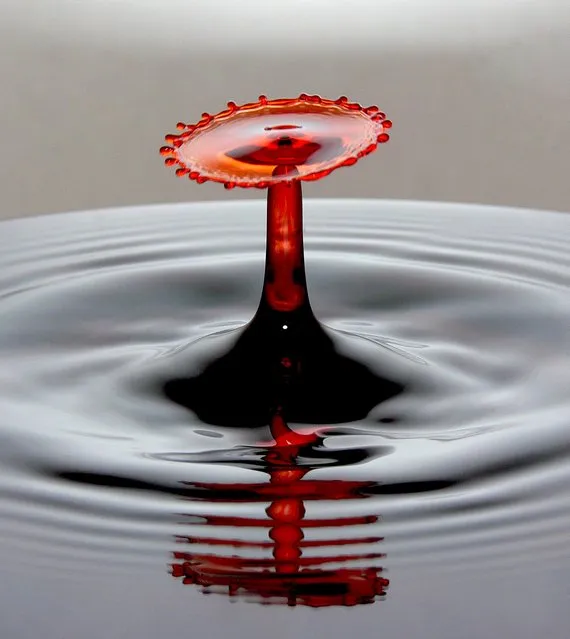
Waterdrop Sculptures by Josh Fancher

“I'm Josh Fancher, a 21 year old with an avid interest in photography, including macro, nature and wildlife, night photography, landscapes, cityscapes and architectural photography. Inspired by the beautiful and amazing water drop photography of Martin Waugh, I started doing water drop collisions in December of 2007. I use a 105mm Micro Nikkor lens for water drops, along with a pair of Nikon SB 600 flashes. I recently got a StopShot system (Nov 2009), which makes timing a lot easier. Before then, timing was manual, with an eye dropper, eye-hand coordination, and a lot of patience” – Josh Fancher. (Photo by Josh Fancher)
Details
19 Aug 2012 10:30:00
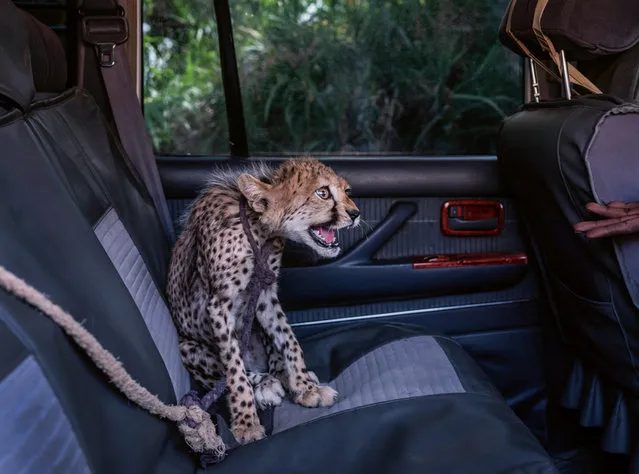
A five-month-old cheetah seated in the back of a Land Cruiser growls at an outstretched hand after being taken from traffickers in Ethiopia and driven to Harirad, Somaliland, in 2020. This photo is part of the work of more than 100 artists in Why We Photograph Animals, a new collection of wildlife photography that aims to help understand why people have photographed animals at different points in history and what it means in the present. (Photo by Nichole Sobecki/Thames & Hudson)

A five-month-old cheetah seated in the back of a Land Cruiser growls at an outstretched hand after being taken from traffickers in Ethiopia and driven to Harirad, Somaliland, in 2020. This photo is part of the work of more than 100 artists in Why We Photograph Animals, a new collection of wildlife photography that aims to help understand why people have photographed animals at different points in history and what it means in the present. (Photo by Nichole Sobecki/Thames & Hudson)
Details
28 Apr 2024 03:15:00
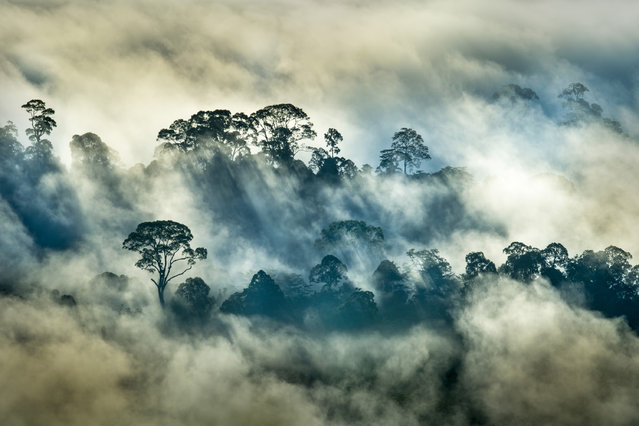
Landscapes, second place: Florian Smit, “Rainforest” (Danum valley, Borneo). (Photo by Florian Smit/2019 GDT Nature Photographer of the Year)

Run by the Society of German Nature Photographers (Gesellschaft Deutscher Tierfotografen), the prestigious annual contest celebrates the best wildlife photography from members in Germany. Here: Landscapes, second place: Florian Smit, “Rainforest” (Danum valley, Borneo). (Photo by Florian Smit/2019 GDT Nature Photographer of the Year)
Details
11 May 2019 00:03:00