Loading...
Done
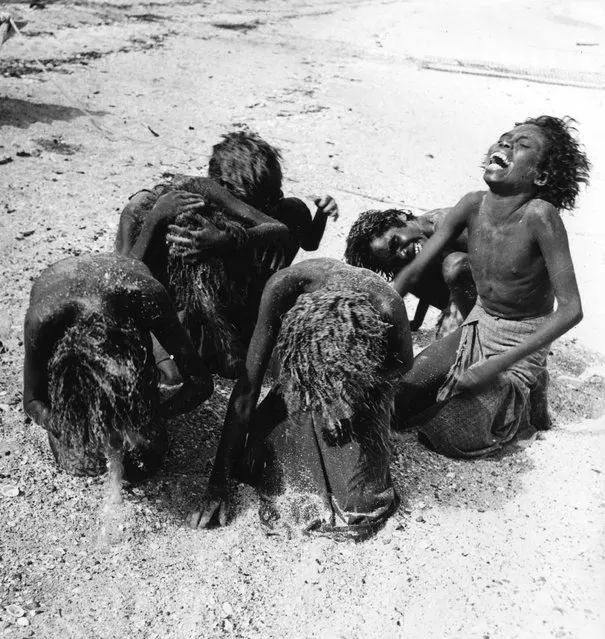
1st January 1950:  Aboriginal women washing their hair with sand at Arnhem land in the Northern Territory of Australia.  (Photo by Three Lions/Getty Images)

“Australian Aborigines are those people regarded as indigenous to the Australian continent. In the High Court of Australia, Australian Aborigines have been specifically identified as a group of people who share, in common, biological ancestry back to the original occupants of the continent”. – Wikipedia

Photo: Aboriginal women washing their hair with sand at Arnhem land in the Northern Territory of Australia. 1st January 1950. (Photo by Three Lions)
Details
02 Feb 2014 07:29:00
1971: A chimpanzee feeding a leopard cub at Southam Park Zoo, Warwickshire

A chimpanzee feeding a leopard cub at Southam Park Zoo, Warwickshire. (Photo by Ian Tyas/Keystone Features/Getty Images). 1971
Details
08 Sep 2011 14:32:00
British troops arriving in England on June 6, 1940 after fleeing Flanders received all kinds of fruit and food from women who passed it out to them as they halted in railroad stations. A soldier holds aloft a banana he received from the woman. (Photo by AP Photo)

British troops arriving in England on June 6, 1940 after fleeing Flanders received all kinds of fruit and food from women who passed it out to them as they halted in railroad stations. A soldier holds aloft a banana he received from the woman. (Photo by AP Photo)
Details
05 Aug 2017 08:29:00
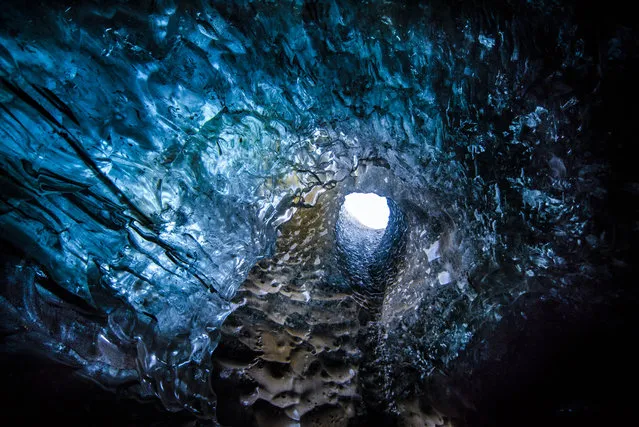
The ice caves, taken in the Vatnajokull National Park in Iceland, on November 11, 2017. (Photo by Matej Kriz/Caters News Agency)

These frozen caves seem almost otherworldly as they daylight illuminates them. Matej Kriz’s shots reveal the beauty of the brilliant caves, but he’s also very aware of how deadly they can be. The photographer captured the amazing shots in the Vatnajokull National Park on the Breidamerkurjokull glacier tongue. Here: The ice caves, taken in the Vatnajokull National Park in Iceland, on November 11, 2017. (Photo by Matej Kriz/Caters News Agency)
Details
17 Jan 2018 07:45:00
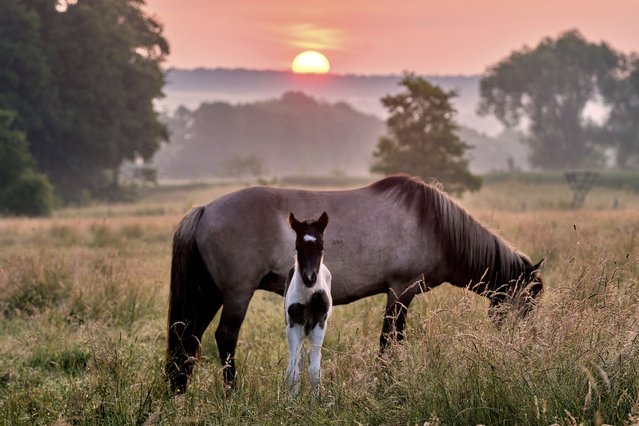
An Icelandic mare and her foal stand on a meadow at a stud farm in Wehrheim near Frankfurt, Germany, Tuesday, June 17, 2025. (Photo by Michael Probst/AP Photo)

An Icelandic mare and her foal stand on a meadow at a stud farm in Wehrheim near Frankfurt, Germany, Tuesday, June 17, 2025. (Photo by Michael Probst/AP Photo)
Details
11 Aug 2025 02:11:00
Transgender Kendra Ferrari, 21, performs during Miss Night Queen beauty contest in Guatemala City, Friday, June 15, 2012. Ferrari won the pageant and will represent the transgender community for one year. (Photo by Rodrigo Abd/AP Photo)

Transgender Kendra Ferrari, 21, performs during Miss Night Queen beauty contest in Guatemala City, Friday, June 15, 2012. Ferrari won the pageant and will represent the transgender community for one year. (Photo by Rodrigo Abd/AP Photo)
Details
18 Aug 2014 09:20:00
A woman talks to a man as two children play inside a wrecked car at a camp for displaced people in Port-au-Prince, Haiti, March 6, 2016. (Photo by Andres Martinez Casares/Reuters)

A woman talks to a man as two children play inside a wrecked car at a camp for displaced people in Port-au-Prince, Haiti, March 6, 2016. (Photo by Andres Martinez Casares/Reuters)
Details
18 Aug 2016 11:16:00
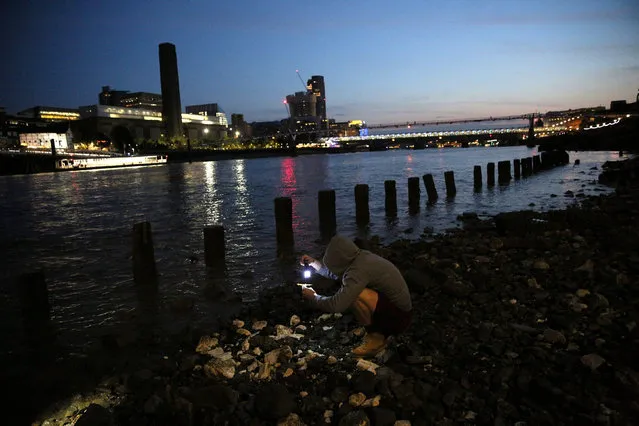
A mudlark uses a torch to look for items on the bank of the River Thames in London, Britain June 06, 2016. Mudlarking is believed to trace its origins to the 18th and 19th century, when scavengers searched the Thames' shores for items to sell. These days, history and archaeology fans are the ones hoping to find old relics such as coins, ceramics, artifacts or everyday items from across centuries. They wait for the low tide and then scour specific areas of exposed shores. "If you're in a field you could be out all day long, with the river you're restricted to about two or three hours," mudlark Nick Stevens said. While many just use the naked eye for their searches, others rely on metal detectors for which a permit from the Port of London Authority is needed. Digging also requires consent. (Photo by Neil Hall/Reuters)

A mudlark uses a torch to look for items on the bank of the River Thames in London, Britain June 06, 2016. Mudlarking is believed to trace its origins to the 18th and 19th century, when scavengers searched the Thames' shores for items to sell. These days, history and archaeology fans are the ones hoping to find old relics such as coins, ceramics, artifacts or everyday items from across centuries. their finds with the Portable Antiquities Scheme. Any item over 300 years old must be recorded. (Photo by Neil Hall/Reuters)
Details
27 Aug 2016 10:43:00