A Tibetan girl reacts as she gets ready to perform in a function organised to mark “Losar” or the Tibetan New Year in Kathmandu, Nepal, February 11, 2016. (Photo by Navesh Chitrakar/Reuters)
A Nepalese Gurung community woman, wearing traditional attire, prepares to participate in a parade to mark their New Year known as “Tamu Loshar” in Kathmandu, Nepal, Friday, December 30, 2016. The indigenous Gurungs, also known as Tamu, are celebrating the advent of the year of the bird. (Photo by Niranjan Shrestha/AP Photo)
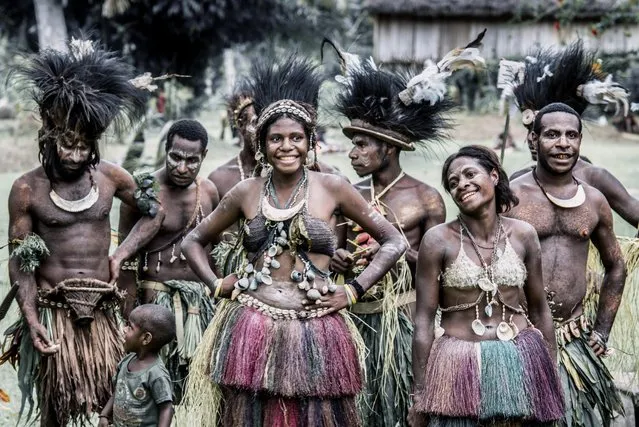
These powerful images capture the spear-wielding tribes of Papua new Guinea who believe they are possessed with the spirit of the crocodile. They show how the Kangunaman clansmen scar their backs to resemble reptile scales while the Huli Wigmen wear elaborate headdresses to signal they are ready for battle. (Photo by Trevor Cole/Media Drum World)
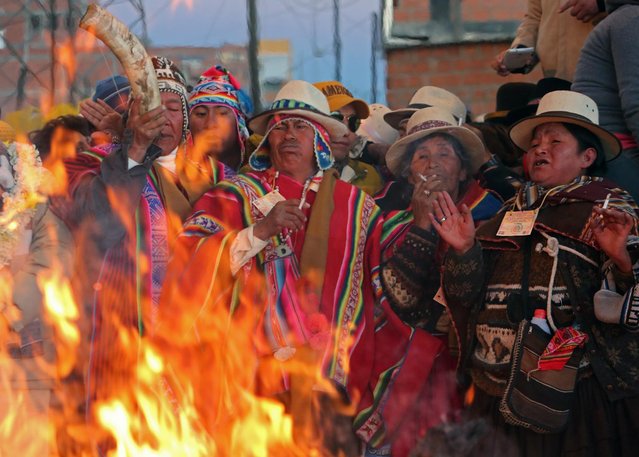
Local priests celebrate the “Aimara New Year”, an Andean Bolivian traditional festival that marks the winter solstice in El Alto, Bolivia, 21 June 2016. Aimara or Aymara means the Return of the Sun. (Photo by Martin Alipaz/EPA)
“Why do you keep blowing the trumpet, young man?
You'd better lie in a coffin, young man!”
On that life-affirming note, let me congratulate you (yes, it's been a tough year, and the next one will be even tougher better). Happy New Year! And now disco.
A participant runs towards the waters of the North Sea during the annual New Year's plunge event in Ostend, Belgium, January 2, 2016. (Photo by Francois Lenoir/Reuters)
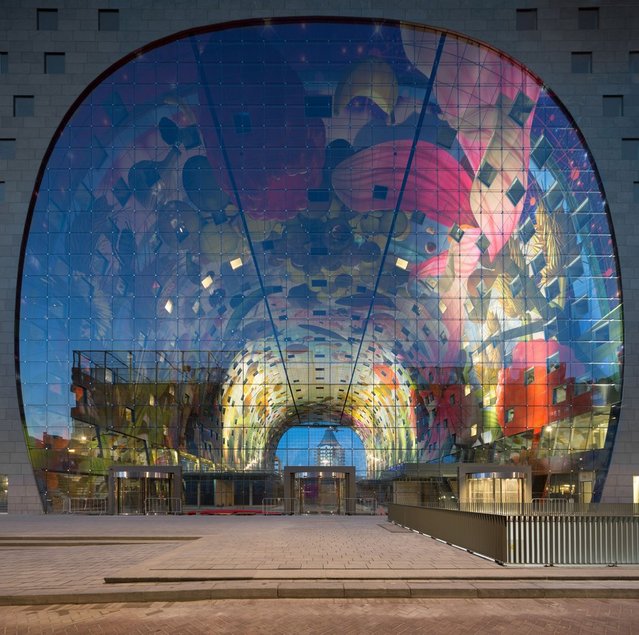
We are so used to seeing common square-shaped buildings that we are completely surprised when architects cook up something new and refreshing. However, the new creation that appeared in Rotterdam beside the Binnenrotte is simply jaw dropping. This one of a kind architectural masterpiece is a combination of a huge open air market and an apartment building. The name of this place is Markthal Rotterdam, and it is bound to become one of the main destination points for tourists that come and visit the beautiful city of Rotterdam. (Photo by Ossip van Duivenbode)
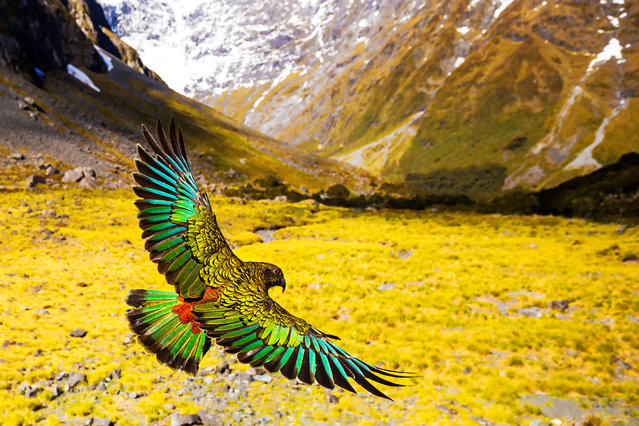
Kea are the only true alpine parrots in the world and thrive as cunning opportunists in the freezing conditions of the Southern Alps. Kea are thought to have developed their wide array of food-finding strategies during the last great ice age, where they learned to adapt using their unusual powers of curiosity. (Photo by Tom Walker/BBC Pictures/The Guardian)