Loading...
Done
Leafy sea dragon

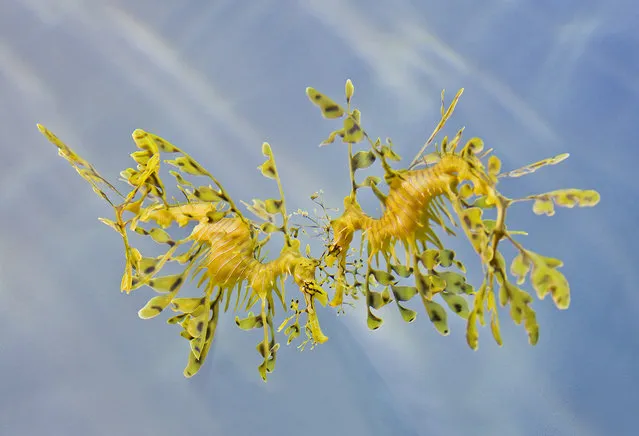
The leafy seadragon or Glauert's seadragon, Phycodurus eques, is a marine fish in the family Syngnathidae, which also includes the seahorses. It is the only member of the genus Phycodurus. It is found along the southern and western coasts of Australia. The name is derived from the appearance, with long leaf-like protrusions coming from all over the body. These protrusions are not used for propulsion; they serve only as camouflage. The leafy seadragon propels itself by means of a pectoral fin on the ridge of its neck and a dorsal fin on its back closer to the tail end. These small fins are almost completely transparent and difficult to see as they undulate minutely to move the creature sedately through the water, completing the illusion of floating seaweed.
Details
05 Sep 2012 08:51:00
Google & Adidas – Talking Shoe

The shoe works similarly to a fitness tracking device, using an accelerometer, gyroscope, Bluetooth and other off-the-shelf technologies to analyze the wearer’s movements and offer motivating and timely commentary. It might tell you to get going if you’ve been idle for too long or cheer you on if it senses you being very active. Its comments can be posted to Google+ by the user, sent to real-time ad units, or broadcast via onboard speakers.
Details
13 Mar 2013 11:49:00
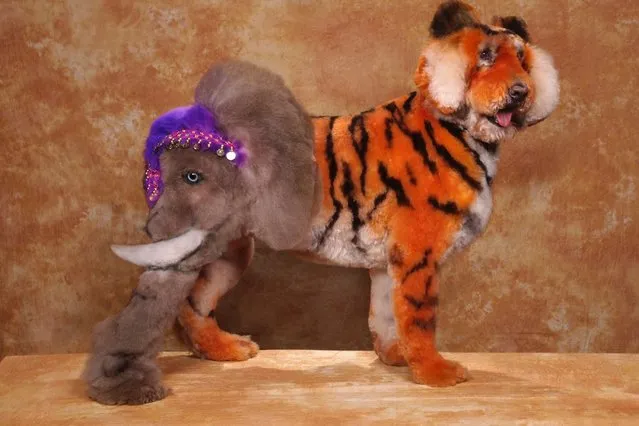
A dog with a half tiger and half elephant design at a creative grooming competition in Hershey, Pennsylvania. (Photo by Ren Netherland/Barcroft Media)

Anamal photographer Ren Netherland travels thousands of miles across America to creative dog grooming competitions every year. He captures the dogs with their striking designs – which include characters from Disney, Star Wars and Sesame Street.

Photo: A dog with a half tiger and half elephant design at a creative grooming competition in Hershey, Pennsylvania. (Photo by Ren Netherland/Barcroft Media). P.S. To see the first part, use please the “Creative dog grooming” tag.
Details
23 Jun 2013 07:16:00
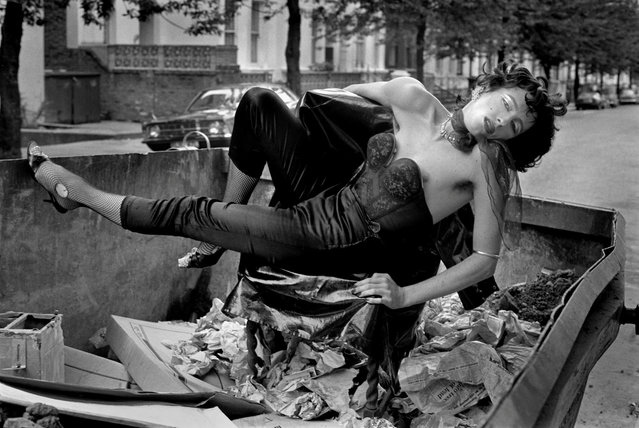
“A very delicate person, beneath the flamboyance”. Jasper, Ladbroke Grove, 1977. “In the 1970s, Australia was rather cut off. I’d always wanted to live abroad, so I moved to Rome and then London. I was an art historian, but started studying photography part-time. I was interested in the demi-monde culture and began mixing in all sorts of circles. Jasper was a rather wonderful character. He was from Sydney, but he was living downstairs from me in Ladbroke Grove, in a flat rented to some gay friends. It was fairly eclectic. Jasper was always playing around with clothes and makeup. If he was looking particularly wonderful, I might get out my lights and take a shot. Or he might put makeup on me. He wasn’t always in drag, but he was permanently in diva mode, dependably louche, funny and naughty. I think all that comes across in the image. He was actually a very delicate person, though, beneath the wit and flamboyance. Jasper floated through London all too briefly. His real name was Peter MacMahon, but to us he was only ever Jasper Havoc, an alter ego he’d created while part of a transvestite troupe called Sylvia and the Synthetics. They were legendary in Sydney gay culture. On this day, we’d been taking some pictures inside and had gone out into the streets to fool around some more. Jasper was wearing a corset and fishnets ensemble, with other bits and pieces, and we joked about him being trashy as he lay in the skip. We just took the shot for ourselves. It wasn’t done with any publication in mind, or anything else. This was way before the internet and people didn’t share images. If you dressed up, it was just for that moment”. (Photo by Jane England)

“A very delicate person, beneath the flamboyance”. Jasper, Ladbroke Grove, 1977. “In the 1970s, Australia was rather cut off. I’d always wanted to live abroad, so I moved to Rome and then London. I was an art historian, but started studying photography part-time. I was interested in the demi-monde culture and began mixing in all sorts of circles. Jasper was a rather wonderful character...”. (Photo by Jane England)
Details
26 Jun 2017 09:04:00
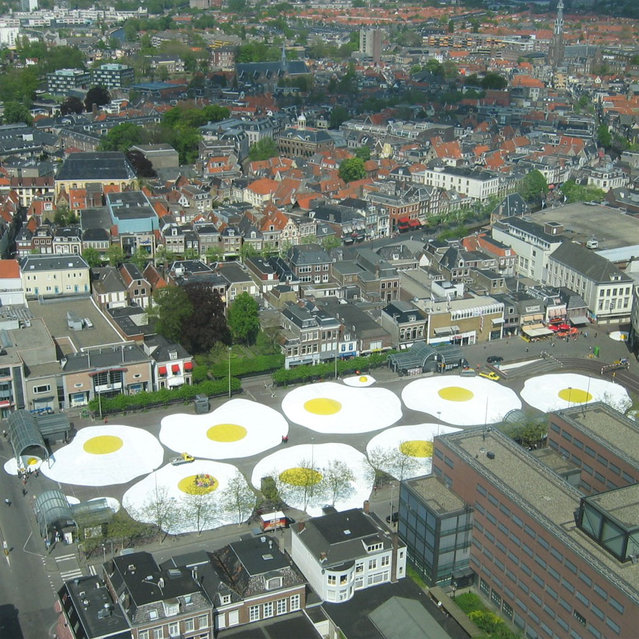
Art Eggcident By Henk Hofstra

With "Art Eggcident," Dutch artist Henk Hofstra demonstrates what it would look like if God threw giant eggs down at us. The eight large, sunny side up eggs measure almost 100 feet wide in diameter. The installation took place in Leeuwarden, a city in the north of the Netherlands.
"I hope it becomes a meeting place with room for art," says Henk. "Art that is different than a framed picture on the wall or a boring bronze sculpture. Art that shows us a different look, surprises us, or makes us angry or happy. Art that allows photographers to grab their cameras and arouses journalists. Art that evokes emotion, or provokes wild laughter."
Details
07 May 2014 10:54:00
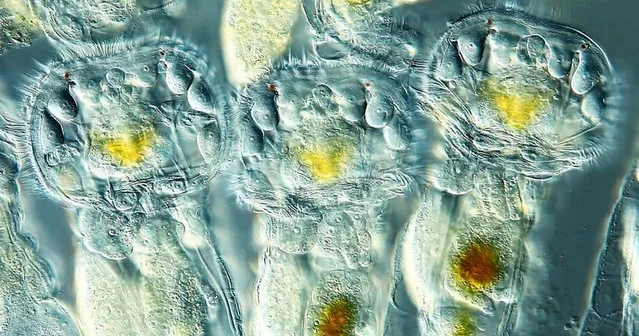
Olympus BioScapes Digital Imaging Competition 2012

Microscope images forge an extraordinary bond between science and art, said Hidenao Tsuchiya, Olympus America's Vice President and General Manager for the Scientific Equipment Group. We founded this competition to focus on the fascinating stories coming out of today's life science research laboratories. The thousands of images that people have shared with the competition over the years reflect some of the most exciting work going on in research today – work that can help shed light on the living universe and ultimately save lives. We look at BioScapes and these beautiful images as sources of education and inspiration to us and the world
Details
23 Dec 2012 15:57:00
Saeva Dupka Cave

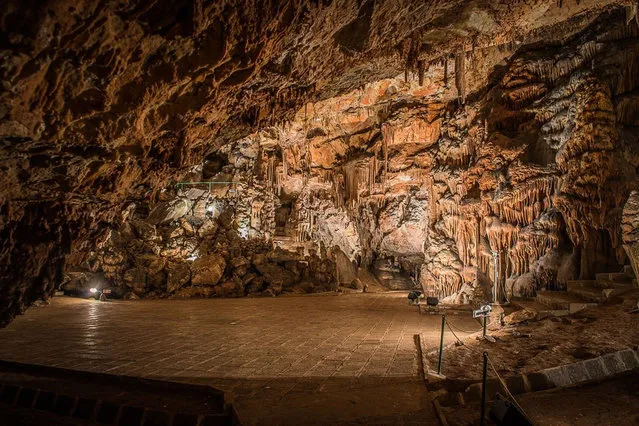
Saeva dupka (Bulgarian: Съева дупка) is a cave in Northern Bulgaria near the village of Brestnitsa, Lovech Province (43°2′N 24°11′E). Its five halls and 400 metres of corridors offer some of the most beautiful cave formations in the country. Besides that the cave has hosted many Choral music performances, thanks to the excellent acoustic conditions. Saeva dupka was named after two brothers Seyu and Sae who used it as a hiding place during the Ottoman occupation of Bulgaria. Recent excavations have showed the cave was inhabited since Roman times. Currently Saeva dupka is one of the 100 Tourist Sites of Bulgaria.
Details
20 Feb 2013 11:30:00
Primitive Tool By Ami Drach And Dov Ganchrow

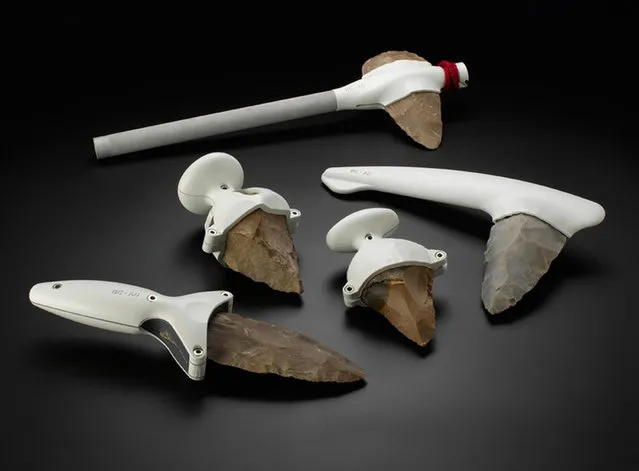
This primitive tool set by Tel Aviv-based design studio Ami Drach and Dov Ganchrow was released at the 2012 Budapest design week. The white modernized handles are a contrasting design against the natural blades of stone. Computer imaging wraps each unique cut of stone to create a perfect fit handle. The set features knives and flint starters. We are invited to explore the usefulness of these beautiful ancient tool concepts in our everyday today.
Details
22 Feb 2013 14:36:00