Loading...
Done


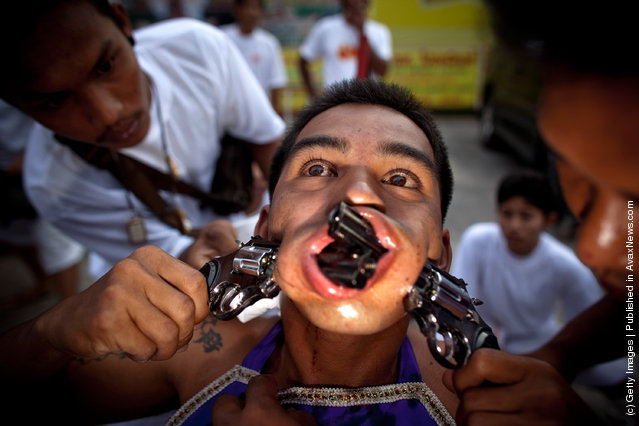
A devotee of the Chinese shrine of Samkong, pierces his cheeks with toy guns during a procession of Vegetarian Festival on October 11, 2010 in Phuket, Thailand. Ritual Vegetarianism in Phuket Island traces it roots back to the early 1800's. The festival begins on the first evening of the ninth lunar month and lasts for nine days. Participants in the festival perform acts of body piercing as a means of shifting evil spirits from individuals onto themselves and bring the community good luck. (Photo by Athit Perawongmetha/Getty Images)
Details
09 Jul 2011 11:55:00
San-Zhi – The Pod Village – Taiwan

San Zhi, Taiwan is an abandoned vacation resort on the northern coast of Taiwan. It was built in the early 1980s, but construction of the futuristic resort ceased after a series of fatal accidents.
Even though it never opened as a vacation resort, San Zhi can still be toured. The strange pod-like buildings act as a tourist attraction. The colors of the pod-like buildings depend on their location. The buildings in the west are green, in the east pink, in the south blue, and in the north white
Details
11 May 2013 10:27:00
Behind The Scenes At The Chinese Opera In Thailand

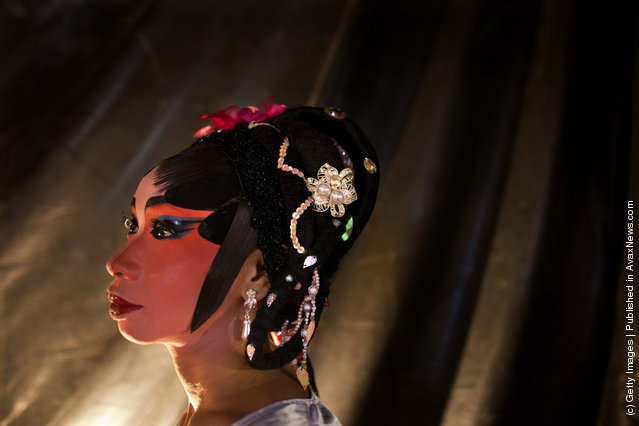
Wanwisa, a Lao Yi Lai Heng Chinese opera performer waits backstage at the Plub Plachai temple on January 25, 2012 in Bangkok, Thailand. The traditional Chinese art form involving music, singing, martial arts and acting has a history of more than 500 years. There are about 30 members working with the group doing specials shows all week to celebrate the Chinese New year. The Chinese opera is popular in many parts of China, Malaysia, Singapore, Thailand and Macau. (Photo by Paula Bronstein/Getty Images)
Details
28 Jan 2012 12:14:00
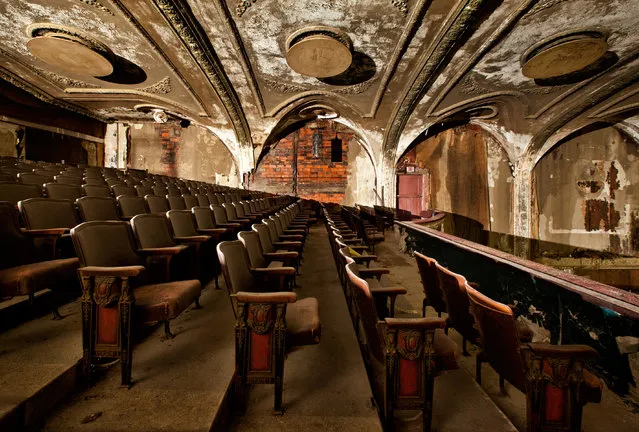
The Variety Theatre, Cleveland, Ohio. (Photo by Matthew Christopher/Caters News)

These images of an abandoned theater act as a time capsule of a location that was once rocked by the stars. The likes of Metallica, R.E.M. and Motorhead all played the Variety Theatre in Cleveland, Ohio, but now all that remains are dusty chairs that once supported encapsulated crowds. Renowned abandoned building photographer Matthew Christopher photographed the theater in its dilapidated state. Here: The Variety Theatre, Cleveland, Ohio. (Photo by Matthew Christopher/Caters News)
Details
11 Apr 2016 10:41:00
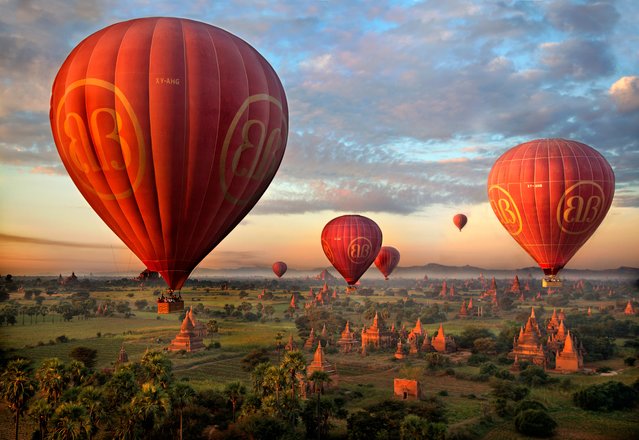
“The fantastic landscape of Bagan in Myanmar features hundreds of temples and pagodas as far as the eye can see. Experiencing this sight at dawn from the basket of a hot air balloon will remain engraved in my memory for ever. Mick Ryan, judge – What a magical photograph and place. The Buddhist temples and pagodas fill the plains of Bagan in Myanmar at sunrise… the golden hour providing beautiful light to illuminate the retrogression of the temples and balloons toward a misty, mountainous distance. An excellent, exotic photograph that makes you want to book a flight”. (Photo by Alastair Swan/The Guardian)

“The fantastic landscape of Bagan in Myanmar features hundreds of temples and pagodas as far as the eye can see. Experiencing this sight at dawn from the basket of a hot air balloon will remain engraved in my memory for ever. Mick Ryan, judge – What a magical photograph and place. The Buddhist temples and pagodas fill the plains of Bagan in Myanmar at sunrise… the golden hour providing beautiful light to illuminate the retrogression of the temples and balloons toward a misty, mountainous distance. An excellent, exotic photograph that makes you want to book a flight”. (Photo by Alastair Swan/The Guardian)
Details
04 Jul 2016 08:36:00
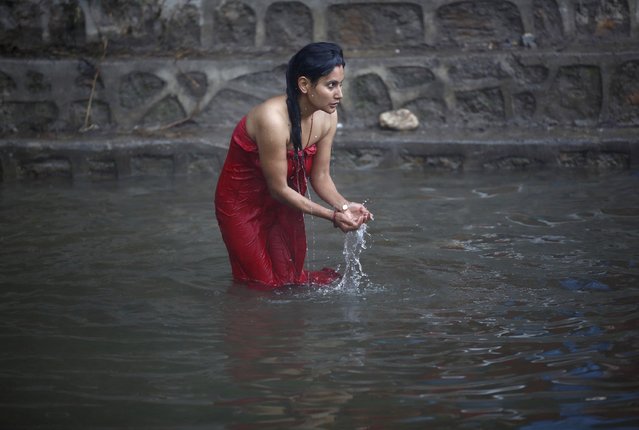
A devotee takes a holy bath in River Saali in Sankhu on the first day of Swasthani Brata Katha festival in Kathmandu January 5, 2015. During the month long festival, devotees recite one chapter of a Hindu tale daily from the 31-chapter sacred Swasthani Brata Katha book that is dedicated to God Madhavnarayan and Goddess Swasthani, alongside various other gods and goddess and the miraculous feats performed by them. (Photo by Navesh Chitrakar/Reuters)

A devotee takes a holy bath in River Saali in Sankhu on the first day of Swasthani Brata Katha festival in Kathmandu January 5, 2015. During the month long festival, devotees recite one chapter of a Hindu tale daily from the 31-chapter sacred Swasthani Brata Katha book that is dedicated to God Madhavnarayan and Goddess Swasthani, alongside various other gods and goddess and the miraculous feats performed by them. (Photo by Navesh Chitrakar/Reuters)
Details
06 Jan 2015 12:22:00
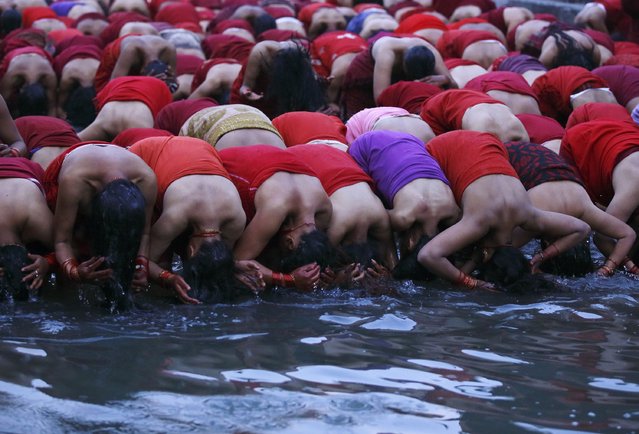
Devotees take a holy bath during the Swasthani Brata Katha festival in Kathmandu January 20, 2015. During the month-long festival, devotees recite one chapter of a Hindu tale daily from the 31-chapter sacred Swasthani Brata Katha book that is dedicated to God Madhavnarayan and Goddess Swasthani, alongside various other gods and goddesses and the miraculous feats performed by them. (Photo by Navesh Chitrakar/Reuters)

Devotees take a holy bath during the Swasthani Brata Katha festival in Kathmandu January 20, 2015. During the month-long festival, devotees recite one chapter of a Hindu tale daily from the 31-chapter sacred Swasthani Brata Katha book that is dedicated to God Madhavnarayan and Goddess Swasthani, alongside various other gods and goddesses and the miraculous feats performed by them. The devotees also go on pilgrimages to various temples, perform religious rituals, take a holy bath in the rivers and fast for a month, especially among women who believe fasting helps in their family's well-being or in getting them a good husband. (Photo by Navesh Chitrakar/Reuters)
Details
21 Jan 2015 13:50:00
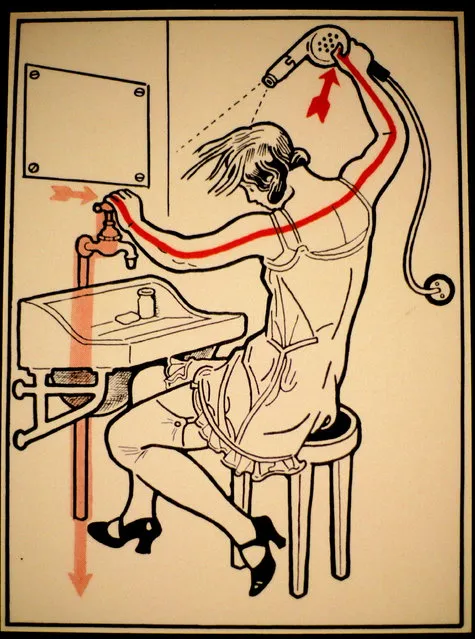
The book “Elektroschutz in 132 Bildern” (Electrical Protection in 132 Pictures) was published in Vienna in the early 1900s by a Viennese physician named Stefan Jellinek (1878-1968, a founder of the Electro-Pathological Museum). The pictures are nice and direct and unambiguous; they teach, graphically, that the surest way to kill yourself with electricity is to form a complete path from source (usually the bright red arrow) to ground (the screened back, pink arrow). Arrowheads provide the path for current flow. (Photo by The Vienna Technical Museum)

The book “Elektroschutz in 132 Bildern” (Electrical Protection in 132 Pictures) was published in Vienna in the early 1900s by a Viennese physician named Stefan Jellinek (1878-1968, a founder of the Electro-Pathological Museum). The pictures are nice and direct and unambiguous; they teach, graphically, that the surest way to kill yourself with electricity is to form a complete path from source (usually the bright red arrow) to ground (the screened back, pink arrow). Arrowheads provide the path for current flow. (Photo by The Vienna Technical Museum)
Details
11 Aug 2014 11:10:00