Loading...
Done
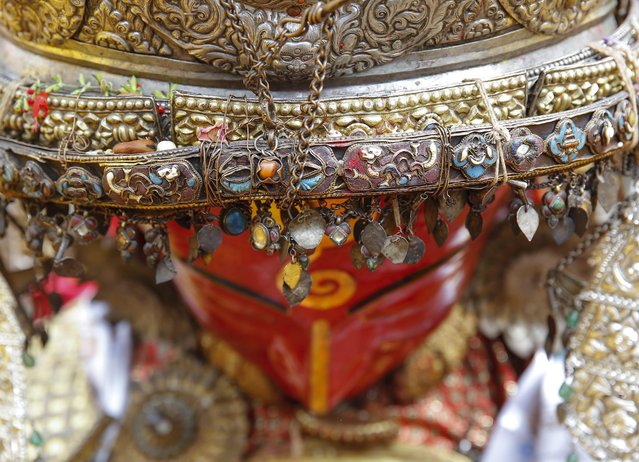
A close up of ornaments of centuries-old idols of Lord Buddha during the Pancha Daan, Five donation, festival in Bhaktapur, Nepal, 30 August 2016. (Photo by Narendra Shrestha/EPA)

A close up of ornaments of centuries-old idols of Lord Buddha during the Pancha Daan, Five donation, festival in Bhaktapur, Nepal, 30 August 2016. Thousands of Buddhist pilgrims observe the main day of the Pancha Daan also known as a five summer gifts (rice, grain, salt, money and fruits) festival which is observes for world peace and human welfare. (Photo by Narendra Shrestha/EPA)
Details
31 Aug 2016 12:18:00
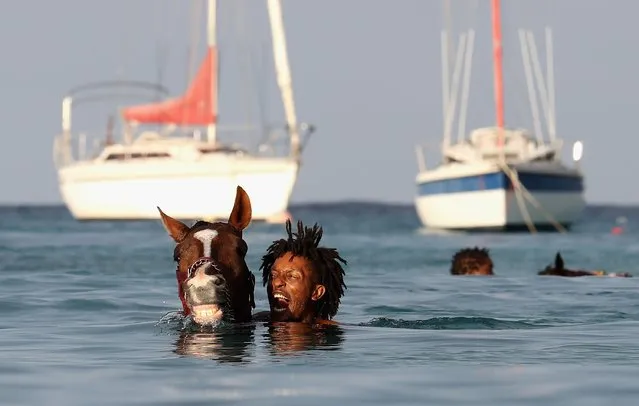
Horses from the Garrison Savannah, who are involved in celebrations today to mark 50 years of Independence, are washed in the sea first thing in the morning on December 1, 2016 in  Bridgetown, Barbados. (Photo by Chris Jackson/Getty Images)

Horses from the Garrison Savannah, who are involved in celebrations today to mark 50 years of Independence, are washed in the sea first thing in the morning on December 1, 2016 in Bridgetown, Barbados. Prince Harry is visiting the Caribbean marking the 35th Anniversary of Independence in Antigua and Barbuda and the 50th Anniversary of Independence in Barbados and Guyana. (Photo by Chris Jackson/Getty Images)
Details
02 Dec 2016 11:53:00
Travellers ride their horse through the river during the Appleby Horse Fair on June 5, 2014 in Appleby, England. The Appleby Horse Fair has existed under the protection of a charter granted by James II since 1685 and is one of the key gathering points for the Romany, gypsy and traveling community. The fair is attended by about 5,000 travellers who come to buy and sell horses. The animals are washed and groomed before being ridden at high speed along the “mad mile” for the viewing of potential buyers. (Photo by Nigel Roddis/Getty Images)

Travellers ride their horse through the river during the Appleby Horse Fair on June 5, 2014 in Appleby, England. The Appleby Horse Fair has existed under the protection of a charter granted by James II since 1685 and is one of the key gathering points for the Romany, gypsy and traveling community. The fair is attended by about 5,000 travellers who come to buy and sell horses. The animals are washed and groomed before being ridden at high speed along the “mad mile” for the viewing of potential buyers. (Photo by Nigel Roddis/Getty Images)
Details
15 Jun 2014 11:33:00
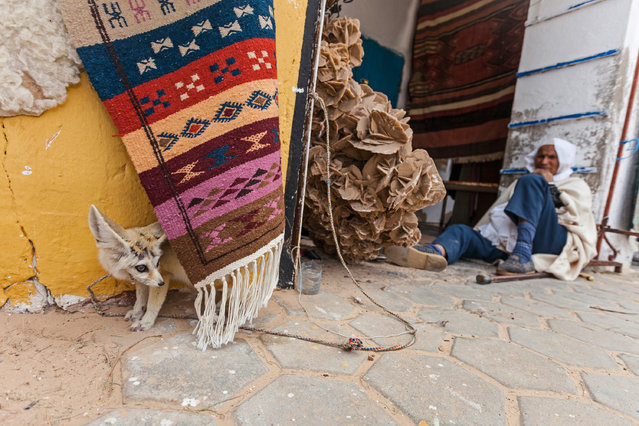
Sultan, a famous captive fennec that is displayed tied on a rope in front of a tourist shop, is the main attraction in the souk of Douz, a desert town in Tunisia. By the display of such a charismatic animal, tourists are often lured to buy things or pay for pictures. On inquiry, although Sultan has been caught as a pup in the wild, the owners of the shop reassure the foreigners stating that the animal is ‘domestic’. (Photo by Bruno D’Amicis/Fritz Pölking Prize/GDT EWPY 2015)

Sultan, a famous captive fennec that is displayed tied on a rope in front of a tourist shop, is the main attraction in the souk of Douz, a desert town in Tunisia. By the display of such a charismatic animal, tourists are often lured to buy things or pay for pictures. On inquiry, although Sultan has been caught as a pup in the wild, the owners of the shop reassure the foreigners stating that the animal is ‘domestic’. (Photo by Bruno D’Amicis/Fritz Pölking Prize/GDT EWPY 2015)
Details
23 Nov 2015 08:02:00
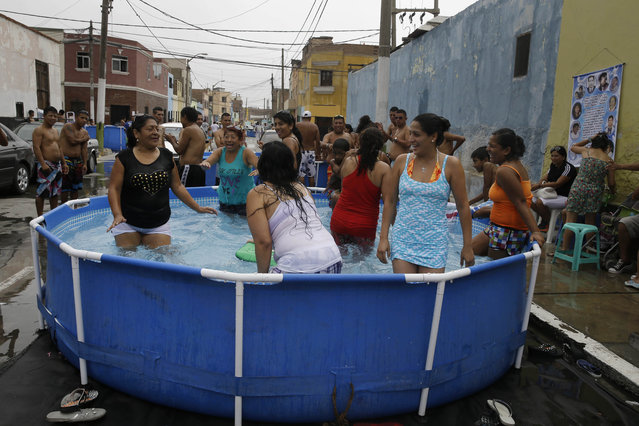
A group of women dance in a pool in Callao, Peru, Sunday, February 22, 2015. One of centers for the front-doorstep, pool-party phenomenon is Lima's port city of Callao. People hold parties in them and sometimes entire blocks chip in to buy a pool, which can be had in local department stores for a bit over $100. (Photo by Martin Mejia/AP Photo)

A group of women dance in a pool in Callao, Peru, Sunday, February 22, 2015. One of centers for the front-doorstep, pool-party phenomenon is Lima's port city of Callao. People hold parties in them and sometimes entire blocks chip in to buy a pool, which can be had in local department stores for a bit over $100. (Photo by Martin Mejia/AP Photo)
Details
24 Feb 2015 15:20:00
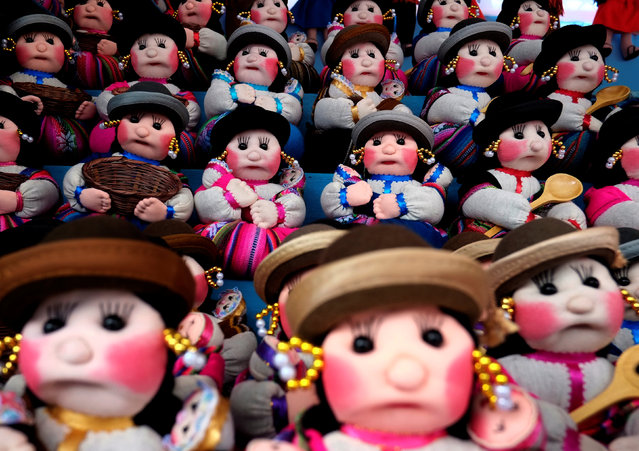
Aymara dolls are seen during the “Alasitas” fair, where people buy miniature versions of goods they hope to acquire in real life, in La Paz, Bolivia, January 24, 2017. Shoppers fill their baskets with miniature versions of things they desire – everything from cars, houses computers – to give to Ekeko the God of abundance, in the hope he will being therm good fortune. And it is all carried out with a priest’s blessing. Originally, the Festival of Alasitas was a celebration by farmers praying for plentiful crops.Today, the meaning amounts to the same only locals hope for more material goods. (Photo by David Mercado/Reuters)

Aymara dolls are seen during the “Alasitas” fair, where people buy miniature versions of goods they hope to acquire in real life, in La Paz, Bolivia, January 24, 2017. Shoppers fill their baskets with miniature versions of things they desire – everything from cars, houses computers – to give to Ekeko the God of abundance, in the hope he will being therm good fortune. (Photo by David Mercado/Reuters)
Details
26 Jan 2017 12:56:00
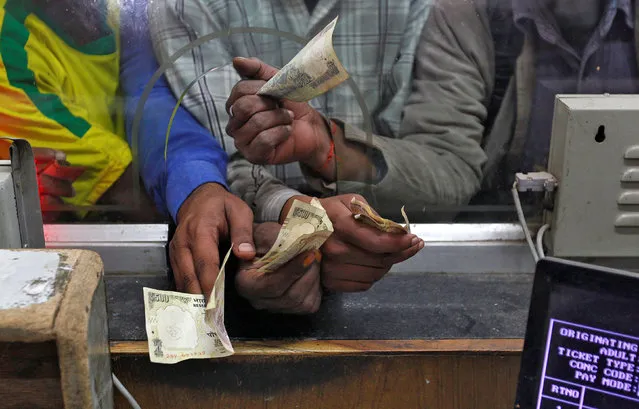
Passengers hold 500 (bottom) rupee banknotes to buy train tickets at a railway booking counter in Allahabad, India, November 9, 2016. (Photo by Jitendra Prakash/Reuters)

Passengers hold 500 (bottom) rupee banknotes to buy train tickets at a railway booking counter in Allahabad, India, November 9, 2016. People are queuing up outside banks across India to exchange 500 and 1,000 rupee notes after they were withdrawn as part of anti-corruption measures. Indians will be able to exchange their old notes, which stopped being legal tender at midnight on Tuesday, for new ones at banks until 30 December. The surprise move is part of a government crackdown on corruption and illegal cash holdings. Banks were shut on Wednesday to allow them enough time to stock new notes. There are also limits on cash withdrawals from ATMs. The BBC's Yogita Limaye in Mumbai says there have been chaotic scenes outside many banks. (Photo by Danish Siddiqui/Reuters)
Details
10 Nov 2016 12:10:00
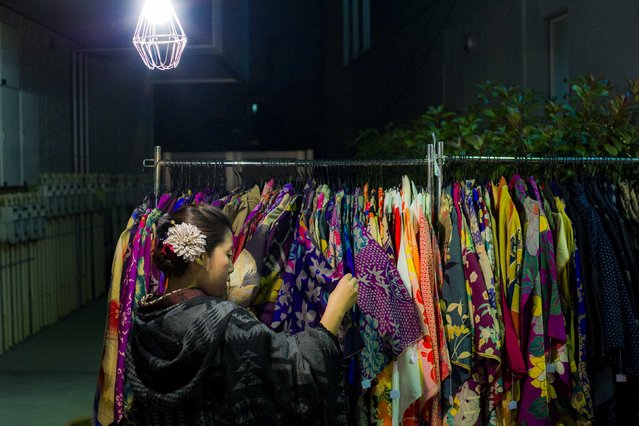
A woman browses through kimonos for sale at Boroichi flea market in Tokyo December 15, 2014. In the 16th century, Boroichi was a place for farmers to buy and sell rags, known as boro, for mending clothes and weaving sandals. Now in its 436th year, the original spirit lingers, with about 700 stands hawking fabric, used clothes and piles of rags. Others sell kitchen tools, pottery, seaweed and spices. (Photo by Thomas Peter/Reuters)

A woman browses through kimonos for sale at Boroichi flea market in Tokyo December 15, 2014. In the 16th century, Boroichi was a place for farmers to buy and sell rags, known as boro, for mending clothes and weaving sandals. Now in its 436th year, the original spirit lingers, with about 700 stands hawking fabric, used clothes and piles of rags. Others sell kitchen tools, pottery, seaweed and spices. About 200,000 people flock to the market, which is only open for four mid-winter days a year – two in December and two in January. (Photo by Thomas Peter/Reuters)
Details
19 Dec 2014 12:50:00