Loading...
Done
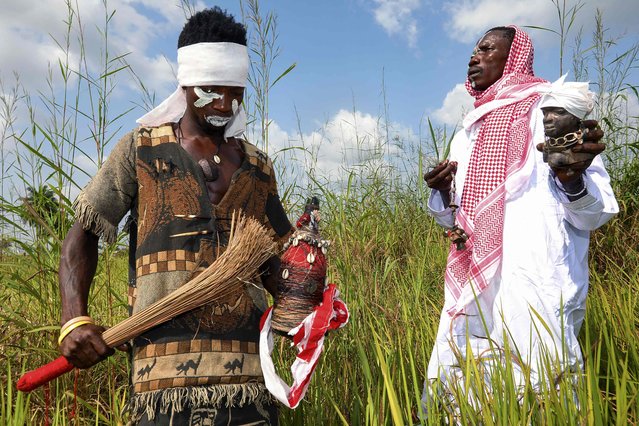
Raka Soko, a traditional healer and Poro society member is deep in prayer while holding a broom and a bottle filled with spiritual wine that is purified to show gratitude to the gods before a ceremony in Waterloo on November 26, 2018. Standing across the field from him another member, Amos Nicol, holds a statue of the spiritual god Sama Yorbu which is used to communicate directly to other gods for permission to perform. (Photo by Lynn Rossi/AFP Photo)

Raka Soko, a traditional healer and Poro society member is deep in prayer while holding a broom and a bottle filled with spiritual wine that is purified to show gratitude to the gods before a ceremony in Waterloo on November 26, 2018. Standing across the field from him another member, Amos Nicol, holds a statue of the spiritual god Sama Yorbu which is used to communicate directly to other gods for permission to perform. (Photo by Lynn Rossi/AFP Photo)
Details
07 Aug 2019 00:01:00
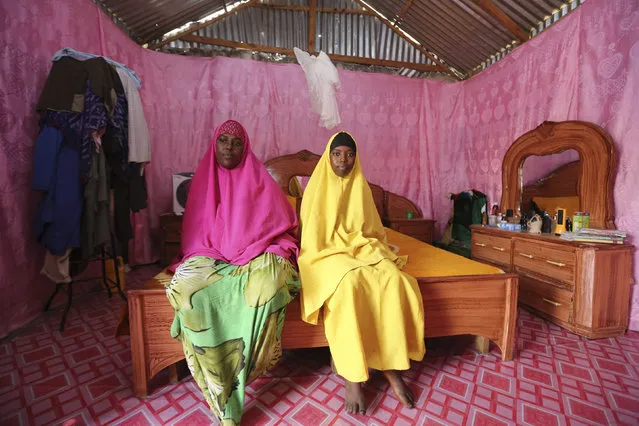
Saciido Sheik Yacquub, 34, poses for a picture with her daughter Faadumo Subeer Mohamed, 13, at their home in Hodan district IDP camp in Mogadishu February 11, 2014. Saciido, who runs a small business, wanted to be a business woman when she was a child. She studied until she was 20. She hopes that Faadumo will become a doctor. Faadumo will finish school in 2017 and hopes to be a doctor when she grows up. (Photo by Feisal Omar/Reuters)

“On March 8th activists celebrate International Women’s Day, which dates back to the early 20th century and has been observed by the United Nations since 1975. In the run-up to the event, Reuters photographers in countries around the globe took a series of portraits of women and their daughters. They asked each mother what her profession was, at what age she had finished education, and what she wanted her daughter to become when she grew up. They also asked each daughter at what age she would finish education and what she wanted to do in the future. The series of images offers an insight into the lives of women and girls around the world”. – Reuters. (Photo by Feisal Omar/Reuters)
Details
09 Mar 2014 04:33:00
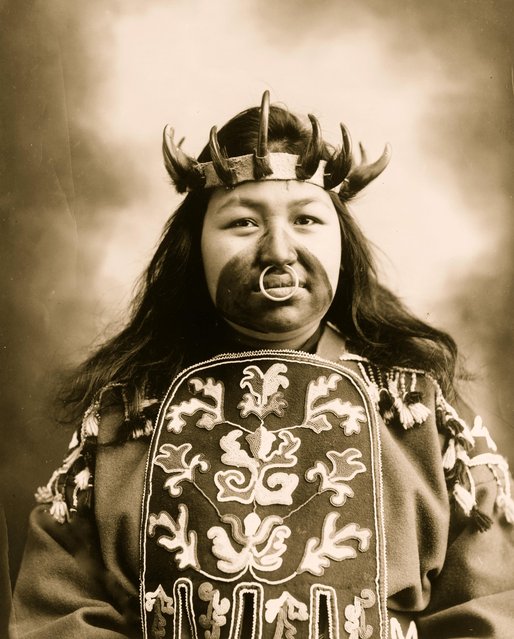
Kaw-Claa, a Tlingit native woman in full potlatch dancing costume, 1906. (Photo by Case & Draper/Buyenlarge/Getty Images)

Kaw-Claa, a Tlingit native woman in full potlatch dancing costume, 1906. (Photo by Case & Draper/Buyenlarge/Getty Images)
Details
11 Jan 2017 14:42:00
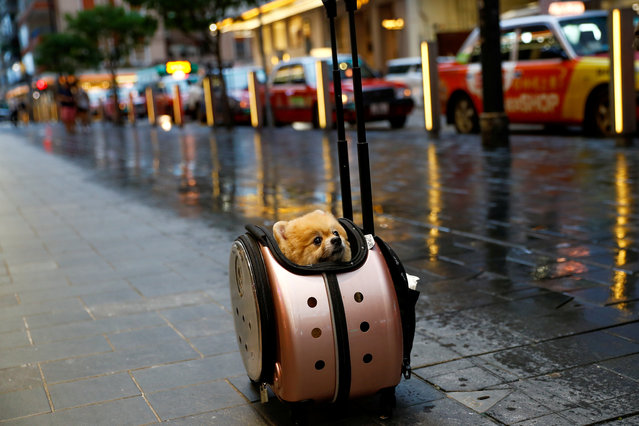
A Pomeranian dog sits in a rolling pet carrier in Hong Kong, China on September 4, 2019. (Photo by Kai Pfaffenbach/Reuters)

A Pomeranian dog sits in a rolling pet carrier in Hong Kong, China on September 4, 2019. (Photo by Kai Pfaffenbach/Reuters)
Details
06 Sep 2019 00:03:00
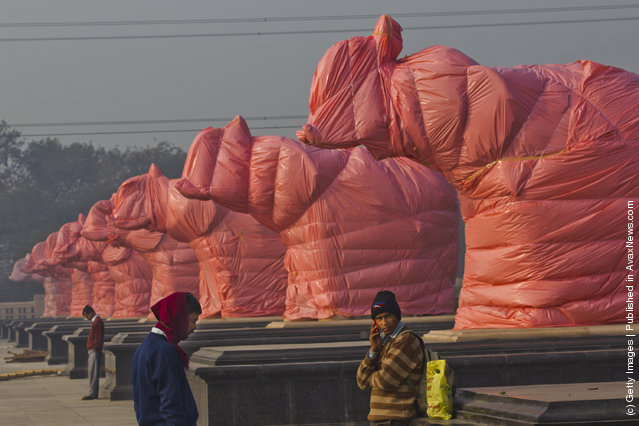
Elephant Statues Of BSP Party Symbol Covered Ahead Of State Elections In India

A worker stands under covered elephant statues at the Ambedkar Park on January 11, 2012 in Noida, Uttar Pradesh, India. India's Election Commission has ordered the covering up of statues, the symbol of the Bahujan Samaj Party, ahead of next month's elections in the state of Uttar Pradesh. (Photo by Daniel Berehulak /Getty Images)
Details
11 Jan 2012 10:14:00
Las Vegas

circa 1930: The neon illuminations of a wedding Chapel in Las Vegas.
Details
19 Mar 2011 09:41:00
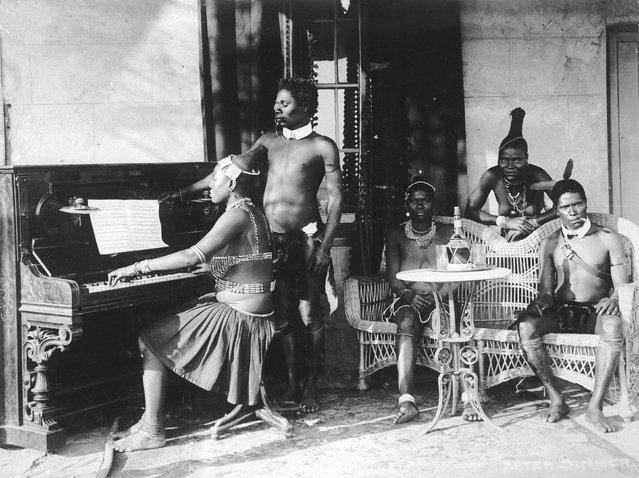
circa 1925:  A Zulu woman playing the piano while a group of others sit and listen.  (Photo by General Photographic Agency/Getty Images)

“The Zulu are the largest South African ethnic group, with an estimated 10–11 million people living mainly in the province of KwaZulu-Natal. Small numbers also live in Zimbabwe, Zambia, and Mozambique. Their language, Zulu, is a Bantu language; more specifically, part of the Nguni subgroup. The Zulu Kingdom played a major role in South African history during the 19th and 20th centuries. Under apartheid, Zulu people were classed as third-class citizens and suffered from state-sanctioned discrimination. They remain today the most numerous ethnic group in South Africa, and now have equal rights along with all other citizens”. – Wikipedia.

Photo: A Zulu woman playing the piano while a group of others sit and listen (to put it briefly, Englishmen scoff over Zulu). South Africa, circa 1925. (Photo by General Photographic Agency)

Details
03 Feb 2014 09:40:00
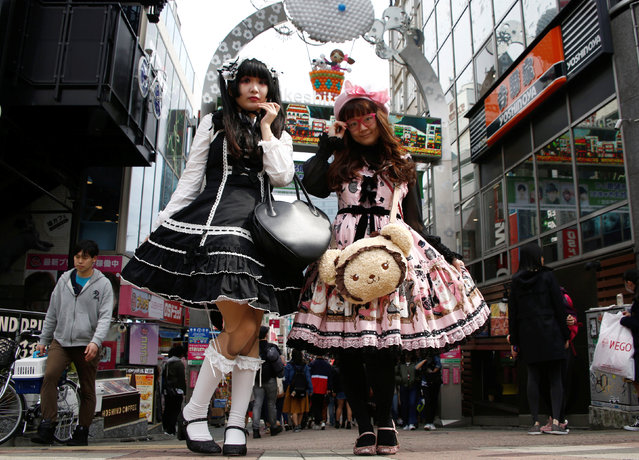
Ai (R) and Hamuka dressed in “Lolita fashion”, influenced by Victorian style, pose for a photographs at  Harajuku shopping district in Tokyo, Japan March 15, 2018. (Photo by Kim Kyung-Hoon/Reuters)

Ai (R) and Hamuka dressed in “Lolita fashion”, influenced by Victorian style, pose for a photographs at Harajuku shopping district in Tokyo, Japan March 15, 2018. (Photo by Kim Kyung-Hoon/Reuters)
Details
16 Mar 2018 06:53:00