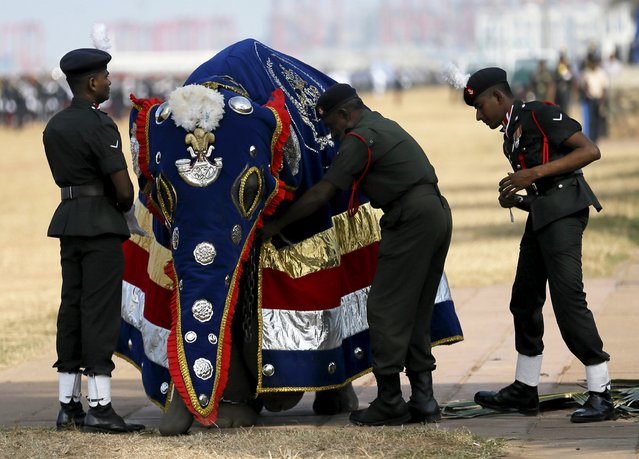
Army soldiers prepare a military elephant for the parade during a rehearsal for Sri Lanka's 68th Independence day celebrations in Colombo, February 2, 2016. (Photo by Dinuka Liyanawatte/Reuters)
Balinese girls in traditional costumes gather during a parade for this year's last sundown in Bali island, Indonesia Thursday, December 31, 2015. (Photo by Firdia Lisnawati/AP Photo)
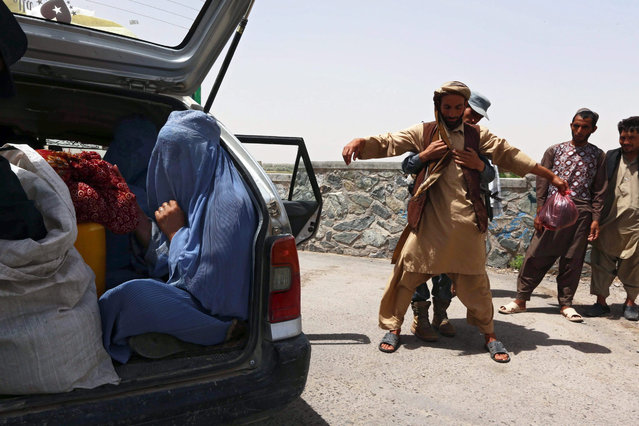
An Afghan policeman frisks a man while a burqa-cald woman sits in the trunk of a car on a roadside in Herat, Afghanistan, 05 July 2015. At least 18 police, two civilians and 30 rebels were killed in central Afghanistan during three days of fierce fighting, police said on 04 July. The clashes ended 04 July after security forces retook control of nine police checkpoints that had fallen to the rebels. (Photo by Jalil Rezayee/EPA)
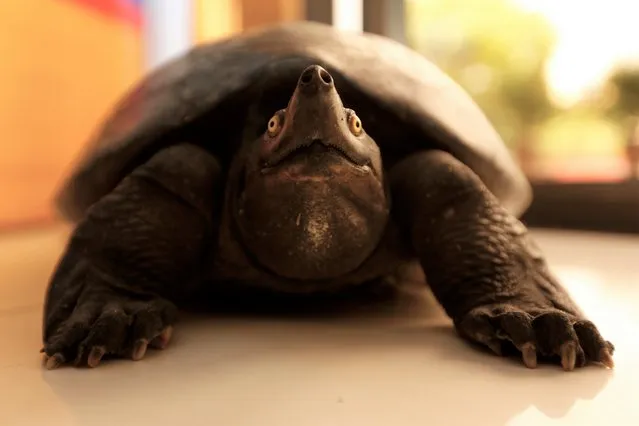
A view of a turtle during an event at the Ministry of Environment in Phnom Penh, Cambodia, 24 June 2020. A Cambodian woman recently bought endangered Royal Turtles from local villagers and gave them to Ministry of Environment. (Photo by Kith Serey/EPA/EFE)
A seagull who turned bright orange after he plunged into a vat of chicken tikka masala in Beckford, England on June 9, 2016. The bird fell into a container of the food while trying to scavenge a piece of meat from a food factory bin in Wales. (Photo by Vale Wildlife Hospital/PA Wire)
A model presents a creation from The Blonds during New York Fashion Week Fall-Winter 2025 in New York City, U.S., February 8, 2025. (Photo by David Dee Delgado/Reuters)
A pro-abortion activist with a Venus symbol painted on her face listens to a speech outside of Congress after the presentation of an abortion bill in Buenos Aires, Argentina, Tuesday, March 6, 2018. Under heavy pressure by women's groups that have taken to the streets in large numbers in recent years, over 70 legislators presented an abortion bill that will be first be discussed in several committees of the lower chamber. (Photo by Victor R. Caivano/AP Photo)
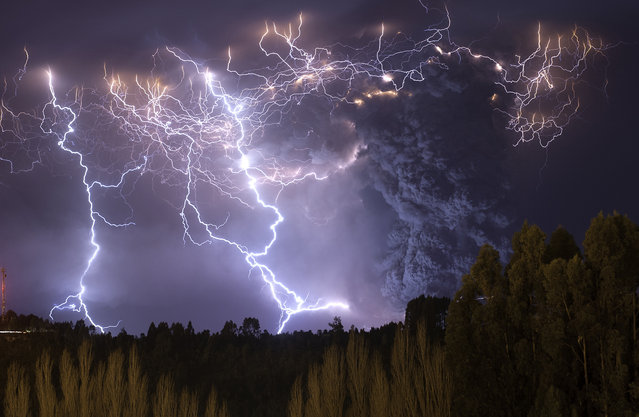
The eruption of Cordon Caulle began on June 4, 2011, located in the Region of Los Rios in Chile. For about 12 months, people and animals became accustomed to living with the daily fall of ash, which also caused problems in the air traffic in South America. The explosions and lightning during first days of the eruption could be seen from hundreds of miles around. This photograph was taken on the second night of eruption from the town of Lago Ranco. (Photo and caption by Francisco Negroni/National Geographic Traveler Photo Contest)
ATTENTION! All pictures are presented in high resolution. To see Hi-Res images – just TWICE click on any picture. In other words, click small picture – opens the BIG picture. Click BIG picture – opens VERY BIG picture.