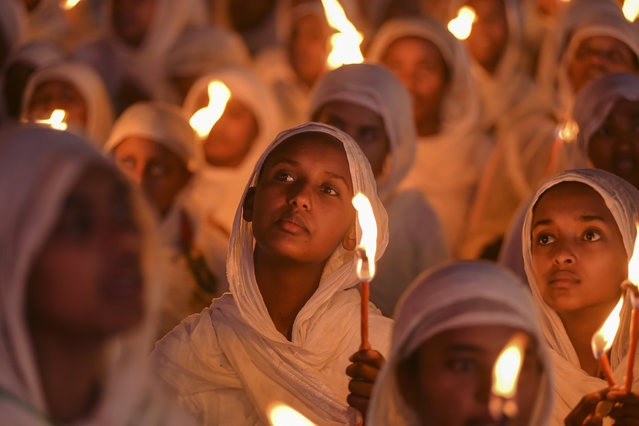
Ethiopian pilgrims pray during a Mass service for Ethiopian Christmas at the Bole Medhane Alem cathedral in Addis Ababa, Ethiopia, Monday, January 6, 2025. (Photo by AP Photo/Stringer)
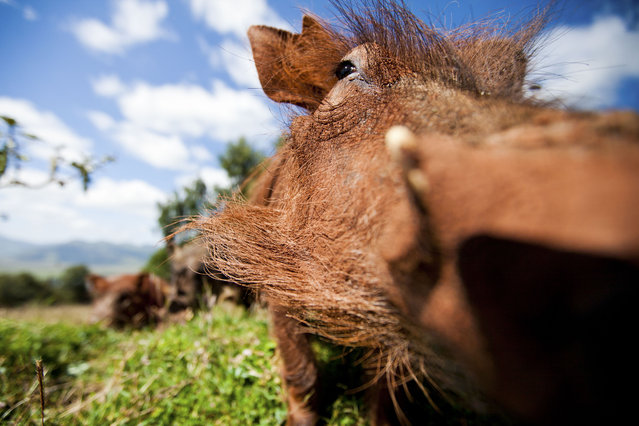
This family of warthogs regularly visited our campsite in the Ethiopian highlands so I set up a remote camera with a wide-angle lens to photograph them as they rummaged around for food. They just had a mud bath. (Photo by Will Burrard-Lucas/Caters News Agency)
A model wearing a creation by Designer Michelle Adepoju, founder of Kilentar, poses for a photograph ahead of a private installation to launch the SS26 collection during Lagos Fashion Week in Lagos, on November 1, 2025. (Photo by Olympia de Maismont/AFP Photo)
Police detain Sebahat Tuncel, co-chair of the pro-Kurdish Democratic Regions Party (DBP), during a protest against the arrest of Kurdish lawmakers, in the southeastern city of Diyarbakir, Turkey, November 4, 2016. (Photo by Sertac Kayar/Reuters)
A demonstrator confronts riot police during a rally in defense of the nationalization of lithium reserves in the country, in Santiago, Chile on January 29, 2018. (Photo by Pablo Sanhueza/Reuters)
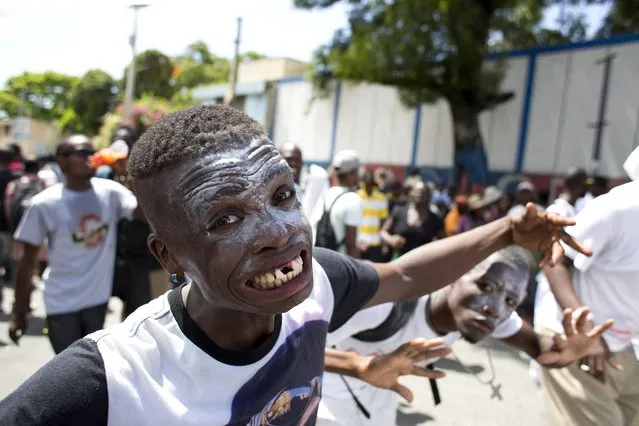
Supporters of the PHTK presidential candidate Jovenel Moise strike zombie poses during a protest march demanding the resignation of interim President Jocelerme Privert in Port-au-Prince, Haiti, Tuesday, June 7, 2016. The electoral council of Haiti has decided to re-do a presidential election that a special commission determined was marred by fraud. (Photo by Dieu Nalio Chery/AP Photo)
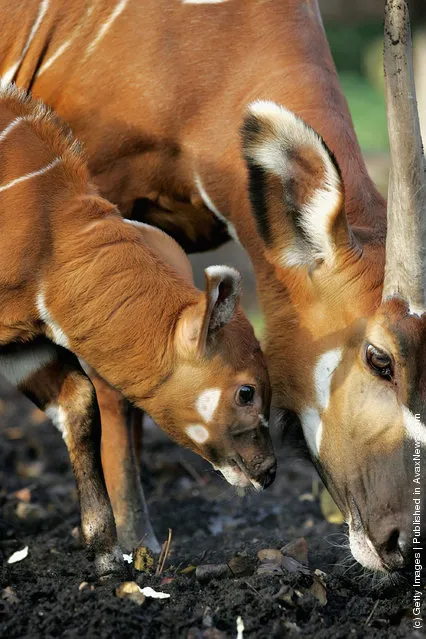
“The western or lowland bongo is a herbivorous, mostly nocturnal forest ungulate and among the largest of the African forest antelope species. Bongos are characterised by a striking reddish-brown coat, black and white markings, white-yellow stripes and long slightly spiralled horns”. – Wikipedia
Photo: The one month old newborn Bongo Antelope Calf ventures out in the cold with his mother in their enclosure at London Zoo on December 9, 2005 in London, England. (Photo by Christopher Lee/Getty Images)
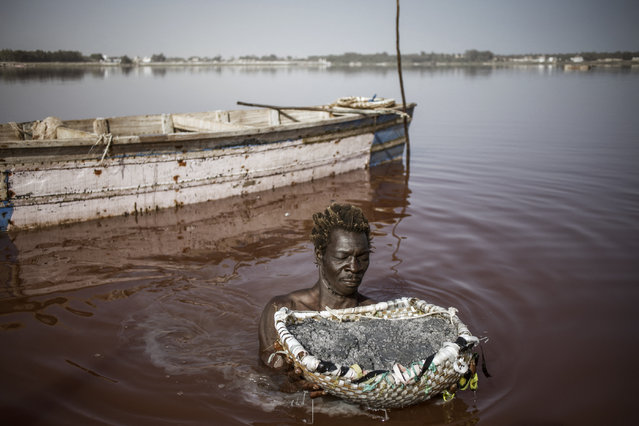
Toure, a Gambian salt harvester, holds a basket filled with the salt collected from the crust of the bottom of the Lake Retba (Pink Lake) in Senegal on March 16, 2021. Lake Retba, divided from the Atlantic Ocean by a narrow corridor of dunes, owes its name to the pink waters caused by the Dunaliella salina algae and is known for its high salt content, up to 40% in some areas. (Photo by Marco Longari/AFP Photo)