American media personality’s Lauren Sánchez’s feline fine in a Michelle Pfeiffer-inspired ensemble early December 2024. (Photo by Lauren Sanchez/Instagram)
American media personality and socialite Kylie Jenner in the second decade of December 2024 cuddles up to mom Kris in a sweet pic. (Photo by kyliejenner/Instagram)
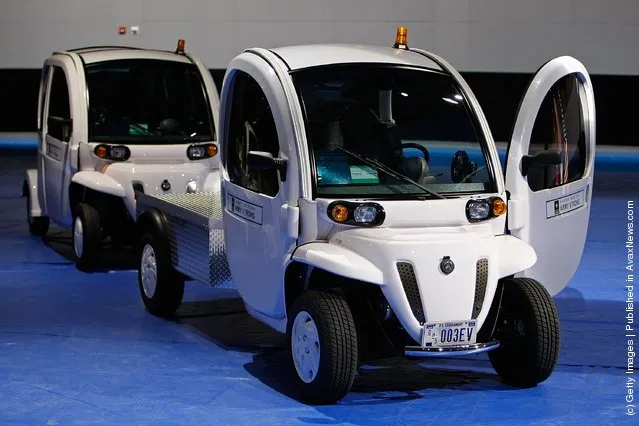
Two of the first six “neighborhood electric vehicles” (NEV) to be leased by the U.S. Army are on display during an introductory ceremony at Fort Myer January 12, 2009 in Arlington, Virginia. The Army has leased 800 of the non-tactical NEVs with a goal of 4,000 vehicles by 2011. These NEVs are manufactured by the Global Electric Motorcars division of Chrysler Corporation. With a full eight-hour charge, the NEVs can traverse 30 miles at a top speed of 25-miles-per-hour. (Photo by Chip Somodevilla/Getty Images)
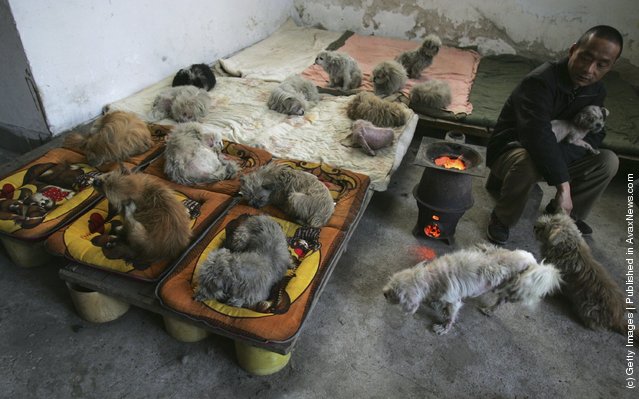
Dai Shuqing's husband sits among adopted stray dogs at an animal shelter on December 15, 2006 in the outskirts of Xian of Shaanxi Province, China. The animal shelter, established by animal lover Dai Shuqing, is located at an abandoned warehouse which houses some 100 dogs and costs over 2,000 yuan (about US $255) per month. (Photo by China Photos/Getty Images)
Sparks are thrown as an employee grinds the edges of a ski at the plant of Swiss ski manufacturer Stoeckli in Malters, Switzerland November 25, 2015. Stoeckli plans to produce some 1,000 pair of skis per year of a special edition for Swiss watch manufacturer TAG Heuer, a brand of LVMH Group. (Photo by Arnd Wiegmann/Reuters)
Fishermen move a fishing boat to a safer place along the shore ahead of cyclone Hudhud at Ganjam district in Odisha October 11, 2014. The India Meteorological Department described Cyclone Hudhud as a “very severe” storm that could pack winds of 195 kilometers (120 miles) per hour and cause torrential rains when it makes landfall near the port city of Visakhapatnam around noon Sunday. (Photo by Reuters/Stringer)
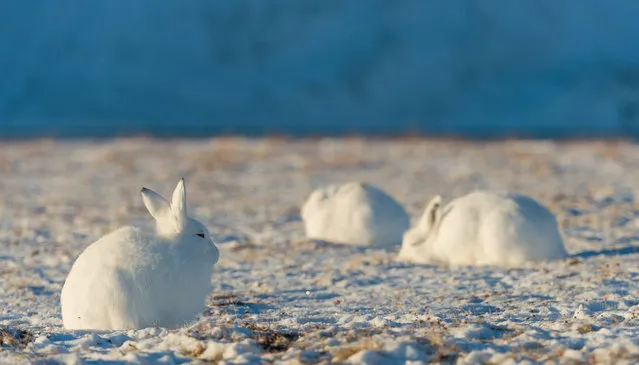
The arctic hare, or polar rabbit, is a species of hare which is adapted largely to polar and mountainous habitats. The arctic hare survives with a thick coat of fur and usually digs holes in the ground or under snow to keep warm and sleep. Arctic hares look like rabbits but have shorter ears, are taller when standing, and, unlike rabbits, can thrive in cold climates. They can travel together with many other hares, sometimes huddling with dozens or more, but are usually found alone, taking, in some cases, more than one partner. The arctic hare can run up to 60 kilometres per hour (40 mph). Its predators include the arctic wolf, arctic fox, and ermine.