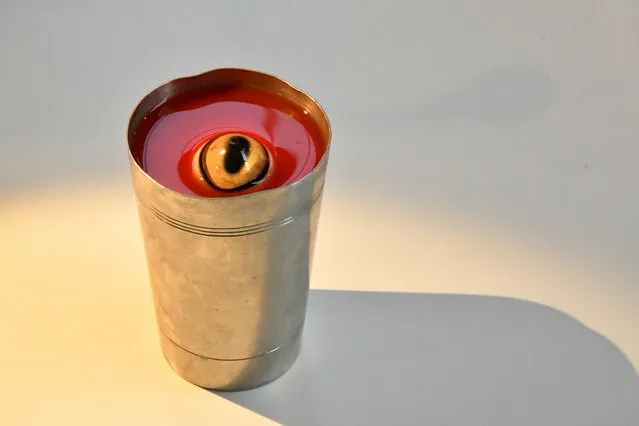
A Mongolian Bloody Mary, made with pickled sheep eyeballs and tomato juice, is displayed at the Disgusting Food Museum in Malmo, Sweden November 1, 2018. (Photo by Mikael Nilsson/Reuters)
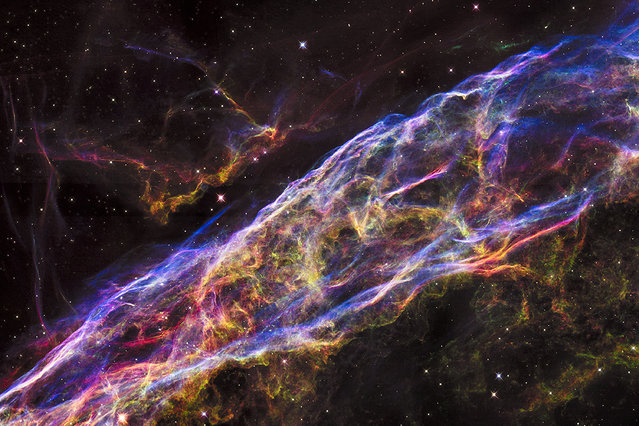
A small section of the expanding remains of the Veil Nebula, a massive star that exploded about 8,000 years ago. The entire nebula is 110 light-years across, covering six full moons on the sky as seen from Earth, and resides about 2,100 light-years away in the constellation Cygnus, the Swan. Image taken by NASA's Hubble Space Telescope. Released September 24, 2015. (Photo by Reuters/NASA/ESA/Hubble Heritage Team)
French army deminers secure a helicopter in a hangar at the Gao airport, on February 9, 2013. Two Malian soldiers and four civilians have already been killed by landmines, and French troops are still fighting off what Paris called “residual jihadists” in reclaimed territory. (Photo by Pascal Guyot/AFP Photo via The Atlantic)
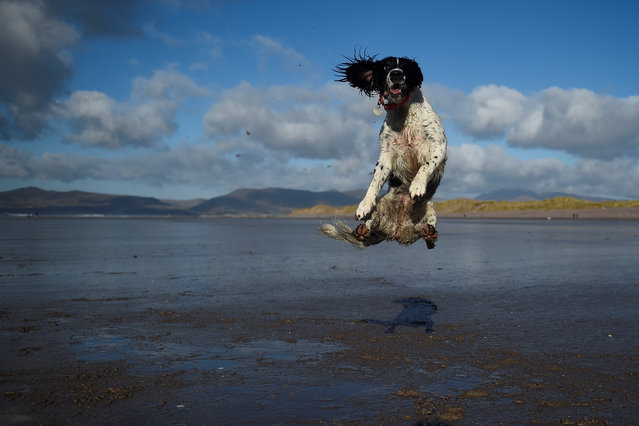
A dog jumps into the air to catch a ball along the beach near the County Kerry village of Rossbeigh, Ireland, February 4, 2018. (Photo by Clodagh Kilcoyne/Reuters)
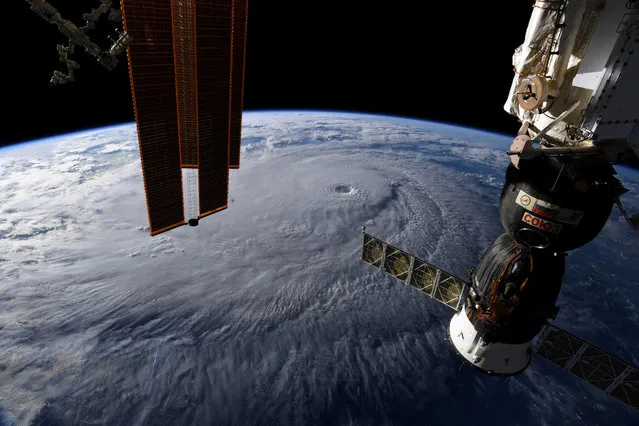
A photo taken from the International Space Station shows Hurricane Lane in the early morning hours near Hawaii, August 22, 2018. (Photo by Courtesy @astro_ricky/NASA/Handout via Reuters)
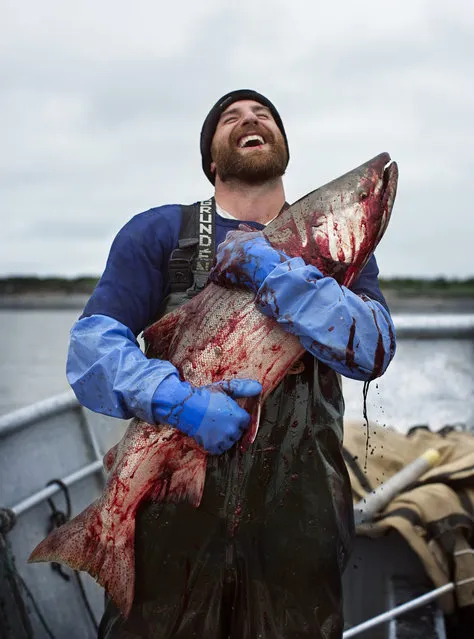
Well before Corey Arnold ever thought about photography, he fished. As a child, he dressed as a fisherman for four consecutive Halloweens, and once brought a dead 3-foot Mako shark to school for show-and-tell. He knew he wanted to be a professional fisherman, even if he didn’t understand what that actually meant.
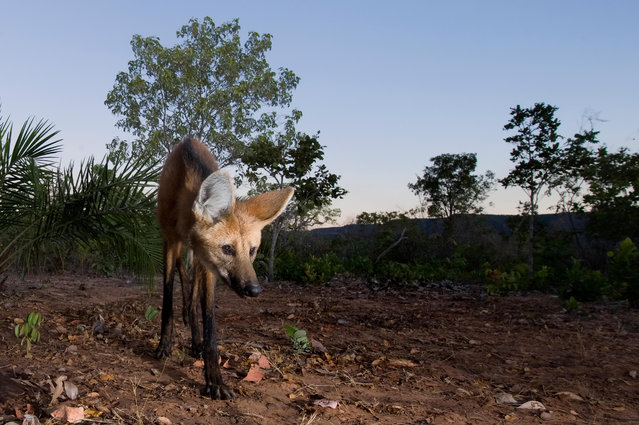
Global wildlife populations will decline by 67% by 2020 unless urgent action is taken to reduce human impact on species and ecosystems, warns the biennial Living Planet Index report from WWF (World Wide Fund for Nature) and ZSL (Zoological Society of London). From elephants to eels, here are some of the wildlife populations most affected by human activity. Here: The maned wolf is among the large mammals in the Brazilian Cerrado that are threatened by the increasing conversion of grasslands into farmland for grazing and growing crops. (Photo by Ben Cranke/Nature Picture Library/Alamy Stock Photo)