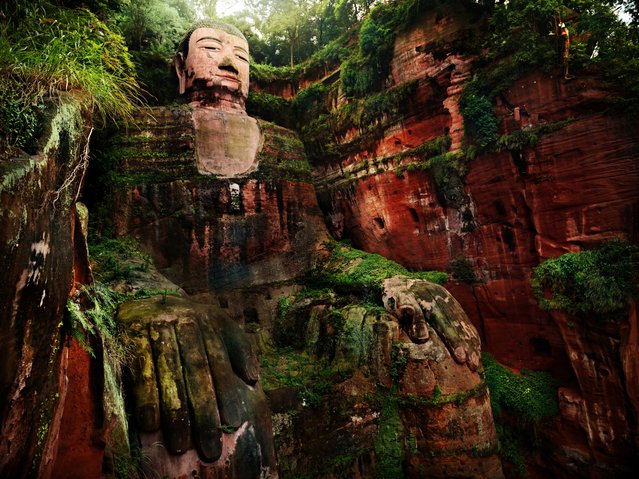
The Leshan Giant Buddha, a 71-metre tall stone statue, is carved out of a cliff face in the southern part of Sichuan province in China. (Photo by Suchet Suwanmongkol/500px)
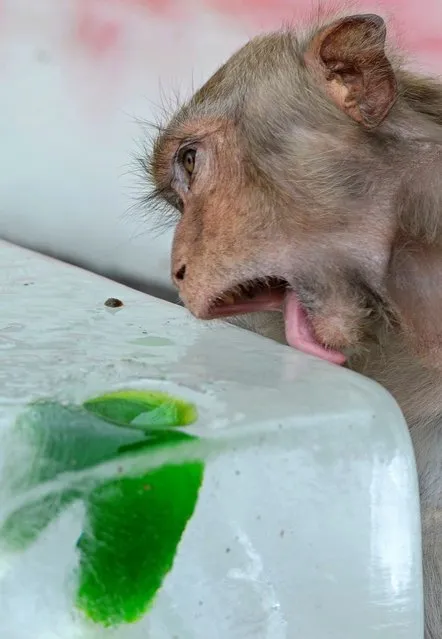
A monkey licks ice during the annual “monkey buffet” in Lopburi province, some 150 kms north of Bangkok on November 24, 2013. More than 2,000 kilos of fruits and vegetables were offered to the monkeys during the annual festival to help promote tourism in the area. (Photo by Pornchai Kittiwongsakul/AFP Photo)
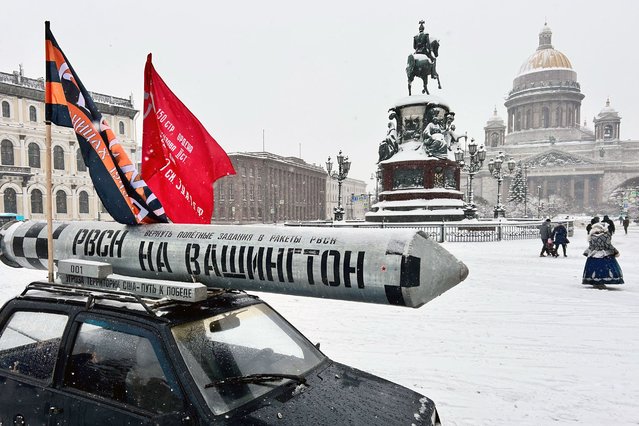
A mock-up of a missile with the inscription reading as “Towards Washington. Threatening U.S. territory is the path to victory” is seen on the roof of a car parked in front of Saint Isaac's Cathedral in Saint Petersburg on January 12, 2025. (Photo by Olga Maltseva/AFP Photo)
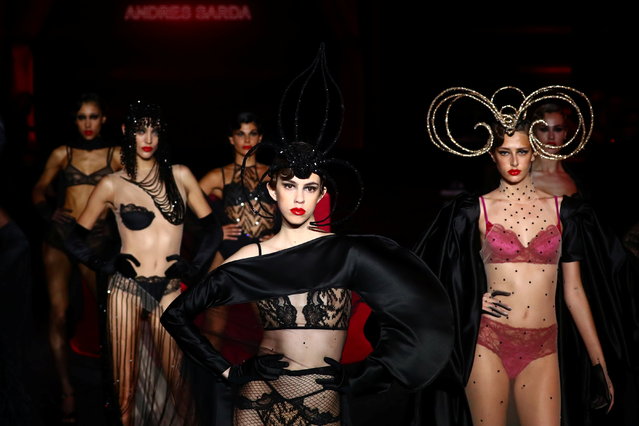
Models display creations by fashion house Andres Sarda during the Mercedes Benz Fashion Week, amid the coronavirus disease (COVID-19) outbreak in Madrid, Spain, April 8, 2021. (Photo by Sergio Perez/Reuters)
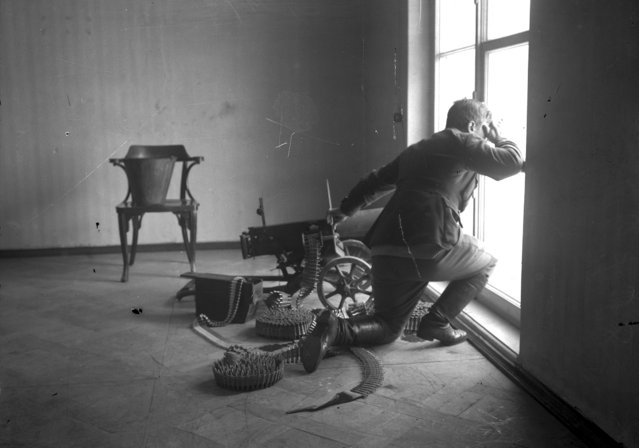
In this photo taken in October 1917, provided by Russian State Documentary Film and Photo Archive, a machine gunner looks through a window at his position near the Kremlin in Moscow, Russia. The 1917 Bolshevik Revolution was long before the digital revolution allowed anyone to instantly document events. But the clumsy cameras of the time still caught some images that capture the period's drama. (Photo by Russian State Documentary Film and Photo Archive via AP Photo)
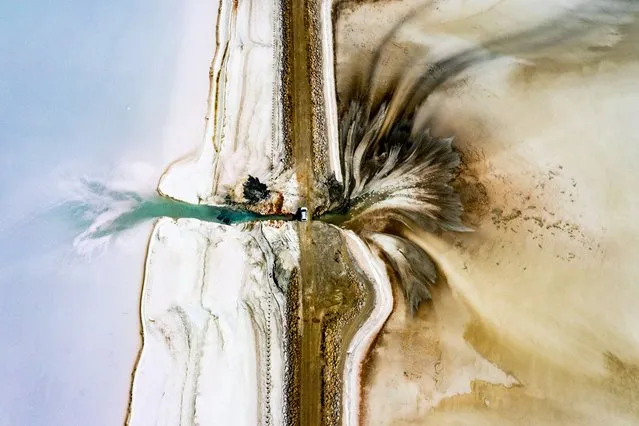
An aerial view of Lake Salt as teams conduct salt extraction works at lake which is a significant portion of Turkiye's salt need is met in Ankara, Turkiye on August 11, 2022. Salt extraction works lasts for about 3 months and continues with the recession of the waters in Lake Salt. The salt extracted from the lake, where salt is produced with a purity of 99 percent, is sent to more than 60 countries. (Photo by Emin Sansar/Anadolu Agency via Getty Images)
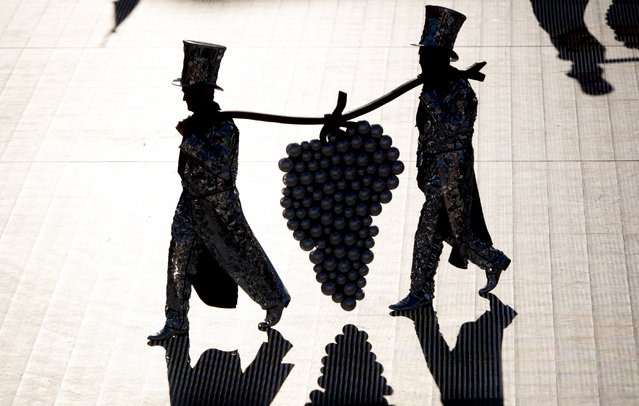
Extras in the arena of the “Fete des Vignerons” (winegrowers' festival in French), during the last rehearsal in Vevey, Switzerland, 17 July 2019. Organized by the brotherhood of winegrowers, the event will celebrate winemaking from 18 July to 11 August. The arena has a capacity of 20,000 spectators and hosts a giant central LED floor of approximately 800 square meters. (Photo by Laurent Gilliéron/EPA/EFE)
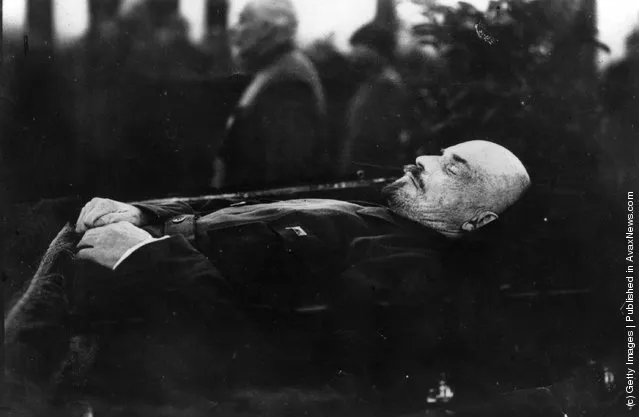
Photo: Vladimir Ilyich Lenin (1870 – 1924) lying in state in the Kremlin. (Photo by Hulton Archive/Getty Images). 1924
Important! For the same article in Russian language click here.
Something quite intriguing is happening within Russian-speaking internet during the last few – should you type a fully academic inquiry (at least, according to Russian academic requirements) in national search engines for "Lenin's mausoleum" – the first thing you get (even in top 10 searches) is website pages talking about black magic and occult. Website authors view this construction differently, but unconditionally agree on one thing: the mausoleum of the "leader of the world proletariat” – the essence of a magical artifact, a sort of “energy vampire”. It was built with a certain purpose: to drain the energy out of miserable Soviet citizens on one hand; and to poison the anthroposphere of one-sixth part of the earth with its vibes (the exact territory that was occupied by the former Soviet Union), depriving the Russian people of will to resist on the other hand. Complete nonsense? No doubt. Nevertheless, an intriguing one. Well, probably because some oddities do exist in mausoleum's history. These oddities are the thing we are going to discuss this time. First, let me refresh you memory on the subject.