Loading...
Done
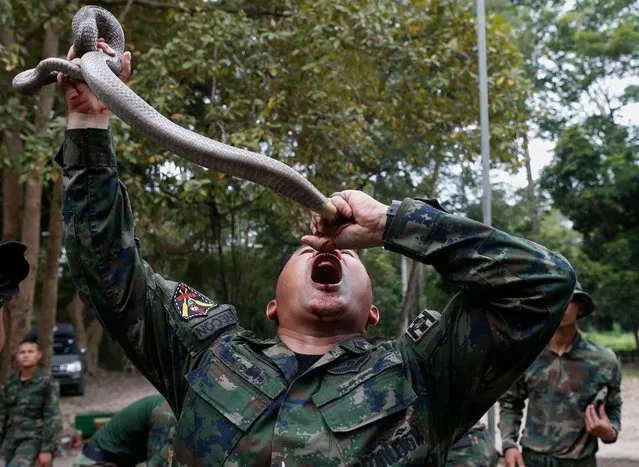
A Thai Marine instructor drinks a cobra's raw blood after killing it as he gives instruction to US Marines and South Korean Marines during jungle survival training as part of the multinational joint military exercise Cobra Gold 2018 at a Force Reconnaissance Battalion camp in the Royal Thai Naval Base, Sattahip district, Chonburi province, Thailand, 19 February 2018. (Photo by Rungroj Yongrit/EPA/EFE)

A Thai Marine instructor drinks a cobra's raw blood after killing it as he gives instruction to US Marines and South Korean Marines during jungle survival training as part of the multinational joint military exercise Cobra Gold 2018 at a Force Reconnaissance Battalion camp in the Royal Thai Naval Base, Sattahip district, Chonburi province, Thailand, 19 February 2018. (Photo by Rungroj Yongrit/EPA/EFE)
Details
21 Feb 2018 00:01:00
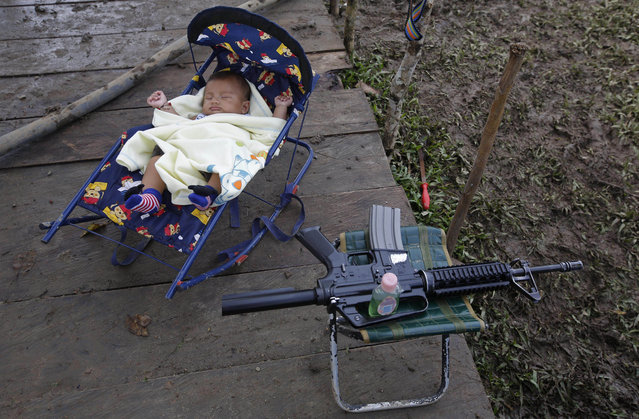
In this Tuesday, February 28, 2017 photo, 3-month-old Junior Alexis Patino, son of FARC rebel Deisy Garcia, sleeps next to his mother's weapon at a rebel camp in a demobilization zone in La Carmelita, in Colombia's southwestern Putumayo state. Amid the makeshift tents and communal kitchens where Colombia's largest rebel army is preparing to lay down its weapons, a new sound is emerging: the cries of babies. (Photo by Fernando Vergara/AP Photo)

In this Tuesday, February 28, 2017 photo, 3-month-old Junior Alexis Patino, son of FARC rebel Deisy Garcia, sleeps next to his mother's weapon at a rebel camp in a demobilization zone in La Carmelita, in Colombia's southwestern Putumayo state. Amid the makeshift tents and communal kitchens where Colombia's largest rebel army is preparing to lay down its weapons, a new sound is emerging: the cries of babies. (Photo by Fernando Vergara/AP Photo)
Details
09 Mar 2017 00:04:00
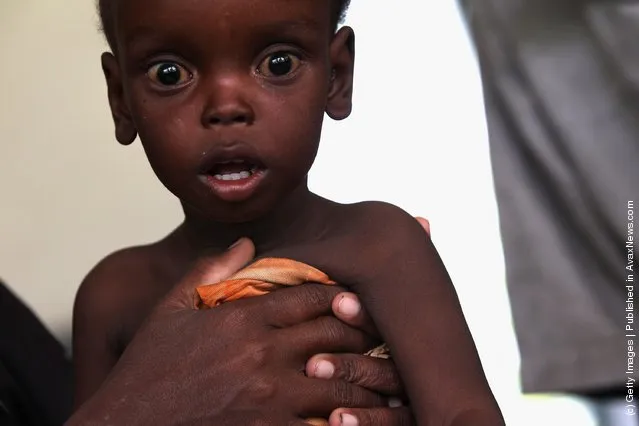
Somali Famine Refugees Seek Aid In Mogadishu

Weakened by sickness and malnutrition, Arbty Mohammad, 2, lies in the Banadir Hospital on August 12, 2011 in Mogadishu, Somalia. Some 100,000 Somalis have flooded into Mogadishu from drought and famine stricken areas of the country. The UN warned Friday that a cholera epidemic could spread through Mogadishu, as Somalis fill unsanitary makeshift camps throughout the capital. (Photo by John Moore/Getty Images)
Details
14 Aug 2011 14:13:00
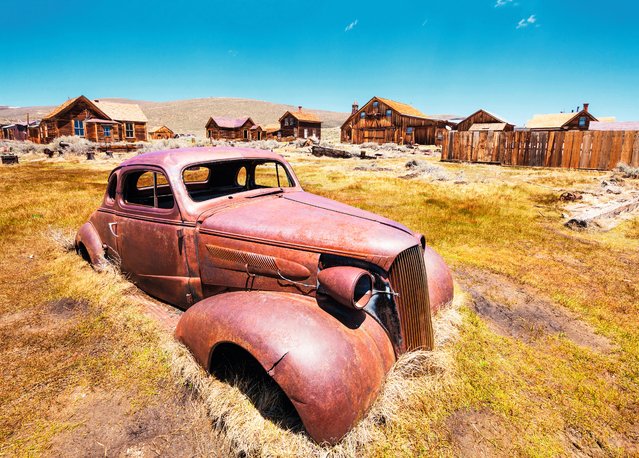
Bodie, Mono County, California. Gold was discovered at Bodie in 1859 (just after the initial California gold rush) and it went from mining camp to boomtown. Its decline began in 1880, when word spread of new boomtowns elsewhere. The Standard Consolidated Mine closed in 1913, and four years later the Bodie Railway was abandoned. By 1940 the population was down to 40. Today, Bodie is maintained in a state of arrested decay as a visitor attraction. (Photo by Alamy Stock Photo)

Kieron Connolly’s new book of photographs of more than 100 once-busy and often elegant buildings gives an idea of how the world might look if humankind disappeared. Here: Bodie, Mono County, California. Gold was discovered at Bodie in 1859 (just after the initial California gold rush) and it went from mining camp to boomtown. Its decline began in 1880, when word spread of new boomtowns elsewhere. The Standard Consolidated Mine closed in 1913, and four years later the Bodie Railway was abandoned. By 1940 the population was down to 40. Today, Bodie is maintained in a state of arrested decay as a visitor attraction. (Photo by Alamy Stock Photo)
Details
07 Sep 2016 09:50:00
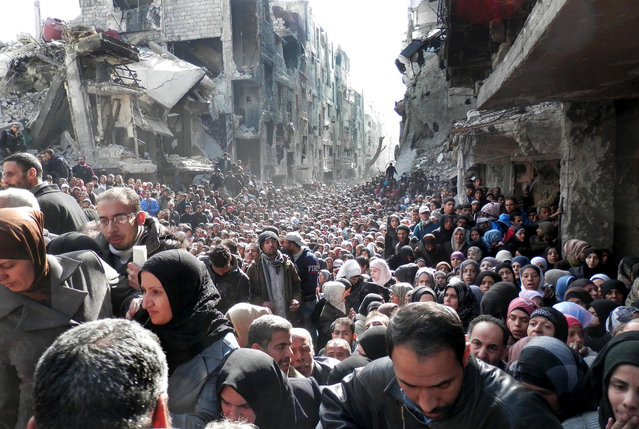
In this January 31, 2014 file photo released by the United Nations Relief and Works Agency for Palestine Refugees in the Near East (UNRWA), shows residents of the besieged Palestinian camp of Yarmouk, queuing to receive food supplies, in Damascus, Syria. That year, the U.N. was able to deliver food to about five percent of people in besieged areas including Yarmouk, while today estimates show the organization is reaching less than one percent. (Photo by UNRWA via AP Photo)

In this January 31, 2014 file photo released by the United Nations Relief and Works Agency for Palestine Refugees in the Near East (UNRWA), shows residents of the besieged Palestinian camp of Yarmouk, queuing to receive food supplies, in Damascus, Syria. That year, the U.N. was able to deliver food to about five percent of people in besieged areas including Yarmouk, while today estimates show the organization is reaching less than one percent. (Photo by UNRWA via AP Photo)
Details
07 Feb 2016 06:36:00
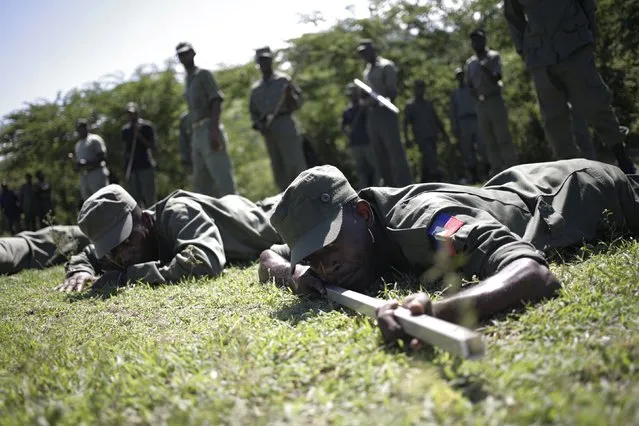
A man holds a metal bar as a weapon during a training day for former soldiers and volunteers train in a makeshift camp in the outskirts of Port-au-Prince, Haiti, October 28, 2015. Haiti disbanded its abusive armed forces two decades ago but uniformed veterans and young recruits are resurfacing to add another destabilising factor to the volatile Caribbean nation already dealing with a political vacuum. (Photo by Andres Martinez Casares/Reuters)

A man holds a metal bar as a weapon during a training day for former soldiers and volunteers train in a makeshift camp in the outskirts of Port-au-Prince, Haiti, October 28, 2015. Haiti disbanded its abusive armed forces two decades ago but uniformed veterans and young recruits are resurfacing to add another destabilising factor to the volatile Caribbean nation already dealing with a political vacuum. (Photo by Andres Martinez Casares/Reuters)
Details
15 Feb 2016 10:05:00
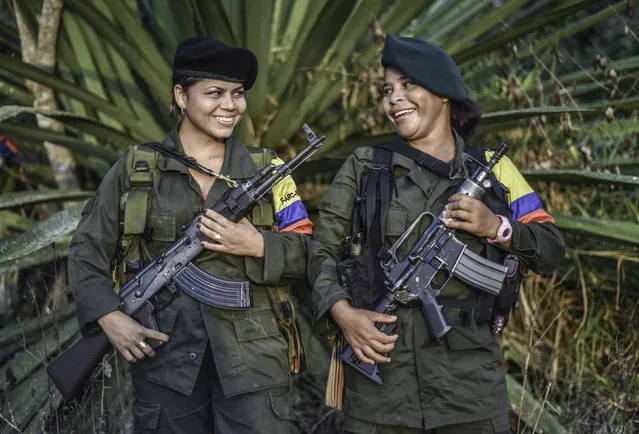
Manuela (L) and Marta, members of the Revolutionary Armed Forces of Colombia (FARC), pose for a picture at a camp in the Colombian mountains on February 18, 2016. Many of these women are willing to be reunited with the children they gave birth and then left under protection of relatives or farmers, whenever the peace agreement will put an end to the country's internal conflict. (Photo by Luis Acosta/AFP Photo)

Manuela (L) and Marta, members of the Revolutionary Armed Forces of Colombia (FARC), pose for a picture at a camp in the Colombian mountains on February 18, 2016. Many of these women are willing to be reunited with the children they gave birth and then left under protection of relatives or farmers, whenever the peace agreement will put an end to the country's internal conflict. (Photo by Luis Acosta/AFP Photo)
Details
27 Feb 2016 10:40:00
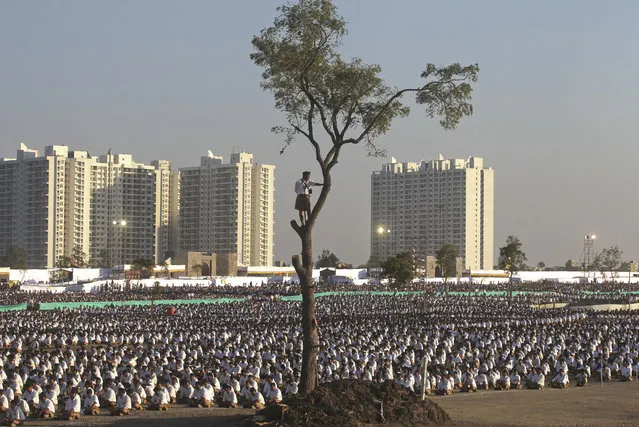
A member of the Hindu nationalist Rashtriya Swayamsevak Sangh (RSS) or the National Volunteers Association keeps watch from the top of a tree as others sit on the ground during their daylong camp on the outskirts of Pune, Maharashtra state, India, Sunday, January 3, 2016. Hindus, make up more than 80 percent of India's population of 1.25 billion. (Photo by Rafiq Maqbool/AP Photo)

A member of the Hindu nationalist Rashtriya Swayamsevak Sangh (RSS) or the National Volunteers Association keeps watch from the top of a tree as others sit on the ground during their daylong camp on the outskirts of Pune, Maharashtra state, India, Sunday, January 3, 2016. Hindus, make up more than 80 percent of India's population of 1.25 billion. (Photo by Rafiq Maqbool/AP Photo)
Details
05 Jan 2016 08:02:00