Loading...
Done
Police detain a woman during a protest against Prime Minister Benjamin Netanyahu and his government's handling of the coronavirus disease (COVID-19) crisis, near Netanyahu's residence in Jerusalem on July 24, 2020. (Photo by Ammar Awad/Reuters)

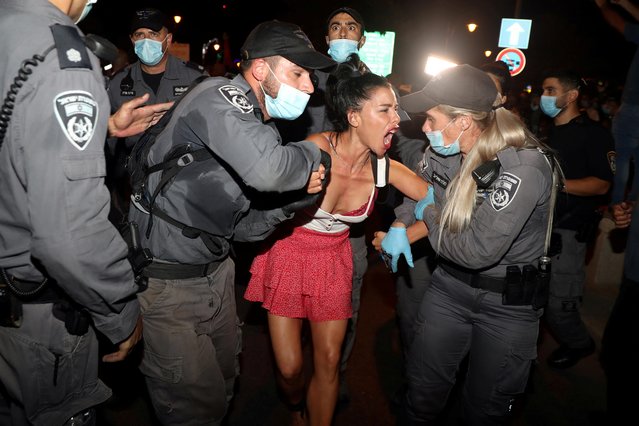
Police detain a woman during a protest against Prime Minister Benjamin Netanyahu and his government's handling of the coronavirus disease (COVID-19) crisis, near Netanyahu's residence in Jerusalem on July 24, 2020. Reimposed coronavirus curbs after a rise in new COVID-19 cases have prompted Israelis demanding better state aid to take to the streets in almost daily demonstrations. Public anger has also been fueled by corruption alleged against Netanyahu, who went on trial in May for bribery, fraud and breach of trust – charges he denies. (Photo by Ammar Awad/Reuters)
Details
25 Jul 2020 00:07:00
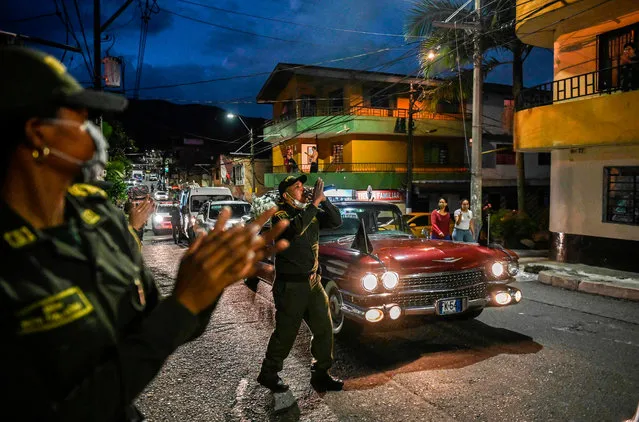
A police officer sings as a hearse drives along a street as part of a campaign sponsored by the Colombian police and a funerary home to raise awareness during the new coronavirus pandemic in Envigado, Antioquia, Colombia, on April 1, 2020. More than 20,000 cases of COVID-19 were registered in Latin America and the Caribbean by Wednesday, according to an AFP tally using information provided by national health authorities and the World Health Organization. (Photo by Joaquin Sarmiento/AFP Photo)

A police officer sings as a hearse drives along a street as part of a campaign sponsored by the Colombian police and a funerary home to raise awareness during the new coronavirus pandemic in Envigado, Antioquia, Colombia, on April 1, 2020. More than 20,000 cases of COVID-19 were registered in Latin America and the Caribbean by Wednesday, according to an AFP tally using information provided by national health authorities and the World Health Organization. (Photo by Joaquin Sarmiento/AFP Photo)
Details
04 Apr 2020 00:01:00
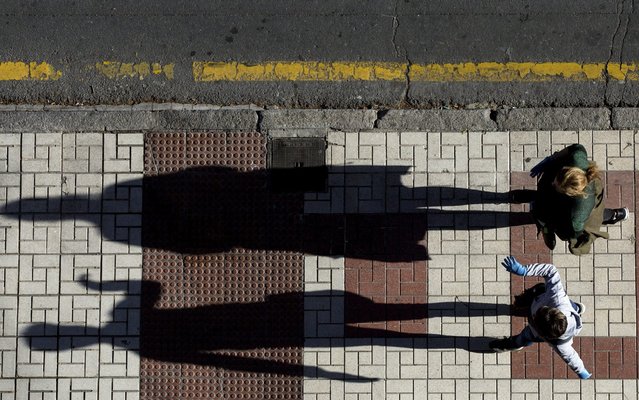
A woman walks with her daughter through an empty street on April 27, 2020 in Malaga, Spain. Since April 27 children under 12 are allowed to come and go from their homes more freely. Spain has had more than 209,000 confirmed cases of COVID-19 and over 23,000 reported deaths, although the rate has declined after weeks of lockdown measures. (Photo by Daniel Perez Garcia-Santos/Getty Images)

A woman walks with her daughter through an empty street on April 27, 2020 in Malaga, Spain. Since April 27 children under 12 are allowed to come and go from their homes more freely. Spain has had more than 209,000 confirmed cases of COVID-19 and over 23,000 reported deaths, although the rate has declined after weeks of lockdown measures. (Photo by Daniel Perez Garcia-Santos/Getty Images)
Details
02 May 2020 00:03:00
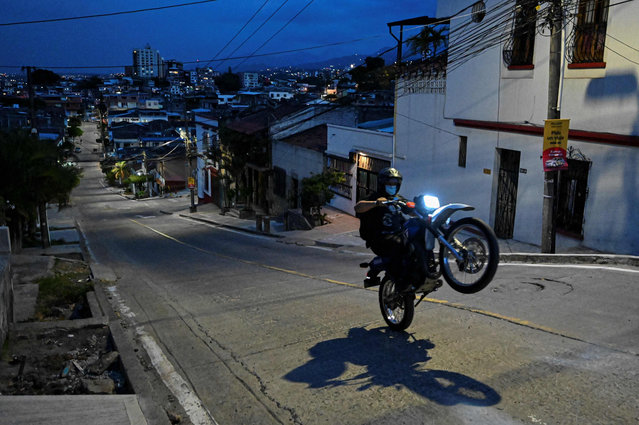
A man rides his motorcycle along an empty street in Cali on April 17, 2021, during a curfew imposed by the government to help curb infections of the novel coronavirus, COVID-19, as weekend partial lockdown takes effect in four Colombian cities. In recent weeks, the Colombian government has imposed, and then tightened, a series of restrictions to stem a third wave of infections that is bringing its health system to the brink of collapse. (Photo by Luis Robayo/AFP Photo)

A man rides his motorcycle along an empty street in Cali on April 17, 2021, during a curfew imposed by the government to help curb infections of the novel coronavirus, COVID-19, as weekend partial lockdown takes effect in four Colombian cities. In recent weeks, the Colombian government has imposed, and then tightened, a series of restrictions to stem a third wave of infections that is bringing its health system to the brink of collapse. (Photo by Luis Robayo/AFP Photo)
Details
19 Apr 2021 10:09:00
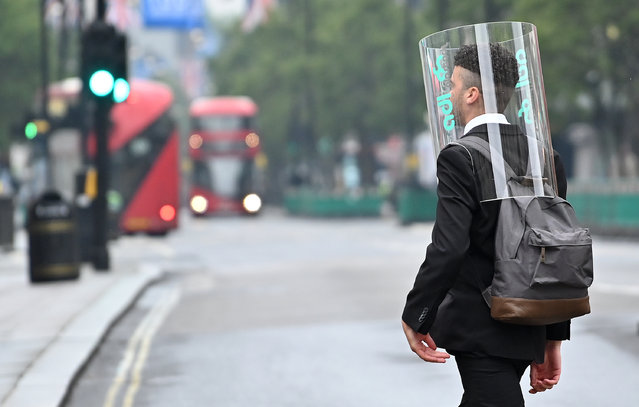
A pedestrian wearing a form of PPE (personal protective equipment) of a perspex full-face covering, as a precautionary measure against COVID-19, walks across Oxford Street in central London on June 11, 2020, as non-essential shops prepare to re-open on June 15. Britain's current guidelines on social distancing remain at two metres (2M), but business leaders and some politicians are on Thursday calling for it to be reduced to one (1M), or one-and-a-half (1.5M) metres. (Photo by Justin Tallis/AFP Photo)

A pedestrian wearing a form of PPE (personal protective equipment) of a perspex full-face covering, as a precautionary measure against COVID-19, walks across Oxford Street in central London on June 11, 2020, as non-essential shops prepare to re-open on June 15. Britain's current guidelines on social distancing remain at two metres (2M), but business leaders and some politicians are on Thursday calling for it to be reduced to one (1M), or one-and-a-half (1.5M) metres. (Photo by Justin Tallis/AFP Photo)
Details
13 Jun 2020 00:07:00
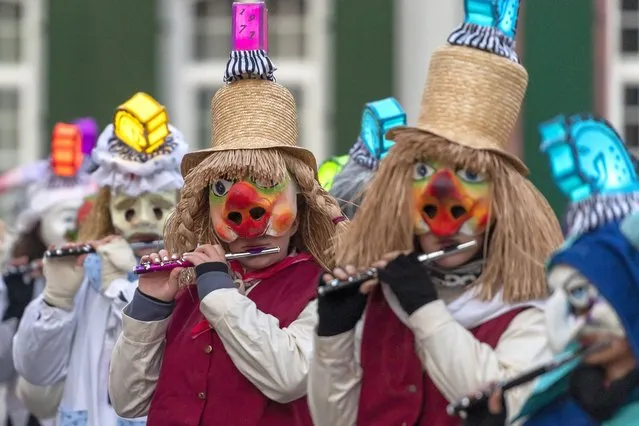
Members of carnival marching bands in costumes parade through the streets during the so-called “Morgestraich” carnival parade in Basel, Switzerland, on Monday, early 07 March 2022. The traditional “Morgenstraich” parade with colorful lanterns and revelers in traditional costumes is starting early morning at 4 a.m. and marks the kick-off for the Basel carnival. It was not held in its usual form in the past two years because of the measures against the Covid-19 pandemic. (Photo by Georgios Kefalas/EPA/EFE)

Members of carnival marching bands in costumes parade through the streets during the so-called “Morgestraich” carnival parade in Basel, Switzerland, on Monday, early 07 March 2022. The traditional “Morgenstraich” parade with colorful lanterns and revelers in traditional costumes is starting early morning at 4 a.m. and marks the kick-off for the Basel carnival. It was not held in its usual form in the past two years because of the measures against the Covid-19 pandemic. (Photo by Georgios Kefalas/EPA/EFE)
Details
23 May 2023 02:10:00
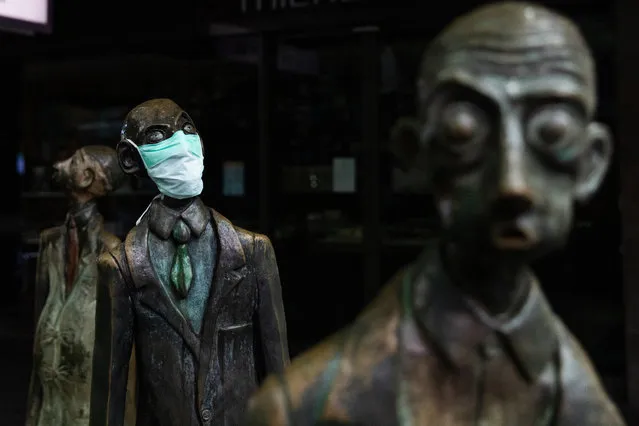
A face mask is placed on one of the 'Three business men who brought lunch' statues on Swanston street on March 29, 2020 in Melbourne, Australia. All international arrivals into Australia from midnight on Saturday will be placed into mandatory quarantine in hotels for 14 days as the Federal Government increases restrictions to stop the spread of COVID-19. All libraries, museums, galleries, beauty salons, tattoo parlours, shopping centre food courts, auctions, open houses, amusement parks, arcades, indoor and outdoor play centres, swimming pools are closed and indoor exercise activities are now banned. This is in addition to the closure of bars, pubs and nightclubs which came into effect on Monday. Restaurants and cafes are restricted to providing takeaway only. Weddings will now be restricted to five people including the couple while funerals are limited to 10 mourners. All Australians are now expected to stay at home except for essential outings such as work, grocery shopping and medical appointments. Exercising outdoors alone is still permitted. Australia now has more than 3,600 confirmed cases of COVID-19 while the death toll now stands at 16. (Photo by Asanka Ratnayake/Getty Images)

A face mask is placed on one of the 'Three business men who brought lunch' statues on Swanston street on March 29, 2020 in Melbourne, Australia. All international arrivals into Australia from midnight on Saturday will be placed into mandatory quarantine in hotels for 14 days as the Federal Government increases restrictions to stop the spread of COVID-19. (Photo by Asanka Ratnayake/Getty Images)
Details
31 Mar 2020 00:07:00
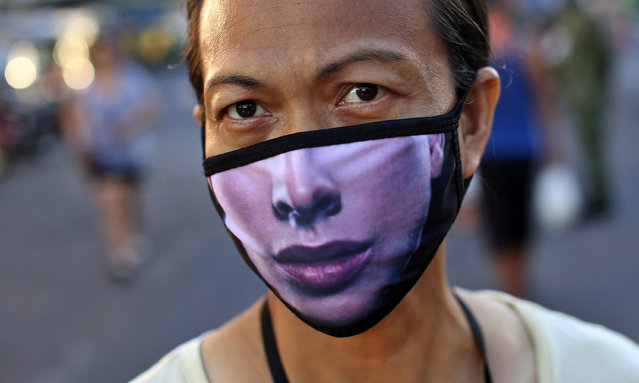
A Filipino woman wears a mask to try and protect against the spread of coronavirus in Malate district, Manila City on March 24, 2020. The Philippines has taken drastic measures to combat the spread of Covid-19. The entire country is under strict quarantine and the army is on the streets to monitor compliance. According to official figures, there are 462 positive cases and 33 dead in the Philippines, but it is thought that thousands of cases remain undetected due to lack of resources in a country where millions of people have no access to health care. In the poorest and most crowded areas, it’s almost impossible to adhere to the physical distancing required during quarantine. (Photo by Alejandro Ernesto/The Guardian)

A Filipino woman wears a mask to try and protect against the spread of coronavirus in Malate district, Manila City on March 24, 2020. The Philippines has taken drastic measures to combat the spread of Covid-19. The entire country is under strict quarantine and the army is on the streets to monitor compliance. According to official figures, there are 462 positive cases and 33 dead in the Philippines, but it is thought that thousands of cases remain undetected due to lack of resources in a country where millions of people have no access to health care. In the poorest and most crowded areas, it’s almost impossible to adhere to the physical distancing required during quarantine. (Photo by Alejandro Ernesto/The Guardian)
Details
08 Apr 2020 00:01:00