The drag artist Wet Mess performs Testo – a show about testosterone – at the Here & Now Showcase, Edinburgh international festival fringe in 2024. (Photo by Murdo MacLeod/The Guardian)
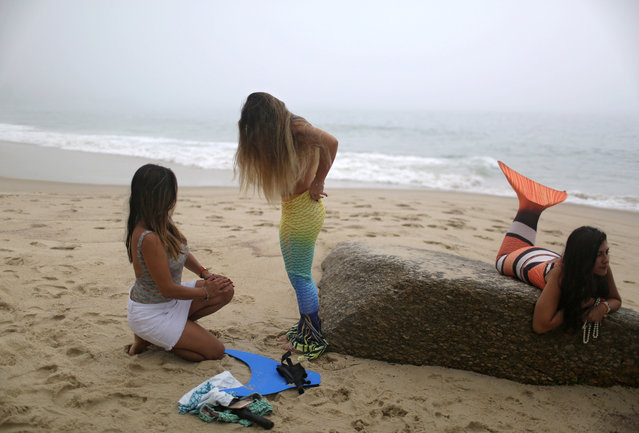
Girls prepare to take part in a mermaid lesson in Rio de Janeiro, Brazil May 28, 2017. Women in Brazil are not unique in their affinity for mermaiding. Classes are held as far away as Texas and some folks wonder if mermaiding will be the next fitness craze. (Photo by Pilar Olivares/Reuters)
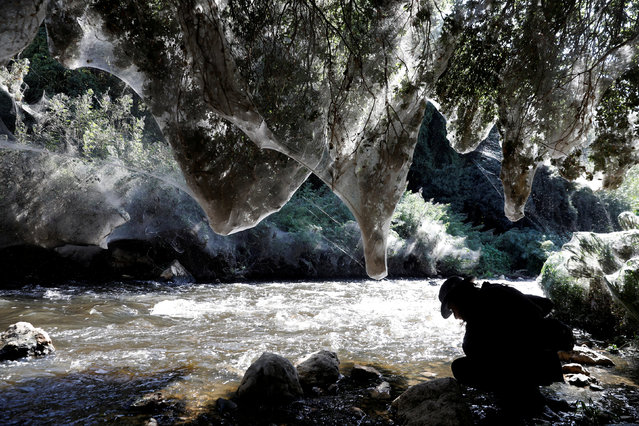
Igor Armicach, a doctoral student at Hebrew University's Arachnid Collection, looks onto giant spider webs, spun by long-jawed spiders (Tetragnatha), covering sections of the vegetation along the Soreq creek bank, near Jerusalem, Israel on November 7, 2017. (Photo by Ronen Zvulun/Reuters)
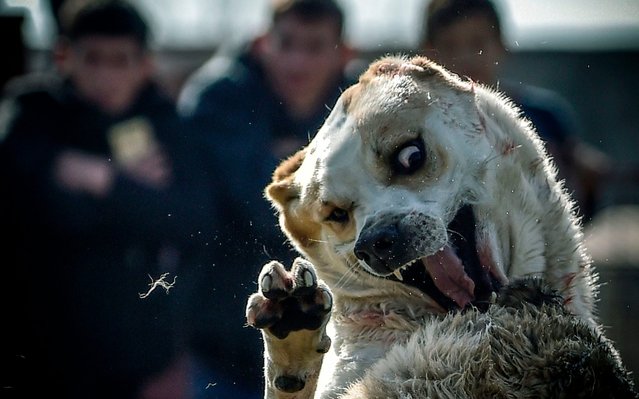
Two wolfhounds take part in a dogfight in a stadium in the Kyrgyzstan capital Bishkek on November 5, 2017, during fights organized by a local breeders aiming to improve the Asian Shepherd breed, organizers said. (Photo by Vyacheslav Oseledko/AFP Photo)
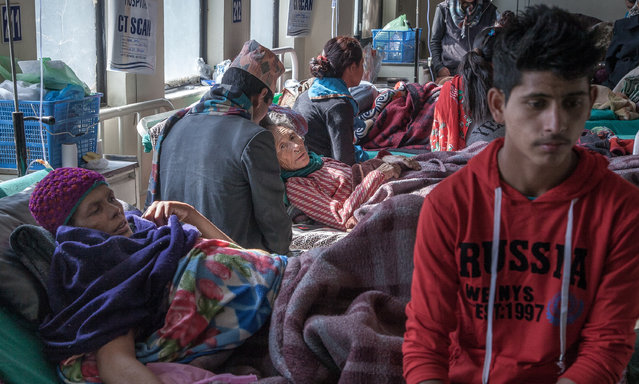
One of the most significant challenges related to cancer in Nepal is the lack of awareness around the prognosis of the disease, as many patients, their families and even healthcare professionals consider cancer to be an incurable disease at any stage. This results in significant delays in bringing patients to hospitals, and high rates of advanced stage cancers and mortality. (Photo by Omar Havana)
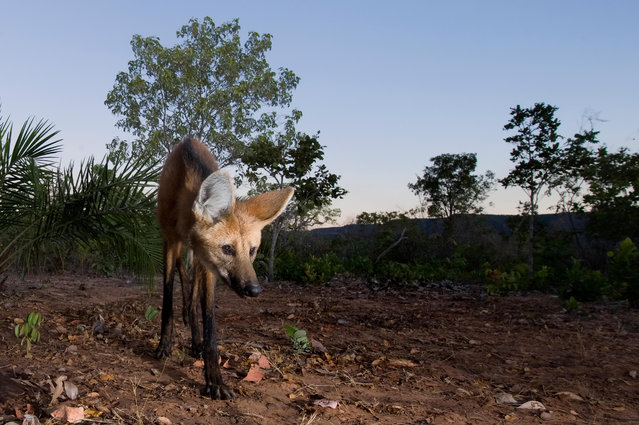
Global wildlife populations will decline by 67% by 2020 unless urgent action is taken to reduce human impact on species and ecosystems, warns the biennial Living Planet Index report from WWF (World Wide Fund for Nature) and ZSL (Zoological Society of London). From elephants to eels, here are some of the wildlife populations most affected by human activity. Here: The maned wolf is among the large mammals in the Brazilian Cerrado that are threatened by the increasing conversion of grasslands into farmland for grazing and growing crops. (Photo by Ben Cranke/Nature Picture Library/Alamy Stock Photo)
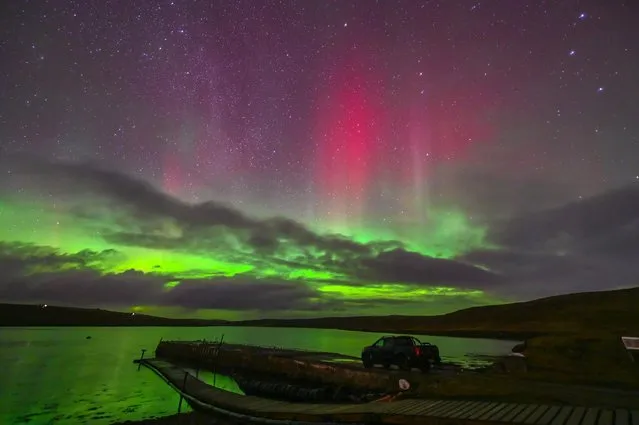
The northern lights as seen from from Yell in the Shetland Islands, Scotland on January 15, 2023. The aurora borealis is caused by collisions between electrically charged particles released from the sun that enter the Earth’s atmosphere and collide with gases such as oxygen and nitrogen. (Photo by Ryan Nisbet/Capture Media Agency)