Postal worker Eddie Smith, dressed as Santa Claus, waves to a neighbor on his mail route in Washington, U.S., December 21, 2021. (Photo by Evelyn Hockstein/Reuters)
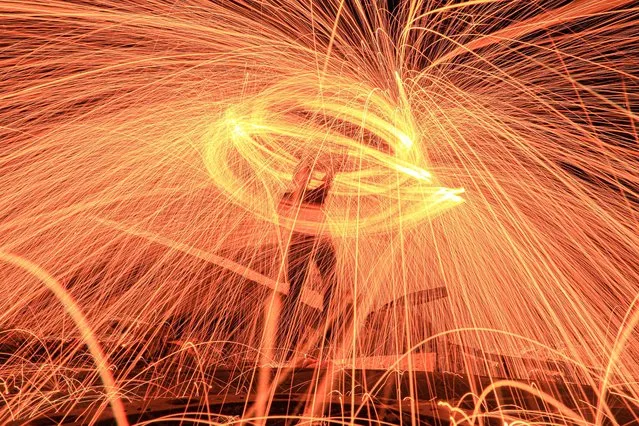
A Palestinian waves fireworks on the last day of the holy month of Ramadan in Khan Yunis in the southern Gaza Strip on May 1, 2022. (Photo by Yousef Masoud/SOPA Images/Rex Features/Shutterstock)
These friends enjoying a night out in the West Yorkshire city beamed for the cameras as they waved Union flags during the Queen Elizabeth II's platinum jubilee celebrations on June 4, 2022. (Photo by Nb press ltd)
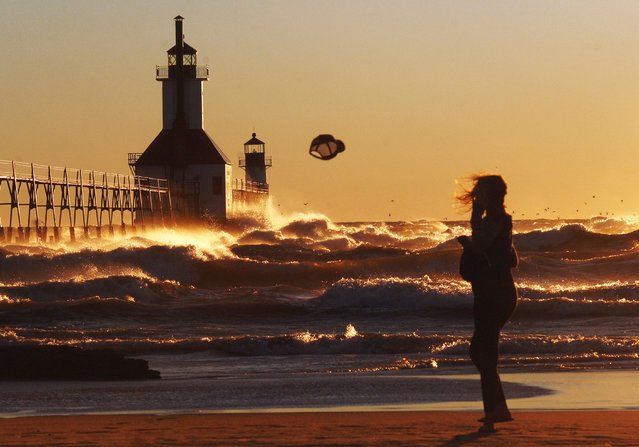
A woman loses her hat as waves crash into the St. Joseph Lighthouses, Sunday, June 30, 2024, off Tiscornia Beach in St. Joseph, Mich. (Photo by Don Campbell/The Herald-Palladium via AP Photo)
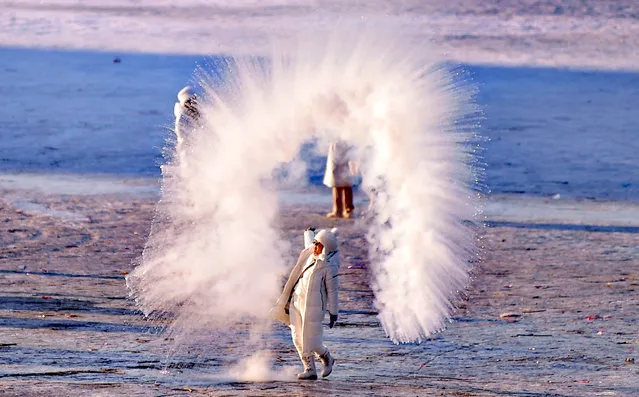
A tourist splashes water on the frozen Songhua River on December 18, 2023 in Harbin, Heilongjiang Province of China. The water immediately freezes into ice in the frigid air. (Photo by VCG/VCG via Getty Images)
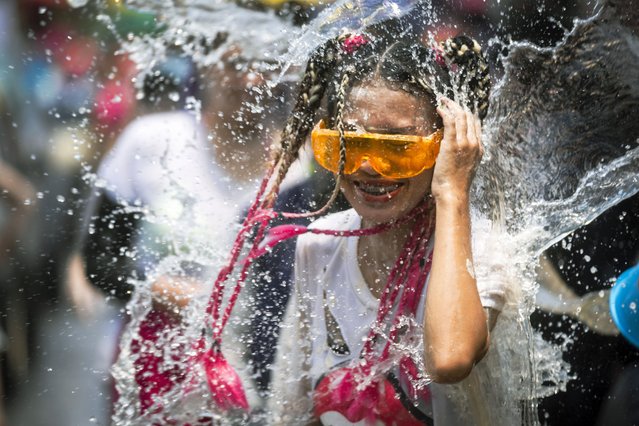
A bucket of water is splashed on a woman during the Songkran water festival to celebrate the Thai New Year, in Prachinburi Province, Thailand, April 13, 2024. (Photo by Wason Wanichakorn/AP Photo)
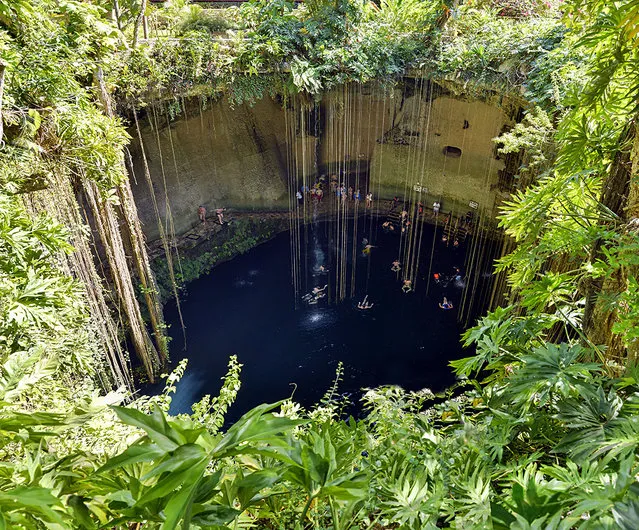
A cenote is a natural phenomenon, a sinkhole in the Earth’s surface. The Yucatan Peninsula in Mexico has an estimated 7,000 cenotes because it is primarily made up of porous limestone. For millions of years, rainfall slowly ate away at the limestone and a huge system of underground caves and caverns was formed. Many filled with water from rain or from the underground water table. When the roof of a water filled cave collapses, a cenote is born. The water found in a cenote may be fresh water, salt water, or both. Structurally it may be completely open, like a lake, almost completely closed with just a small opening at the top, or somewhere in between.