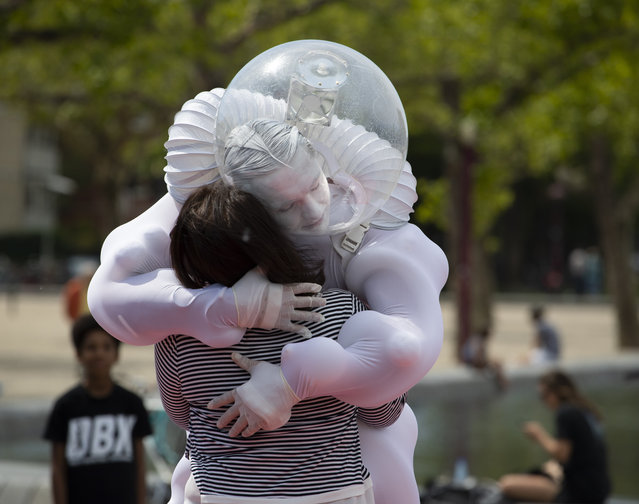
A tourist gets an “Art Hug” from a disinfected costumed man outside the reopened Rijksmuseum in Amsterdam, Netherlands, Monday, June 1, 2020. The government takes a major step to relax the coronavirus lockdown, with bars, restaurants, cinemas and museums reopening under strict conditions. (Photo by Peter Dejong/AP Photo)
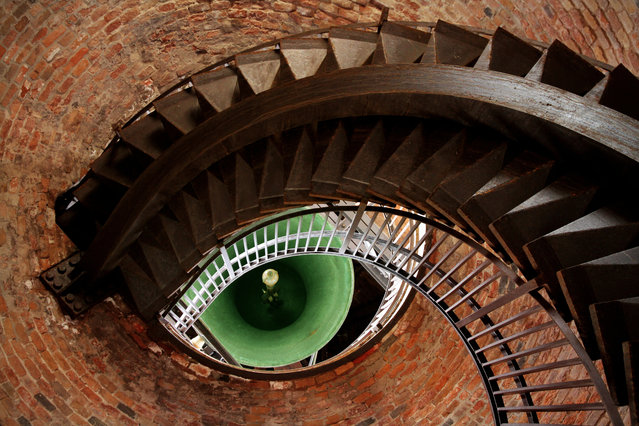
“Eye of the Tower” by Mehmet Yasa; Verona, Italy. “The staircase and the bell looks like an eye. Architecture can fascinate us in many ways”. (Photo by Mehmet Yasa/Art of Building Photography Awards 2017)
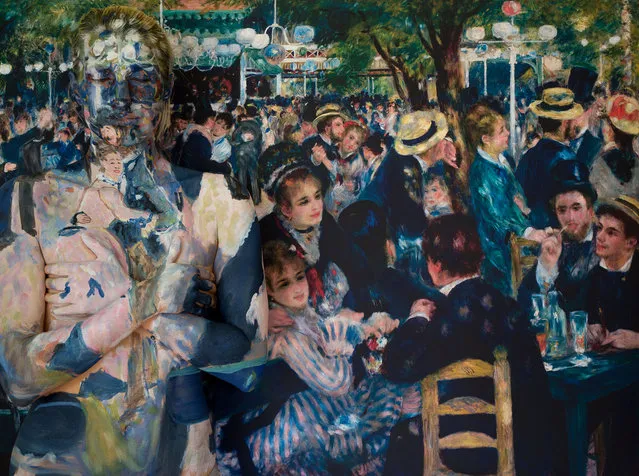
An innovative artist has camouflaged nude bodies by painting them into the worlds most expensive artworks. New York body artist, Trina Merry picked the 20 top dearest paintings, then photographed naked models disguised as part of the piece. Here: Titled 8,100,000 after the price paid for Bal du moulin de la Galette. (Photo by Trina Merry/Caters News)
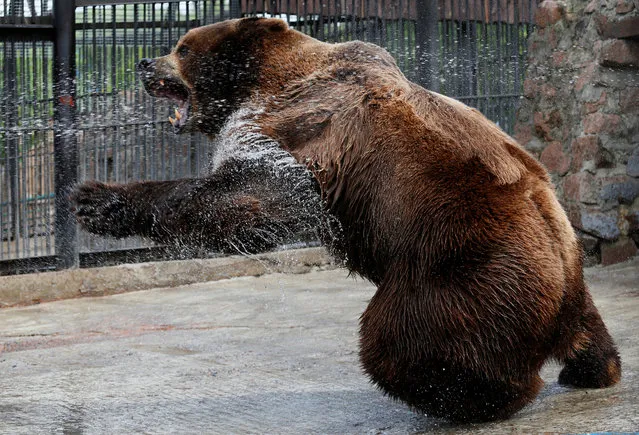
Buyan, a male Siberian brown bear, cools down under a stream of water sprayed by an employee in an enclosure on a hot summer day, at the Royev Ruchey zoo in Krasnoyarsk, Russia on June 14, 2019. (Photo by Ilya Naymushin/Reuters)
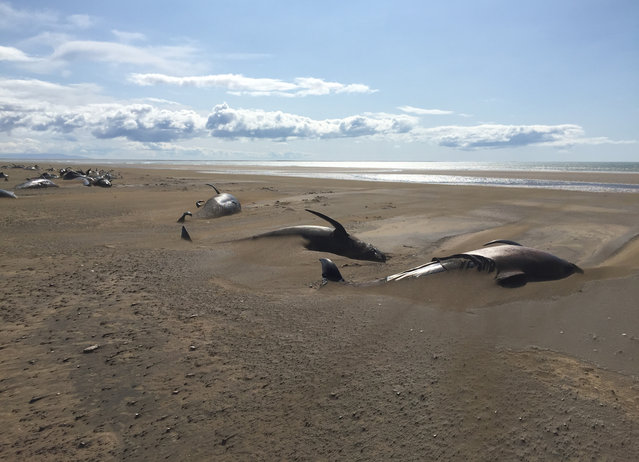
Some dozens of long-finned pilot whales lay dead on a remote beach in Iceland after they were discovered by tourists sightseeing in the Snaefellsnes Peninsula in western Iceland aboard a helicopter, Thursday July 18, 2019. The whales were concentrated in one spot on the beach, many partially covered by sand. (Photo by David Schwarzhans via AP Photo)
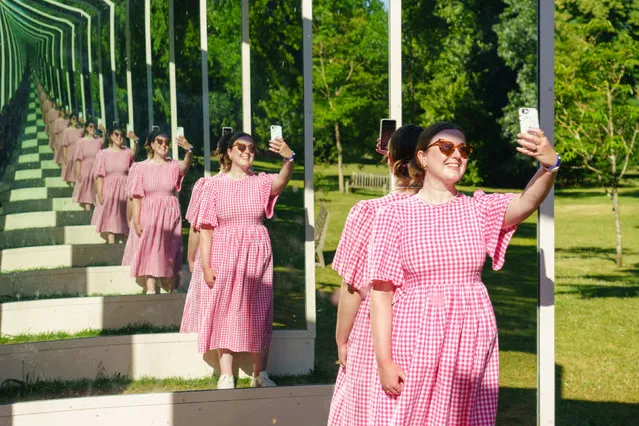
A visitor takes a selfie with “The Breach” by Leandro Erlich, during a photo call for Kew Gardens' forthcoming “Food Forever” exhibition, examining the fragile future of food and the impact of our day-to-day eating habits on the planet, at the Royal Botanic Gardens, in Kew, Richmond, Surrey on Thursday, June 16, 2022. (Photo by Dominic Lipinski/PA Images via Getty Images)
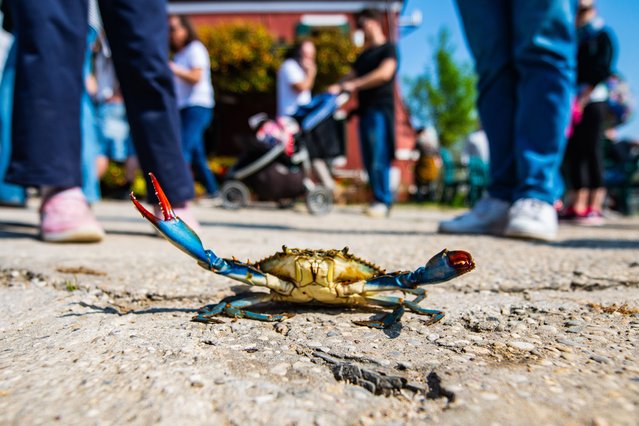
A blue crab, a highly invasive alien species, is seen at Lio Piccolo during the reforestation day on April 05, 2025 in Venice, Italy. The island of Lio Piccolo in the northern lagoon of Venice is being replanted with 16,000 new trees that will protect the salt marsh ecosystem that is fundamental to the natural health of Venice and the lagoon by WOWnature project, an Etifor initiative. (Photo by Simone Padovani/Getty Images)