Loading...
Done
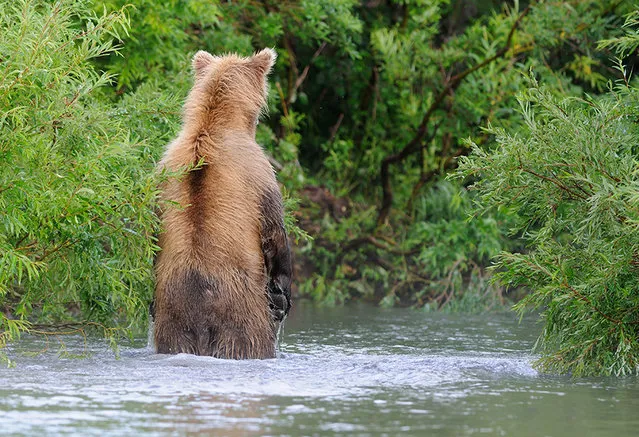
Where's the fish?/n. South Kamchatka Sanctuary<><>South Kamchatka Sanctuary; Kuril Lake; Kamchatka; bear; salmon; spawning

Igor Shpilenok works in the reserve at Kamchatka, Russia. Igor is a fellow of the International League of Conservation Photographers and a winner of the 2006 BBC Wildlife Photographer Competition. Igor’s work has been published in numerous international and Russian magazines, including Smithsonian, National Wildlife, Geo, and BBC Wildlife.

“How does a bear behave when encounter a human? In most cases he runs away. But before running he almost always would rise to stand on his rear feet. And this behavior does not indicate the attack, as many people think...” – Igor Shpilenok. (Photo by Igor Shpilenok via Wildlife Photo Russia)
Details
16 Sep 2012 12:54:00
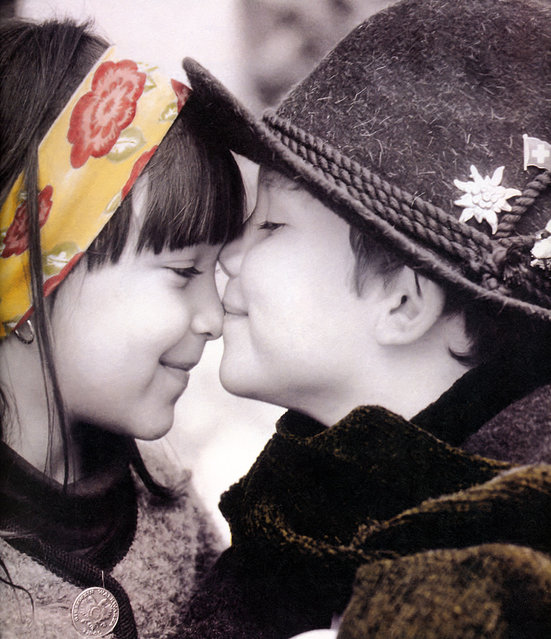
Children Photos By Kim Anderson Part 1

Kim Anderson photography career, now overseen from his home base in a Swiss mountainside village, began the way of many shutter bugs. His early photos focused on fashion and people, as well as photography for advertising agencies.
Details
25 Mar 2014 13:11:00
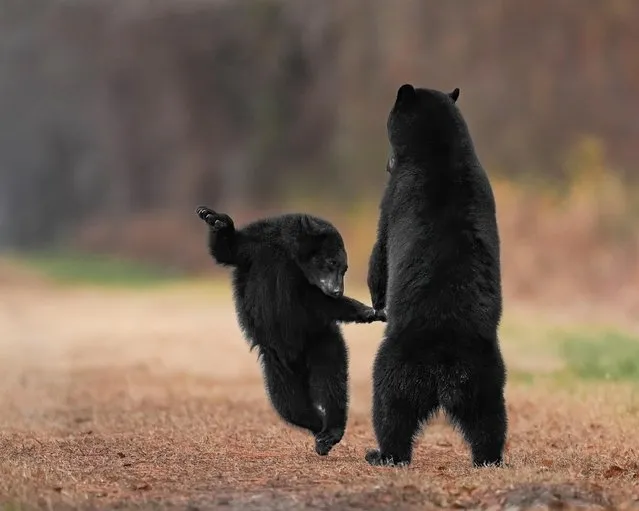
A black bear cub performs for its mum at the Pocosin Lakes National Wildlife park in North Carolina, US in January 2022. (Photo by Jennifer Hadley/Animal News Agency)

A black bear cub performs for its mum at the Pocosin Lakes National Wildlife park in North Carolina, US in January 2022. (Photo by Jennifer Hadley/Animal News Agency)
Details
23 Jan 2022 04:31:00
The overall winner of the 2013 Red Bull Illume photography competition from Lorenz Holder. (Photo by Lorenz Holder/Red Bull)

The overall winner of the 2013 Red Bull Illume photography competition from Lorenz Holder. (Photo by Lorenz Holder/Red Bull)
Details
30 Aug 2013 10:54:00
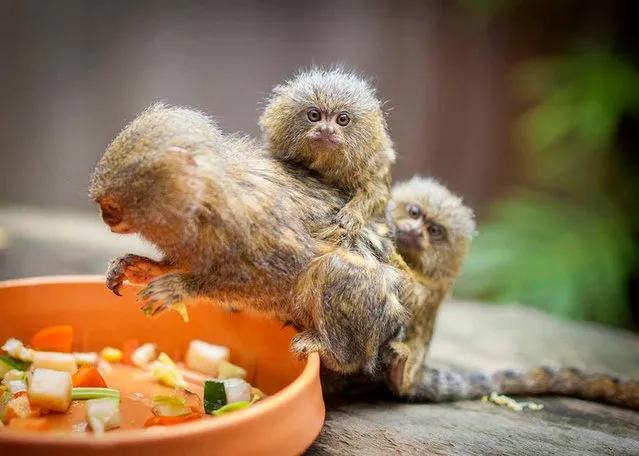
An undated handout picture made available by the Symbio Wildlife Park on 28 November 2016 shows three Pygmy Marmoset monkeys including an adult male, a female juvenile and a four-week-old baby, at the Symbio Wildlife Park in Helensburgh, South of Sydney, New South Wales, Australia. Officers were called to the wildlife park in Helensburgh on 26 November, after staff discovered the monkeys were missing from their enclosure. According to reports on 27 November, two men have been charged with stealing the three rare monkeys after they were found while driving south-west Sydney with one of the missing monkeys, the four-week-old one. Wollongong Police found the missing female juvenile, Sofia, in the Campbelltown area on 27 November, and returned her to the care of the zoo. The male marmoset, father “Gomez”, was reported still missing. (Photo by EPA/Symbio Wildlife Park)

An undated handout picture made available by the Symbio Wildlife Park on 28 November 2016 shows three Pygmy Marmoset monkeys including an adult male, a female juvenile and a four-week-old baby, at the Symbio Wildlife Park in Helensburgh, South of Sydney, New South Wales, Australia. (Photo by EPA/Symbio Wildlife Park)
Details
04 Dec 2016 09:58:00
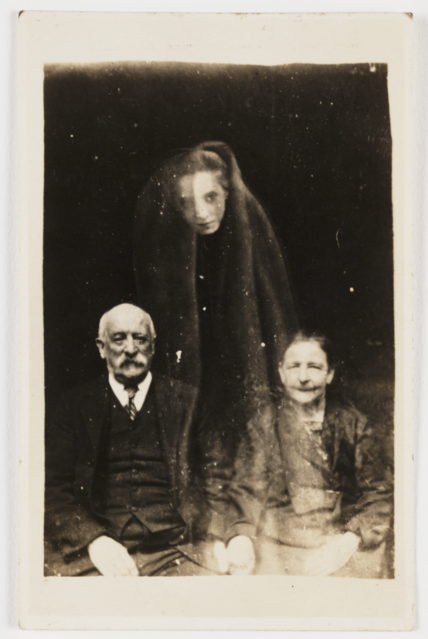
Couple with a young female spirit

“William Hope (1863 – 8 March 1933) was a pioneer of so-called “spirit photography” (spirit photography is a type of photography whose primary attempt is to capture images of ghosts and other spiritual entities, especially in ghost hunting). Based in Crewe, England, he was a member of the well known spiritualists group, the Crewe Circle”. – Wikipedia

Photo: Couple with a young female spirit.
Details
06 Jun 2012 11:30:00
Kite Aerial By Seeing The World From New Heights

Kite Aerial photography (KAP) is a hobby and a type of photography. A camera is lifted using a kite and is triggered either remotely or automatically to take aerial photographs. The camera rigs can range from the extremely simple, consisting of a trigger mechanism with a disposable camera, to complex apparatus using radio control and digital cameras. On some occasions it can be a good alternative to other forms of aerial photography.
Details
17 Jan 2014 13:22:00
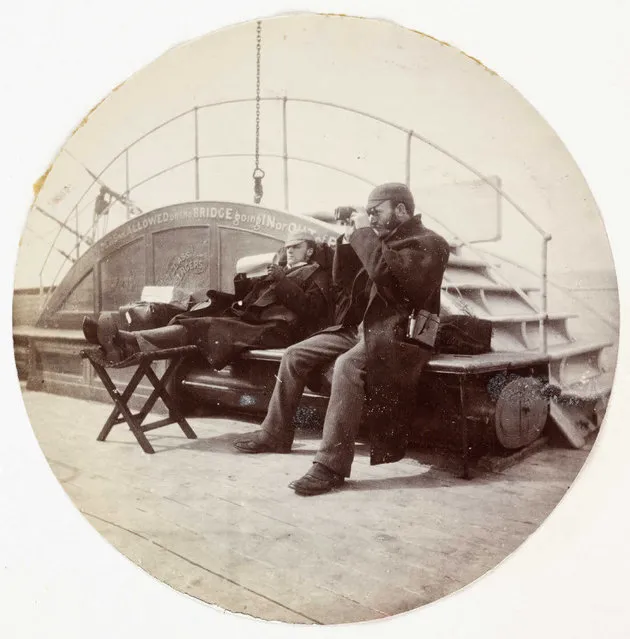
Two men on the deck of a ship, about 1890. (Photo by Collection of National Media Museum/Kodak Museum)

“Today, we take photography for granted. Anyone can take a photograph simply by pressing a button. Yet, it was not always so simple. The invention of photography was announced in 1839, but during its first fifty years taking a photograph was a complicated and expensive business. In 1888, all this was to change following the appearance of a camera that was to revolutionize photography. Popular photography can properly be said to have started 120 years ago with the introduction of the Kodak”. – The UK National Media Museum. Photo: Two men on the deck of a ship, about 1890. (Photo by Collection of National Media Museum/Kodak Museum)
Details
27 May 2014 10:31:00