Loading...
Done
The Lun-class Ekranoplane was used by the Soviet Navy starting in 1987, and wasn't retired until the late 1990s, after the Soviet Union's fall. (Igor113)

“The Lun-class ekranoplan (NATO reporting name Duck) was a ground effect vehicle (GEV) designed by Rostislav Evgenievich Alexeev and used by the Soviet and Russian navies from 1987 until sometime in the late 1990s. It “flew” using the lift generated by the ground effect of its large wings when close to the surface of the water – about four metres or less. Although they might look similar and/or have related technical characteristics, ekranoplans like the Lun are not aircraft, seaplanes, hovercraft, or hydrofoils – ground effect is a separate technology altogether. The International Maritime Organization classifies these vehicles as maritime ships. The name Lun comes from the Russian for harrier”. – Wikipedia (Photo by Igor113)
Details
08 Aug 2014 10:51:00
The rising sun illuminates the sky above the spires of a church in Vienna, Austria, November 17, 2015. (Photo by Heinz-Peter Bader/Reuters)

The rising sun illuminates the sky above the spires of a church in Vienna, Austria, November 17, 2015. (Photo by Heinz-Peter Bader/Reuters)
Details
19 Nov 2015 08:05:00
A worker spreads paddy crop for drying in a rice mill complex on the outskirts of Ahmedabad February 3, 2011. (Photo by Amit Dave/Reuters)

A worker spreads paddy crop for drying in a rice mill complex on the outskirts of Ahmedabad February 3, 2011. (Photo by Amit Dave/Reuters)
Details
13 May 2016 12:01:00
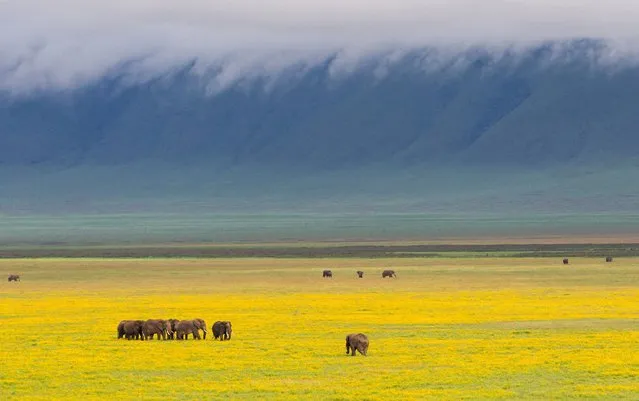
Ngorongoro Crater (Tanzania). At 610m deep and 260 sq km, this is the largest unflooded caldera in the world. A blue-green vision from above it's a haven for engangered wildlife and Maasai livestock. The crater was formed three million years ago when a giant volcano, which could have been as high as Kilimanjaro, exploded and collapsed. The caldera formed the concentric fractures in the crust cracked down to a magma reservoir deep underground. (Photo by John Bryant/Getty Images)

Ngorongoro Crater (Tanzania). At 610m deep and 260 sq km, this is the largest unflooded caldera in the world. A blue-green vision from above it's a haven for engangered wildlife and Maasai livestock. The crater was formed three million years ago when a giant volcano, which could have been as high as Kilimanjaro, exploded and collapsed. The caldera formed the concentric fractures in the crust cracked down to a magma reservoir deep underground. (Photo by John Bryant/Getty Images)
Details
28 Mar 2014 08:08:00
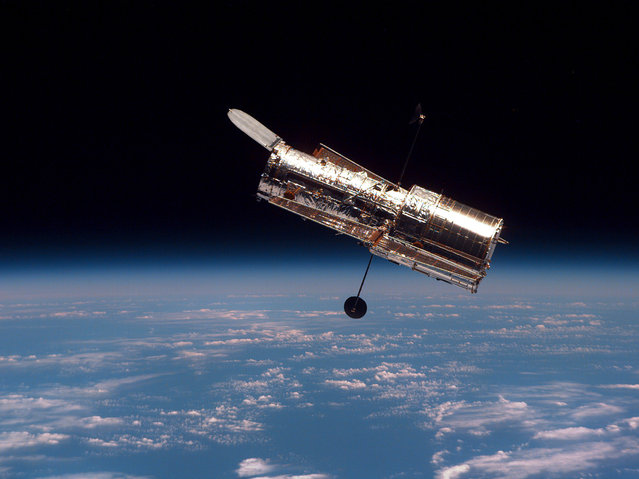
The Hubble Space Telescope is shown following its release from the space shuttle Discovery Wednesday, February 19, 1997. The Hubble Space Telescope, one of NASA'S crowning glories, marks its 25th anniversary on Friday, April 24, 2015. With more than 1 million observations, including those of the farthest and oldest galaxies ever beholden by humanity, no man-made satellite has touched as many minds or hearts as Hubble. (Photo by AP Photo/NASA)

The Hubble Space Telescope is shown following its release from the space shuttle Discovery Wednesday, February 19, 1997. The Hubble Space Telescope, one of NASA'S crowning glories, marks its 25th anniversary on Friday, April 24, 2015. With more than 1 million observations, including those of the farthest and oldest galaxies ever beholden by humanity, no man-made satellite has touched as many minds or hearts as Hubble. (Photo by AP Photo/NASA)
Details
24 Apr 2015 11:25:00
A newborn baby pangolin climbs the walls of a cage in Bangkok, Thailand April 20, 2011. The Thai custom office showed 175 pangolins they found hidden in a truck heading into Bangkok. (Photo by Damir Sagolj/Reuters)

A newborn baby pangolin climbs the walls of a cage in Bangkok, Thailand April 20, 2011. The Thai custom office showed 175 pangolins they found hidden in a truck heading into Bangkok. (Photo by Damir Sagolj/Reuters)
Details
07 May 2015 12:31:00
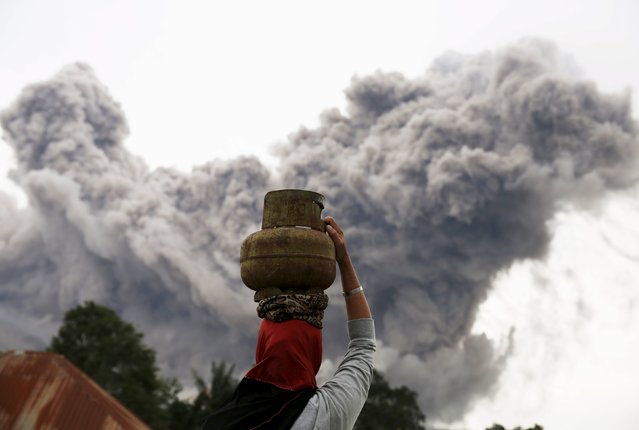
A resident carries a gas canister as an ash cloud hovers above during an eruption of Mount Sinabung volcano at Tiga Serangkai village in Karo Regency, North Sumatra province, Indonesia June 24, 2015. More than 10,000 people from 12 villages, who are living around the slopes of Mount Sinabung, left their homes and moved to refugee camps, local media reported. (Photo by Reuters/Beawiharta)

A resident carries a gas canister as an ash cloud hovers above during an eruption of Mount Sinabung volcano at Tiga Serangkai village in Karo Regency, North Sumatra province, Indonesia June 24, 2015. More than 10,000 people from 12 villages, who are living around the slopes of Mount Sinabung, left their homes and moved to refugee camps, local media reported. (Photo by Reuters/Beawiharta)
Details
27 Jun 2015 13:30:00
A girl uses her mobile phone during the evening at the National Park in Khartoum, Sudan, April 24, 2015. (Photo by Mohamed Nureldin Abdallah/Reuters)

A girl uses her mobile phone during the evening at the National Park in Khartoum, Sudan, April 24, 2015. (Photo by Mohamed Nureldin Abdallah/Reuters)
Details
14 Jul 2015 13:23:00