Loading...
Done
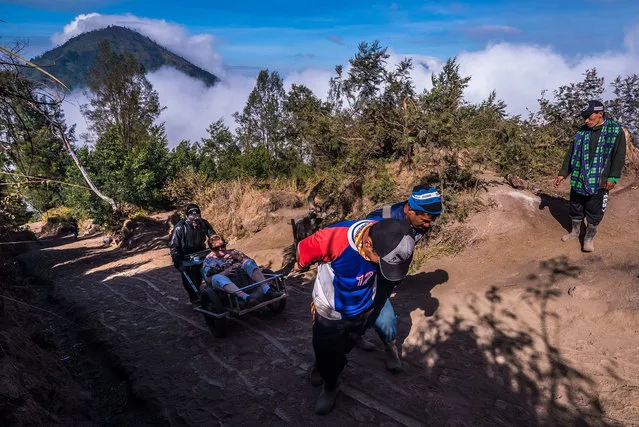
Miners pulling up lazy tourists to the rim of Kawah Ijen (Ijen Volcano), East Java, Indonesia on September 21, 2017. They will earn as much as they would bring down a load of sulfur. Nomadic Explorer, Cultural Lifestyle Photographer Claudio Sieber captured striking images of miners working at Ijen volcanic range in East Java, Indonesia. The sulphur miners risk their lives daily as they climb the active volcano carrying heavy loads, which they sell to sugar refineries. Shortly after midnight curious tourists are flocking in hundreds through the gate of Ijen's foothills to be right on time, driven by the images others took before them. Kawah Ijen is the one of the world's largest acidic volcanic crater lake; famous for its turquoise color as well as the unreal atmosphere it offers during darkness. A dusty path zigzags 3 kilometers up to the crater rim. This doesn't mean anything challenging; in particular, special sights have to be deserved anyway. The irritating smell of sulfur announces the near of the crater's existence. Arriving on the crater's rim the reward for the torture becomes visible. Blue fire darts its tongues through the fumes of sulfur dioxide. Somehow, the spectacle isn't as romantic as expected, since it is also the rough working space of approx. 150 sulfur miners who start their shift at 1 am. Lately, harvesting the abundance of devil's gold received international attention. This did obviously not really improve a miner's lifestyle; neither did it contribute to a better wage. (Photo by Claudio Sieber/Barcroft Images)

Miners pulling up lazy tourists to the rim of Kawah Ijen (Ijen Volcano), East Java, Indonesia on September 21, 2017. They will earn as much as they would bring down a load of sulfur. Nomadic Explorer, Cultural Lifestyle Photographer Claudio Sieber captured striking images of miners working at Ijen volcanic range in East Java, Indonesia. The sulphur miners risk their lives daily as they climb the active volcano carrying heavy loads, which they sell to sugar refineries. (Photo by Claudio Sieber/Barcroft Images)
Details
02 Oct 2017 08:31:00
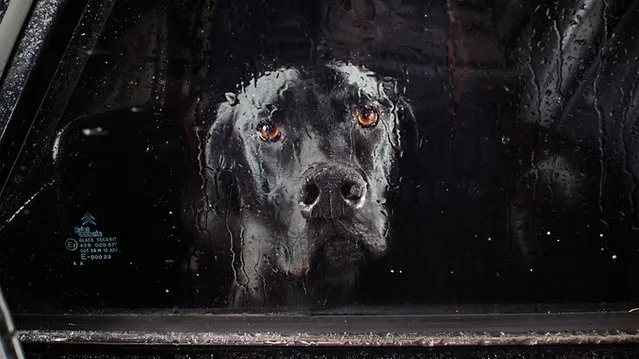
The Silence of Dogs in Cars

At first, British photographer Martin Usborne just wanted to do some reporting on people who leave their dogs locked up in cars. But as he went around scouring parking lots, “making barking noises to try and awaken sleeping dogs that were not actually there,” his project took on a new artistic direction. “The Silence of Dogs in Cars” was inspired by a “childhood memory of waiting in a car whilst his parents were shopping in a supermarket, and the youthful fear that they would not return.”
Details
08 Jul 2013 08:57:00
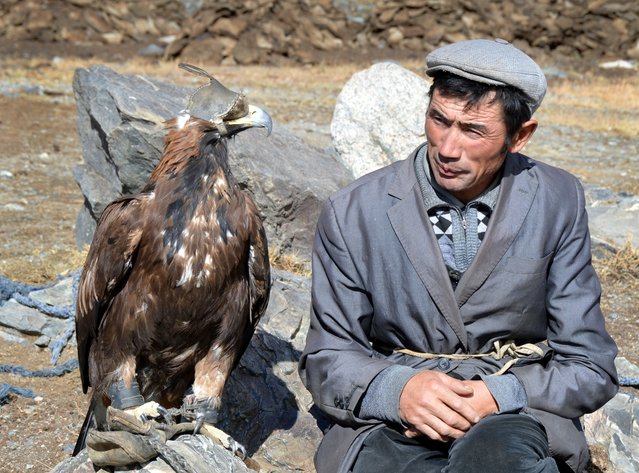
Hunter Berek and his eagle outside his home. (Photo by Brad Ruoho/The Star Tribune)

“I’d come to the Altai Mountains on an Adventure Sherpas tour. Our group of 12 was made up mostly of Minnesotans who’d left warm weather and falling leaves for frosty Mongolia. We’d come to sleep in cozy ger tents, the traditional yurt abode of the Mongolian steppe; sip mare’s milk tea; climb mountain glaciers; ride horses to an ancient battle site, and attend the annual Eagle Hunting Festival in Ölgiy...”. – Kathryn Kysar via The Star Tribune. Here: hunter Berek and his eagle outside his home. (Photo by Brad Ruoho/The Star Tribune)
Details
11 Jan 2015 12:57:00
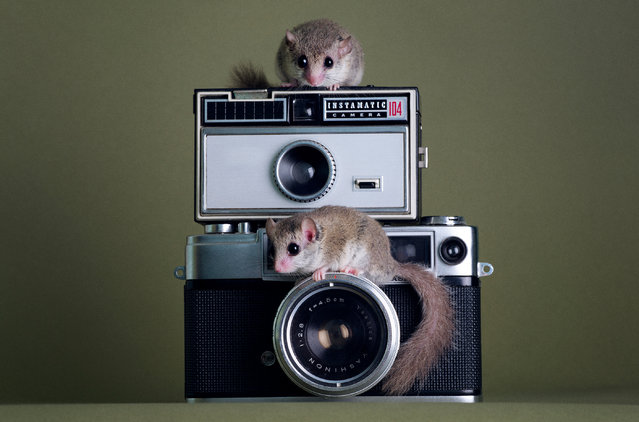
“The most difficult aspect of this shoot was to get each African pygmy dormouse – also known as micro squirrels – on to a separate camera. Once in place, they needed to remain still long enough to get them both in the frame and looking at me. Often solitary, they naturally wanted to move away”. (Photo by David Yeo/Leica Studio Mayfair/The Guardian)

David Yeo’s photography places naturally small species alongside animals that have been selectively bred to be tiny and cute. Here: “The most difficult aspect of this shoot was to get each African pygmy dormouse – also known as micro squirrels – on to a separate camera. Once in place, they needed to remain still long enough to get them both in the frame and looking at me. Often solitary, they naturally wanted to move away”. (Photo by David Yeo/Leica Studio Mayfair/The Guardian)
Details
24 Oct 2017 08:20:00
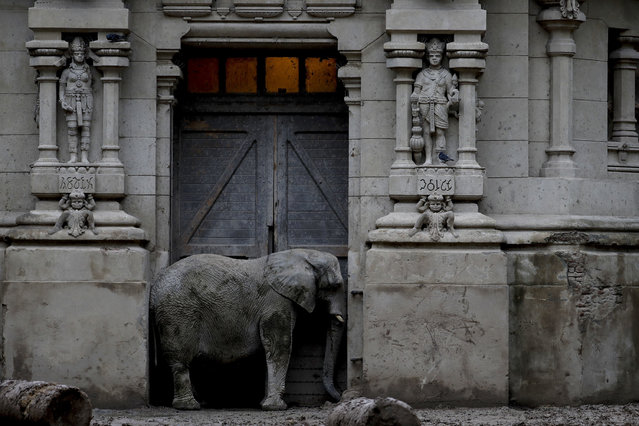
In this May 12, 2017 photo, Pupy, an African elephant, stands in the doorway of his enclosure at the former city zoo now known as Eco Parque in Buenos Aires, Argentina. A year ago the 140-year old Buenos Aires zoo closed its doors and was transformed into a park. The first director decided that the animals should be housed in buildings that reflected their countries of origin. A replica of a Hindu temple was built for the Asian elephants. (Photo by Natacha Pisarenko/AP Photo)

In this May 12, 2017 photo, Pupy, an African elephant, stands in the doorway of his enclosure at the former city zoo now known as Eco Parque in Buenos Aires, Argentina. A year ago the 140-year old Buenos Aires zoo closed its doors and was transformed into a park. The first director decided that the animals should be housed in buildings that reflected their countries of origin. A replica of a Hindu temple was built for the Asian elephants. (Photo by Natacha Pisarenko/AP Photo)
Details
25 May 2017 08:42:00
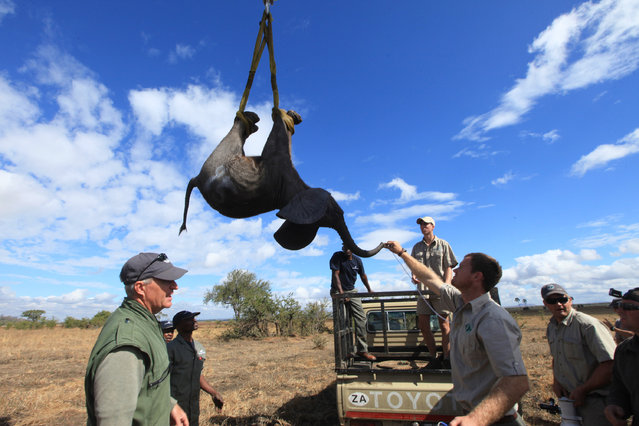
In this Tuesday July 12, 2016 photo, an elephant is lifted by a crane in an upside down position in Lilongwe, Malawi, in the first step of an assisted migration of 500 of the threatened species. African Parks, which manages three Malawian reserves is moving the 500 elephants from Liwonde National Park, this month and next, and again next year when vehicles can maneuver on the rugged terrain during Southern Africa's dry winter. (Photo by Tsvangirayi Mukwazhi/AP Photo)

In this Tuesday July 12, 2016 photo, an elephant is lifted by a crane in an upside down position in Lilongwe, Malawi, in the first step of an assisted migration of 500 of the threatened species. African Parks, which manages three Malawian reserves is moving the 500 elephants from Liwonde National Park, this month and next, and again next year when vehicles can maneuver on the rugged terrain during Southern Africa's dry winter. (Photo by Tsvangirayi Mukwazhi/AP Photo)
Details
20 Jul 2016 10:19:00
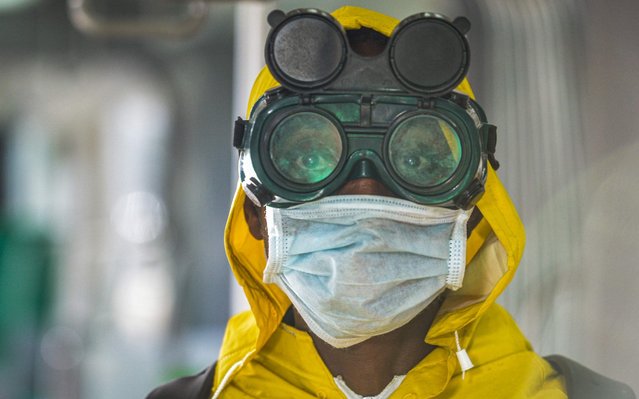
A cleaning staff waers protective gear to disinfect a metro carriage as a prevemtive measure against the spreading of the COVID-19 coronavirus in Addis Ababa, Ethiopia, on March 20, 2020. African countries have been among the last to be hit by the global COVID-19 coronavirus epidemic but as cases rise, many nations are now taking strict measures to block the deadly illness. (Photo by Michael Tewelde/AFP Photo)

A cleaning staff waers protective gear to disinfect a metro carriage as a prevemtive measure against the spreading of the COVID-19 coronavirus in Addis Ababa, Ethiopia, on March 20, 2020. African countries have been among the last to be hit by the global COVID-19 coronavirus epidemic but as cases rise, many nations are now taking strict measures to block the deadly illness. (Photo by Michael Tewelde/AFP Photo)
Details
23 Mar 2020 00:07:00
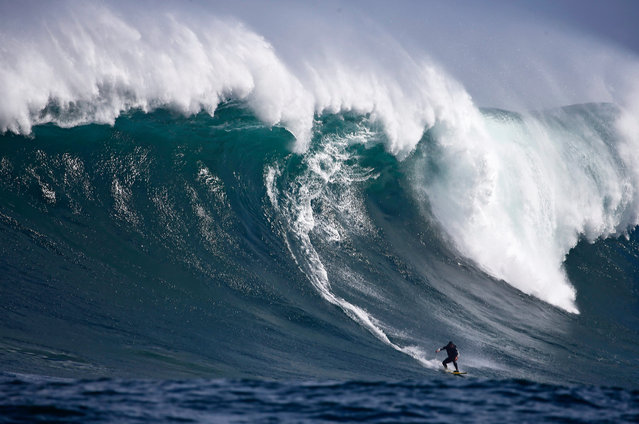
South African surfer Andy Marr rides a wave at Dungeons offshore reef in the Atlantic Ocean outside Cape Town, South Africa, 01 September 2016. The big wave surfing season is at its peak with winter swells driven by storms in the South Atlantic breaking on the Cape's outer reefs providing good conditions. Big wave surfers are competing in the 2016 Striped Horse Challenge and Rebel Sessions big wave competitons symultaneously throughout the season. (Photo by Nic Bothma/EPA)

South African surfer Andy Marr rides a wave at Dungeons offshore reef in the Atlantic Ocean outside Cape Town, South Africa, 01 September 2016. The big wave surfing season is at its peak with winter swells driven by storms in the South Atlantic breaking on the Cape's outer reefs providing good conditions. Big wave surfers are competing in the 2016 Striped Horse Challenge and Rebel Sessions big wave competitons symultaneously throughout the season. (Photo by Nic Bothma/EPA)
Details
02 Sep 2016 14:00:00