Loading...
Done
Tardigrades (commonly known as waterbears or moss piglets). (Photo by SPL/East News)

“Tardigrades (commonly known as waterbears or moss piglets) are small, water-dwelling, segmented animals with eight legs. Tardigrades were first discovered in 1773 by Johann August Ephraim Goeze, who called them kleiner Wasserbär, meaning “little water bear” in German. The name Tardigrada means “slow walker” and was given by Lazzaro Spallanzani in 1777. The name water bear comes from the way they walk, reminiscent of a bear's gait. The biggest adults may reach a body length of 1.5 millimetres (0.059 in), the smallest below 0.1 mm. Freshly hatched tardigrades may be smaller than 0.05 mm”. – Wikipedia. Photo: Tardigrades. (Photo by SPL/East News)
Details
26 Sep 2012 09:55:00


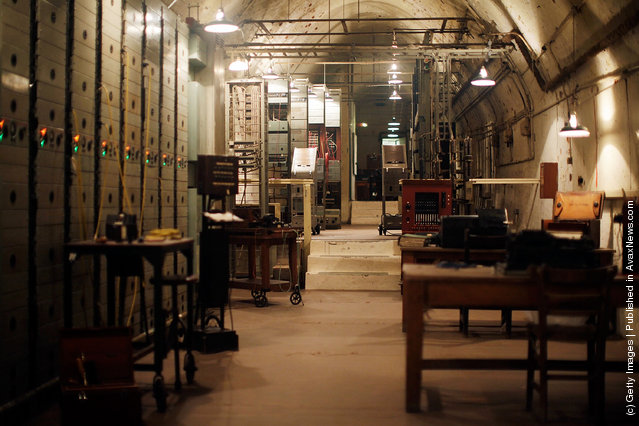
“Dover Castle is a medieval castle in the town of the same name in the English county of Kent. It was founded in the 12th century and has been described as the “Key to England” due to its defensive significance throughout history. It is the largest castle in England.

The outbreak of the Second World War in 1939 saw the tunnels converted first into an air-raid shelter and then later into a military command centre and underground hospital. In May 1940, Admiral Sir Bertram Ramsey directed the evacuation of French and British soldiers from Dunkirk, code-named Operation Dynamo, from his headquarters in the cliff tunnels”. – Wikipedia

Photo: The Repeater Station in the subterranean tunnels underneath Dover Castle, which has been restored by English Heritage for a public exhibition on June 3, 2011 in Dover, England. The evacuation of allied soldiers from Dunkirk was masterminded and co-ordinated from the secret command and control centre in the tunnels deep below the castle. (Photo by Matthew Lloyd/Getty Images)
Details
07 Jun 2011 09:26:00
New York Police Department  tactical police officers stand guard near the New York Stock Exchange

New York Police Department tactical police officers stand guard near the New York Stock Exchange on September 9, 2011 in New York City. Officials are stepping up security in New York and Washington D.C. a day after U.S. officials received a credible but unconfirmed terror threat to utilize car bombs on bridges or tunnels in New York or Washington. (Photo by Justin Sullivan/Getty Images)
Details
10 Sep 2011 11:13:00
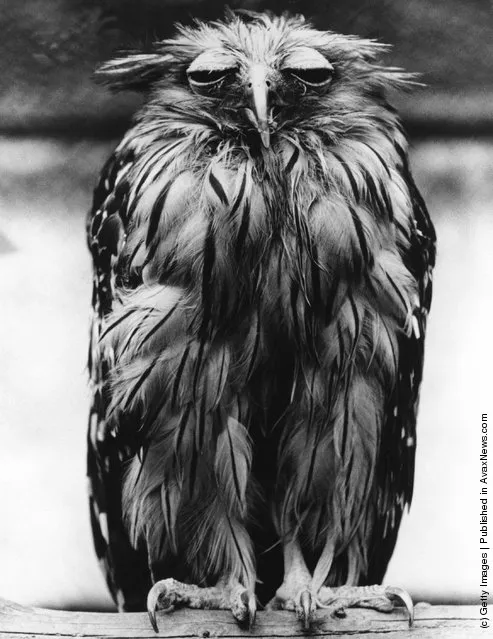
1973: A tired-looking Javan Fish Owl

A tired-looking Javan Fish Owl. (Photo by Fox Photos/Getty Images). 5th December 1973
Details
13 Oct 2011 11:33:00
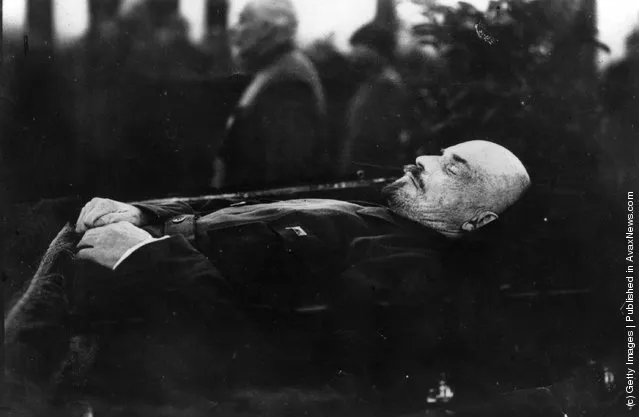
1924:  Vladimir Ilyich Lenin lying in state in the Kremlin

Photo: Vladimir Ilyich Lenin (1870 – 1924) lying in state in the Kremlin. (Photo by Hulton Archive/Getty Images). 1924

Important! For the same article in Russian language click here.

Something quite intriguing is happening within Russian-speaking internet during the last few – should you type a fully academic inquiry (at least, according to Russian academic requirements) in national search engines for "Lenin's mausoleum" – the first thing you get (even in top 10 searches) is website pages talking about black magic and occult. Website authors view this construction differently, but unconditionally agree on one thing: the mausoleum of the "leader of the world proletariat” – the essence of a magical artifact, a sort of “energy vampire”. It was built with a certain purpose: to drain the energy out of miserable Soviet citizens on one hand; and to poison the anthroposphere of one-sixth part of the earth with its vibes (the exact territory that was occupied by the former Soviet Union), depriving the Russian people of will to resist on the other hand. Complete nonsense? No doubt. Nevertheless, an intriguing one. Well, probably because some oddities do exist in mausoleum's history. These oddities are the thing we are going to discuss this time. First, let me refresh you memory on the subject.
Details
16 Oct 2011 11:27:00
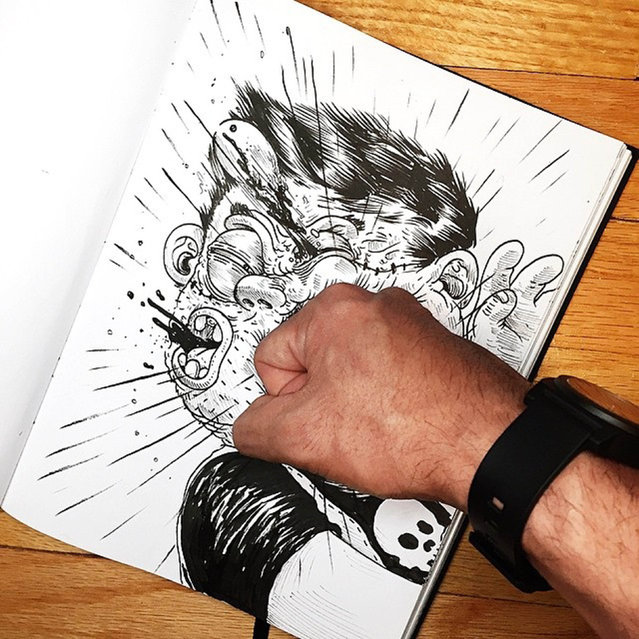
A quirky cartoonist challenged his own creation to a fight – but he could only draw. US artist Alex Solis, 31, from Chicago, Illinois, drew his skull t-shirt-wearing alter ego, who he calls Chuck, smashing his phone and stabbing his finger in his Inkteraction pictures. But Alex got his own back with a punch to Chucks jaw before squashing him against the bottom of the page. (Photo by Alex Solis/Caters News)

A quirky cartoonist challenged his own creation to a fight – but he could only draw. US artist Alex Solis, 31, from Chicago, Illinois, drew his skull t-shirt-wearing alter ego, who he calls Chuck, smashing his phone and stabbing his finger in his Inkteraction pictures. But Alex got his own back with a punch to Chucks jaw before squashing him against the bottom of the page. The ink man tried to get under Chucks skin to win the fight by stretching and pulling the cartoons face as the drawings became more bloody. (Photo by Alex Solis/Caters News)
Details
23 Feb 2015 12:39:00
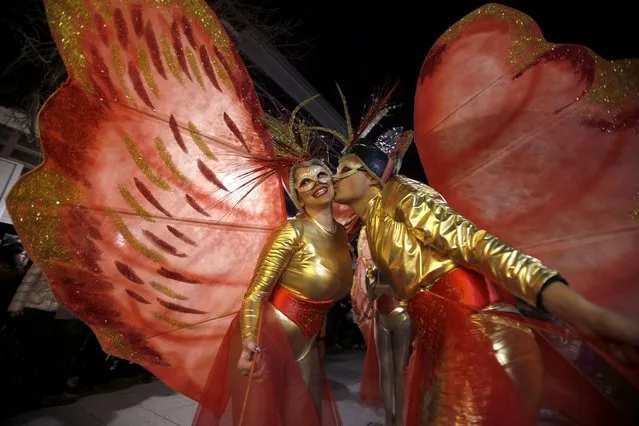
Costumed revelers perform during a carnival procession in the southeastern Macedonia's town of Strumica, Saturday, February 21, 2015. Strumica carnival is held every year during the Christian Orthodox holiday Trimeri, marking the beginning of the Easter fasting period. (Photo by Boris Grdanoski/AP Photo)

Costumed revelers perform during a carnival procession in the southeastern Macedonia's town of Strumica, Saturday, February 21, 2015. Strumica carnival is held every year during the Christian Orthodox holiday Trimeri, marking the beginning of the Easter fasting period. (Photo by Boris Grdanoski/AP Photo)
Details
02 Mar 2015 07:24:00
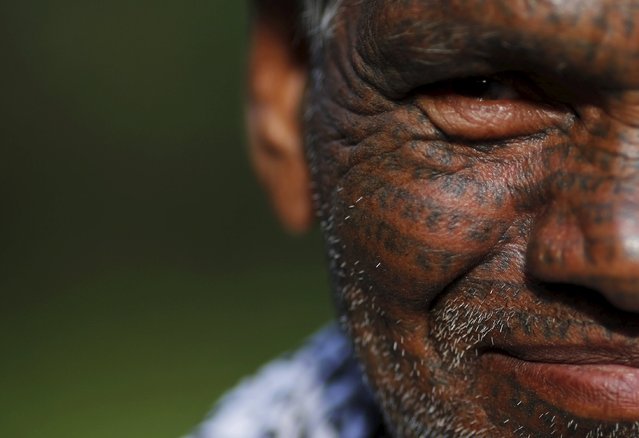
Tiharu Ram, 70, a follower of Ramnami Samaj, who has tattooed the name of the Hindu god Ram on his face, poses for a picture outside his house in the village of Chandlidi, in the eastern state of Chhattisgarh, India, November 16, 2015. (Photo by Adnan Abidi/Reuters)

Tiharu Ram, 70, a follower of Ramnami Samaj, who has tattooed the name of the Hindu god Ram on his face, poses for a picture outside his house in the village of Chandlidi, in the eastern state of Chhattisgarh, India, November 16, 2015. Denied entry to temples and forced to use separate wells, low-caste Hindus in the eastern state of Chhattisgarh first tattooed their bodies and faces more than 100 years ago as an act of defiance and devotion. (Photo by Adnan Abidi/Reuters)
Details
14 Jan 2016 08:05:00