Loading...
Done
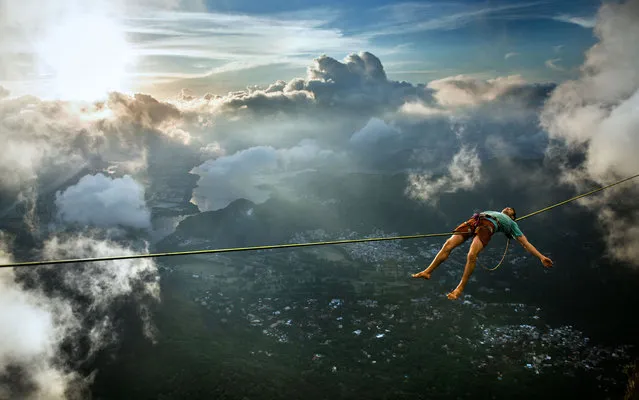
“Sokolica”. Sokolica, Poland. (Photo and caption by Marcin Kęsek/National Geographic Traveler Photo Contest)

“Sokolica”. Sokolica, Poland. (Photo and caption by Marcin Kęsek/National Geographic Traveler Photo Contest)

ATTENTION! All pictures are presented in high resolution. To see Hi-Res images – just TWICE click on any picture. In other words, click small picture – opens the BIG picture. Click BIG picture – opens VERY BIG picture.
Details
25 Jun 2013 09:13:00
“Cub”. In the colony of penguins in South Georgia. (Photo and caption by Ondrej Zaruba/National Geographic Traveler Photo Contest)

“Cub”. In the colony of penguins in South Georgia. (Photo and caption by Ondrej Zaruba/National Geographic Traveler Photo Contest)

ATTENTION! All pictures are presented in high resolution. To see Hi-Res images – just TWICE click on any picture. In other words, click small picture – opens the BIG picture. Click BIG picture – opens VERY BIG picture.
Details
28 Jun 2013 12:32:00
Shoppers walk down stairs featuring a five-metre-high reproduction of Vincent van Gogh's signature painting “Sunflowers”, at the entrance to Ocean Terminal in Hong Kong July 15, 2013. A premium three-dimensional reproduction of works of Van Gogh, the RELIEVO collection, approved by the curators of the Van Gogh Museum in Amsterdam, is on display at a gallery inside Harbour City shopping mall attached to the terminal. (Photo by Bobby Yip/Reuters)

Shoppers walk down stairs featuring a five-metre-high reproduction of Vincent van Gogh's signature painting “Sunflowers”, at the entrance to Ocean Terminal in Hong Kong July 15, 2013. A premium three-dimensional reproduction of works of Van Gogh, the RELIEVO collection, approved by the curators of the Van Gogh Museum in Amsterdam, is on display at a gallery inside Harbour City shopping mall attached to the terminal. (Photo by Bobby Yip/Reuters)
Details
20 Jul 2013 11:59:00
A handout photo made available by the World Press Photo (WPP) organization on 13 February 2017 shows a picture by Rossiya Segodnya photographer Valery Melnikov that won the Long-Term Projects – First Prize award of the 60th annual World Press Photo Contest, it was announced by the WPP Foundation in Amsterdam, The Netherlands on 13 February 2017. Caption: Civilians escape from a fire at a house destroyed by an air attack in the Luhanskaya village. Story: Ordinary people became victims of the conflict between self-proclaimed republics and the official Ukrainian authorities from 2014 onwards in the region of Donbass. Disaster came into their lives unexpectedly. These people were involved in the military confrontation against their will. They experienced the most terrible things: the death of their friends and relatives, destroyed homes and the ruined lives of thousands of people. (Photo by Valery Melnikov/EPA/Rossiya Segodnya/World Press Photo)

A handout photo made available by the World Press Photo (WPP) organization on 13 February 2017 shows a picture by Rossiya Segodnya photographer Valery Melnikov that won the Long-Term Projects – First Prize award of the 60th annual World Press Photo Contest, it was announced by the WPP Foundation in Amsterdam, The Netherlands on 13 February 2017. Caption: Civilians escape from a fire at a house destroyed by an air attack in the Luhanskaya village. (Photo by Valery Melnikov/EPA/Rossiya Segodnya/World Press Photo)
Details
15 Feb 2017 00:06:00
Takeoka Chisaka, Hiroshima, Japan. “One morning in August 1945, I was walking home from the night shift at a factory in Hiroshima. As I reached my door, there was a huge explosion. When I came to, my head was bleeding and I had been blasted 30m away”. (Photo and caption by Sasha Maslov)

Takeoka Chisaka, Hiroshima, Japan. “One morning in August 1945, I was walking home from the night shift at a factory in Hiroshima. As I reached my door, there was a huge explosion. When I came to, my head was bleeding and I had been blasted 30m away. The atomic bomb had detonated. When I found my mother, her eyes were badly burned. A doctor said they had to come out, but he didn’t have the proper tools so used a knife instead. It was hellish. I became a peace-worker after the war. In the 1960s, at a meeting at the UN, I met one of the people who created the atomic bomb. He apologised”. (Photo and caption by Sasha Maslov)
Details
11 May 2015 11:56:00
A demonstrator jumps from a vehicle of the Organisation for Security and Co-operation in Europe (OSCE) during a protest to demand what protesters say is true information from the OSCE about the shelling in Donetsk, Ukraine, July 23, 2015. The graffiti reads, “Stop moronic war!”. (Photo by Alexander Ermochenko/Reuters)

A demonstrator jumps from a vehicle of the Organisation for Security and Co-operation in Europe (OSCE) during a protest to demand what protesters say is true information from the OSCE about the shelling in Donetsk, Ukraine (since April 2014, the city is the administrative centre of the Donetsk People's Republic), July 23, 2015. The graffiti reads, “Stop moronic war!”. (Photo by Alexander Ermochenko/Reuters)
Details
24 Jul 2015 12:13:00
A Syrian refugee girl covers herself with a blanket as she stands outside tents at a makeshift settlement in Bar Elias in the Bekaa valley January 5, 2015. Lebanon enforced new immigration controls at the Syrian border on Monday in a move to gain control of the steady stream of refugees from its much larger neighbour. (Photo by Mohamed Azakir/Reuters)

A Syrian refugee girl covers herself with a blanket as she stands outside tents at a makeshift settlement in Bar Elias in the Bekaa valley January 5, 2015. Lebanon enforced new immigration controls at the Syrian border on Monday in a move to gain control of the steady stream of refugees from its much larger neighbour. (Photo by Mohamed Azakir/Reuters)
Details
06 Jan 2015 11:56:00
In this Wednesday, July 23, 2014 file photo, Omaha photographer Lane Hickenbottom photographs the night sky in a pasture near Callaway, Neb. With no moon in the sky, the Milky Way was visible to the naked eye. More than one-third of the world’s population can no longer see the Milky Way because of man-made lights, according to a scientific paper by Light Pollution Science and Technology Institute's Fabio Falchi and his team members, published on Friday, June 10, 2016. (Photo by Travis Heying/The Wichita Eagle via AP Photo)

In this Wednesday, July 23, 2014 file photo, Omaha photographer Lane Hickenbottom photographs the night sky in a pasture near Callaway, Neb. With no moon in the sky, the Milky Way was visible to the naked eye. More than one-third of the world’s population can no longer see the Milky Way because of man-made lights, according to a scientific paper by Light Pollution Science and Technology Institute's Fabio Falchi and his team members, published on Friday, June 10, 2016. (Photo by Travis Heying/The Wichita Eagle via AP Photo)
Details
11 Jun 2016 12:37:00